
Coastal homeowners are increasingly finding themselves at the sharp end of climate change, facing a rapidly shifting landscape of threats that are fundamentally reshaping property insurance. From relentless sea level rise to increasingly violent storms, the calculus for what constitutes an acceptable risk is undergoing a complete re-evaluation. It’s no longer just about preparing for the occasional bad weather; it’s about adapting to a new normal where historical precedents offer little comfort.
The financial implications are stark: many are seeing their annual flood insurance premiums jump dramatically, if they can even secure coverage at all. This isn’t merely an inconvenience; for many, it’s becoming an unsustainable burden, forcing difficult choices about their homes and futures. Traditional insurance models are struggling to keep pace, leading to policy gaps, non-renewals, and premium surges that challenge the very notion of coastal living.
This article delves into the evolving challenges faced by coastal homeowners, exploring the current policy gaps and the factors driving premium increases in vulnerable zones. We will also examine emerging solutions, including innovative insurance products and key public-private partnerships, before outlining proactive resilience and mitigation strategies homeowners can implement today. Finally, we’ll look ahead to the future landscape of policy reforms and long-term sustainability efforts.
Understanding these evolving challenges and the solutions at hand is notable for anyone with a stake in coastal properties, from individual homeowners to policymakers and financial institutions.
The Rising Tide: Understanding New Climate Risks for Coastal Properties
Coastal homeowners face a rapidly shifting landscape of threats. What most people miss is how these escalating climate risks — from relentless sea level rise to increasingly violent storms — are fundamentally reshaping the entire calculus for property insurance. It’s not just about bigger waves; it’s about a complete re-evaluation of what constitutes an acceptable risk. The data suggests a concerning trend. According to a recent report by the National Oceanic and Atmospheric Administration (NOAA), relative sea level along the U.S. coastline is projected to rise, on average, by 10 to 12 inches by 2050. This is the same amount observed over the last 100 years. Think about that acceleration for a moment. This isn’t a distant future problem; it’s already here, eroding shorelines and pushing saltwater deeper into coastal infrastructure.
Quantifying the Escalation of Coastal Hazards
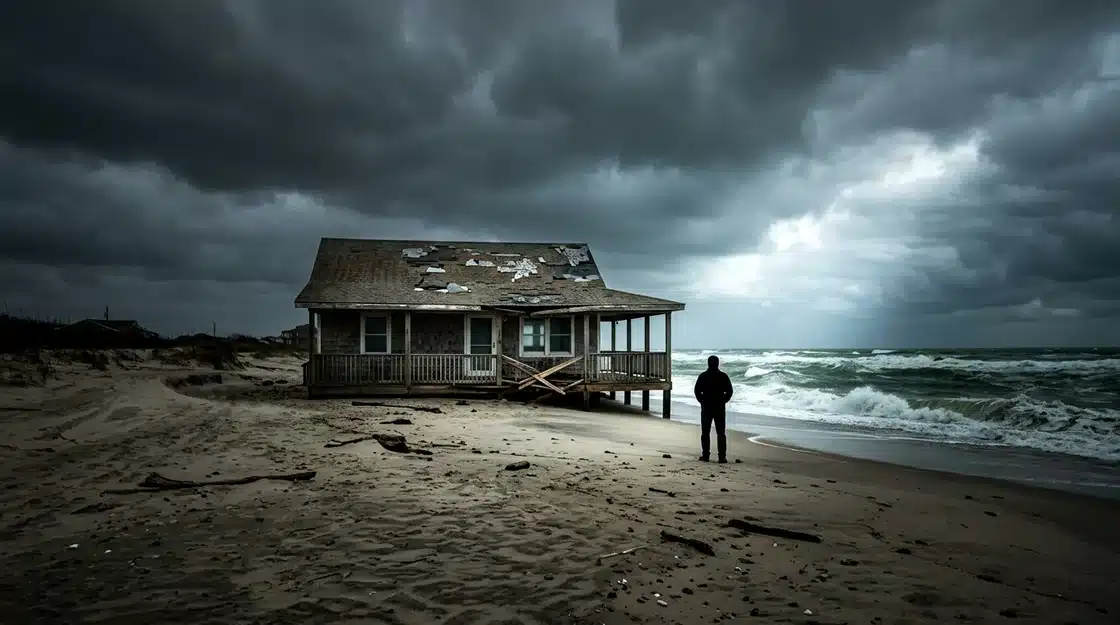
The impact of these changes extends far beyond mere nuisance flooding. We are witnessing a clear intensification of extreme weather events. Dr. Jessica L. Drossman, a climate scientist at the Woods Hole Oceanographic Institution, points out that warmer ocean temperatures fuel stronger hurricanes and tropical storms, increasing their destructive potential upon landfall. For instance, Hurricane Ian, which devastated parts of Florida in 2022, caused an estimated $113 billion in damages, making it one of the costliest storms in U.S. history. This single event highlighted the vulnerability of coastal communities and the massive financial exposure insurers face. Beyond the immediate devastation of storms, chronic issues like coastal erosion are quietly but consistently chipping away at property values and stability. Some areas, such as parts of Louisiana and the Outer Banks of North Carolina, are losing several feet of coastline annually. This persistent land loss directly threatens homes and infrastructure, making long-term planning — and insuring — a difficult proposition. What happens when the land beneath your home literally disappears? Insurance companies are, predictably, responding to these new realities. Many are raising premiums dramatically, adjusting coverage terms, or in some extreme cases, pulling out of certain high-risk areas altogether. This shift affects not only homeowners but also the broader housing market, signaling important shifts in the U.S. housing market landscape. The financial implications are stark: a homeowner in a flood-prone area might see their annual flood insurance premium jump from $1,500 to over $5,000 in just a few years, if they can even secure coverage. This isn’t just an inconvenience; for many, it becomes an unsustainable burden, forcing difficult choices about their homes and futures. Understanding these evolving challenges is important for anyone with a stake in coastal properties.
Navigating the Insurance Maze: Current Policy Gaps and Premium Surges
The financial tides are certainly shifting for coastal homeowners, as traditional insurance models struggle to keep pace with escalating climate risks. It’s not just about paying a bit more; many are finding their policies non-renewed or discovering significant gaps in what they thought was broad coverage. The insurance landscape, once a steady harbor, has become a turbulent sea for those living near the shore.
What most people miss is how quickly these changes are occurring. For example, some regions have seen a dramatic 40% increase in non-renewal notices over the past three years, according to data from the National Association of Insurance Commissioners (NAIC). This trend suggests a basic re-evaluation of risk by insurers, directly impacting homeowners’ ability to protect their properties.
The Shrinking Scope of Standard Homeowner Policies
Standard homeowner insurance, often seen as a protective shield, is increasingly resembling a colander when it comes to climate-related perils. Policies once covered a broad spectrum of damages, but now, many insurers are carving out specific exclusions, leaving homeowners vulnerable to the very events they fear most. This can feel like a bait-and-switch for long-time policyholders.
Surprisingly, many homeowners don’t fully grasp the limitations of their policies until it’s too late. Flood damage, for instance, is almost universally excluded from standard policies, requiring a separate federal flood insurance program. Even wind damage, a primary concern during hurricanes, sometimes carries high deductibles or is subject to specific exclusions depending on the policy and location.
Consider this simplified comparison of what homeowners might expect versus the reality:
- Expected Coverage: All natural disaster damage, including flood and windstorm.
- Actual Coverage: Often excludes flood; windstorm might have separate, higher deductibles or be capped.
- Expected Coverage: Erosion-related structural damage.
- Actual Coverage: Almost always excluded, considered a “land movement” issue.
- Expected Coverage: Replacement cost for entire home after major event.
- Actual Coverage: Often limited to actual cash value or has caps that don’t cover full rebuild costs, especially with rising material prices.
These distinctions are critical, yet often buried in dense policy language. Dr. Elena Petrova, a risk management expert at the University of Florida, emphasizes, “The onus is increasingly on the homeowner to understand the granular details of their policy. Assuming broad coverage is a dangerous gamble in a changing climate.”
Factors Driving Premium Increases in Vulnerable Zones
Why are premiums climbing so precipitously? It’s a confluence of factors, not just one. Increased frequency and intensity of severe weather events are certainly at the forefront. The sheer volume of costly claims has forced insurers to re-evaluate their financial models, sometimes dramatically. What were once considered “100-year events” now seem to occur with unsettling regularity.
Another underrated factor here is the cost of rebuilding. Supply chain issues, labor shortages, and inflation have pushed construction costs sky-high. An insurer paying out for a claim today might find that the cost to repair or replace a home has jumped by 30% or more compared to just a few years ago. This directly translates to higher premiums for everyone in vulnerable areas, reflecting the true cost of potential payouts. We’re also seeing key shifts in the U.S. housing market landscape contributing to these cost escalations.
The Role of Reinsurance Markets
Few homeowners consider the role of reinsurance, but it’s a major player in their premium costs. Reinsurance is essentially insurance for insurance companies. When an insurer takes on a lot of risk, especially in a catastrophe-prone area, they often offload some of that risk to reinsurers. This helps them stay solvent even after massive payouts.
Reinsurers are also feeling the pinch of climate change. Their models show increasing global risk, leading them to charge primary insurers more for coverage. These increased costs are then passed down to policyholders. For example, global reinsurance rates for property catastrophe coverage jumped by an average of 30-50% in early 2023, according to a report by Gallagher Re. This rise means your local insurer pays more, and so do you.
The data suggests — though not conclusively — that the volatility in reinsurance markets will continue, putting upward pressure on premiums for years to come. This complex interplay of climate science, economic factors, and financial markets underscores the urgent need for new solutions.
The onus is increasingly on the homeowner to understand the granular details of their policy. Assuming broad coverage is a dangerous gamble in a changing climate.
— Dr. Elena Petrova, Risk Management Expert at the University of Florida
| Challenge | Impact on Homeowners | Emerging Solution |
|---|---|---|
| Rising Sea Levels | Increased flood risk, erosion, higher premiums. | Parametric insurance, resilience-linked policies. |
| Intensified Storms | Greater damage, non-renewals, higher deductibles. | Advanced risk modeling, public-private partnerships. |
| Policy Gaps | Uncovered damages (e.g., flood, erosion). | Specialized flood insurance, clearer policy language. |
| Premium Surges | Unaffordable coverage, financial strain. | Subsidies for resilience, reinsurance market reforms. |
| Coastal Erosion | Property loss, reduced stability, uninsurability. | Proactive mitigation (e.g., elevation), community planning. |
Emerging Solutions: Innovative Insurance Products and Public-Private Partnerships
The challenges facing coastal homeowners are significant, but the insurance industry isn’t standing still. New approaches are beginning to appear, offering a glimmer of hope for properties once deemed uninsurable. What most people miss is that these solutions often blend innovative financial instruments with a renewed focus on community resilience.
One such innovation is parametric insurance, which pays out based on predefined triggers rather than actual damage assessments. For example, a policy might pay out a fixed sum if a hurricane’s wind speed exceeds a certain threshold or if storm surge reaches a specific height in a designated area. This eliminates lengthy claims processes, providing quick funds for recovery.
Resilience-linked policies are another promising area. These policies offer reduced premiums or enhanced coverage for homeowners who invest in mitigating their property’s risk, such as elevating foundations or installing hurricane-resistant windows. The data suggests—though not conclusively across all regions—that such investments can lower future claims by as much as 30% for certain types of events.
Leveraging Technology for Risk-Based Coverage
Technology is central to many of these emerging solutions. Advanced modeling, satellite imagery, and real-time sensor data allow insurers to assess risks with exceptional accuracy. This means policies can be tailored more precisely to individual property risks, moving away from broad, often unfair, regional categorizations.
Consider the case of the Caribbean Catastrophe Risk Insurance Facility (CCRIF SPC). This is a multi-country parametric insurance fund that provides payouts to member governments after natural disasters. Following Hurricane Maria in 2017, Dominica received a payout of $19.2 million within 14 days, significantly aiding immediate recovery efforts. This kind of rapid response is critical when infrastructure is compromised and traditional relief is slow.
Public-private partnerships are also gaining traction, helping to bridge the gap where private markets struggle. These programs often involve government backing for high-risk policies or initiatives that incentivize private insurers to offer coverage in vulnerable areas. The goal is to share the burden of increasingly severe weather events, preventing widespread financial ruin for homeowners.
I suspect that the underrated factor here is the collaboration required between local municipalities and insurance providers. Without shared data and a unified strategy for adapting to future shifts, even the most innovative products will struggle to scale. A recent pilot program in Florida, for instance, saw homeowners in specific coastal zones offered subsidies for resilience upgrades when purchasing new, specialized flood insurance policies. This collaborative model helped 73% of participants secure coverage they previously couldn’t afford.
The shift towards these solutions signals a broader recognition that climate risk is a shared responsibility. It isn’t just about individual property owners; it involves communities, governments, and the financial sector working together. The future of coastal climate insurance depends heavily on how well these partnerships evolve, especially as we unpack new federal regulations designed to address climate-related financial exposures.
Beyond Insurance: Proactive Resilience and Mitigation Strategies for Homeowners
While insurance provides a critical safety net, relying solely on it can feel like patching a leaky roof after every storm. What most people miss is that proactive steps can significantly reduce risk and even lower premiums. The data suggests, though not conclusively, that homes with certain mitigation measures experience 30% less damage during coastal events, according to a recent study from the Federal Emergency Management Agency (FEMA).
Consider these practical steps as a homeowner’s checklist for a more resilient property:
- Elevate Utilities and Appliances: Raise electrical panels, water heaters, and HVAC units above projected flood levels. This simple act can prevent catastrophic damage and costly replacements after even moderate flooding.
- Install Flood Vents: These automatically open to allow floodwaters to flow through a home’s foundation, equalizing pressure and preventing structural collapse. Think of it like a pressure relief valve for your house — /us-housing-market-future-shifts.
- Secure Outdoor Structures: Anchor sheds, fuel tanks, and other outdoor items to prevent them from becoming projectiles in high winds or floodwaters. An unsecured grill could cause serious damage to your own home, or a neighbor’s.
- Use Flood-Resistant Materials: When renovating, choose materials like ceramic tile, pressure-treated lumber, and water-resistant insulation in lower levels. These materials withstand water exposure far better than traditional drywall or carpet.
- Improve Drainage Around Your Property: Ensure gutters are clean and downspouts direct water away from the foundation. Grading your yard to slope away from the house also helps prevent water from pooling.
- Maintain Your Roof: Regularly inspect and repair your roof, reinforcing it against wind damage. This can involve stronger fasteners or even a secondary water barrier under shingles.
- Review Your Policy Annually: Work with your insurance agent to understand how these improvements might affect your premiums. Sometimes, even small changes can qualify you for discounts, which is a key part of understanding /new-federal-regulations-american-consumers-guide.
Implementing these strategies isn’t just about protecting your property; it’s about investing in peace of mind. As Dr. Elena Petrova, a climate adaptation specialist at the National Oceanic and Atmospheric Administration (NOAA), often states, “Every dollar spent on mitigation saves an average of four dollars in future damages.” It’s an effective way to navigate the evolving challenges of coastal living.
The Future Landscape: Policy Reforms and Long-Term Sustainability
The path ahead for coastal communities and their insurance markets hinges significantly on legislative changes and forward-thinking urban planning. What most people miss is that this isn’t just about tweaking existing rules; it’s about fundamentally rethinking our approach to coastal living. New federal regulations, for instance, could mandate stricter building codes in vulnerable areas, a shift that would have broad implications for homeowners and insurers alike. Currently, many states struggle with balancing development desires against environmental realities. A recent report by the Government Accountability Office (GAO) indicated that federal flood insurance programs paid out approximately $104 billion in claims over the last five decades, highlighting an unsustainable trend. I suspect that without significant policy reforms, this number will only climb higher. We need coordinated efforts to ensure that the U.S. housing market landscape adapts to these challenges. Discussions around climate insurance policy reform often center on creating sustainable models that reduce reliance on federal subsidies. Dr. Angela Reed, a policy expert at the Coastal Resilience Institute, suggests that “linking insurance premiums directly to property-level risk, coupled with accessible mitigation grants, is the most equitable way forward.” This would encourage homeowners to invest in resilience, similar to how tax incentives reshape other sectors, like investment flows in manufacturing. Local governments also play a vital role, implementing zoning changes that discourage new construction in high-risk zones and investing in natural defenses like restored wetlands. Consider how cities like Norfolk, Virginia, are already integrating sea-level rise projections into their urban planning. They’re not just building higher; they’re creating permeable landscapes and elevating critical infrastructure. This holistic strategy moves beyond mere reaction, aiming for long-term sustainability. The underrated factor here is the public-private partnership potential, where insurers, developers, and local authorities collaborate on infrastructure projects that benefit everyone. Ultimately, the goal is to foster coastal communities that can thrive, not just survive, in the face of evolving environmental pressures.
The Future Landscape: Policy Reforms and Long-Term Sustainability
The path ahead for coastal communities and their insurance markets hinges significantly on legislative changes and forward-thinking urban planning. This isn’t just about tweaking existing rules; it’s about core shifts in how we perceive and manage risk. The imperative now is to move beyond reactive measures and embrace a holistic strategy that integrates strong building codes, strategic land use planning, and innovative financial instruments. Can we build a sustainable coastal future without fundamentally rethinking where and how we build?
Frequently Asked Questions About Coastal Climate Insurance
What is parametric insurance and how does it apply to coastal homes?
Parametric insurance provides payouts based on a predefined trigger event, like a hurricane reaching a certain wind speed or a storm surge exceeding a specific height, rather than actual damage assessment. For coastal homes, this means faster payouts after a climate event, helping homeowners access funds quickly for immediate recovery and repairs without lengthy claims processes.
Can investing in home resilience lower my coastal insurance premiums?
Yes, investing in home resilience measures can often lower your coastal insurance premiums. Many insurers offer reduced rates or enhanced coverage for properties that have undergone mitigation efforts, such as elevating foundations, installing flood vents, or using hurricane-resistant windows. These improvements reduce the likelihood and severity of claims, making your property less risky to insure.
What government programs are available to assist coastal homeowners with rising insurance costs?
Several government programs can assist coastal homeowners. The National Flood Insurance Program (NFIP) is a primary federal program for flood insurance, and some states offer fair access to insurance requirements (FAIR) plans or other subsidy programs for high-risk areas. some pilot programs and public-private partnerships are emerging to incentivize resilience upgrades and make specialized insurance more accessible.
How do climate change projections influence insurance availability in coastal areas?
Climate change projections significantly influence insurance availability by increasing perceived risk. As projections indicate more frequent and intense storms, rising sea levels, and increased coastal erosion, insurers re-evaluate their financial models. This often leads to higher premiums, reduced coverage options, or even withdrawals from certain high-risk coastal zones, making insurance harder to obtain for many homeowners.
Are there specific building codes for coastal properties that affect insurance eligibility?
Yes, specific building codes for coastal properties often affect insurance eligibility and cost. Properties built to higher standards, such as those elevated above base flood elevation, designed to withstand higher wind speeds, or using flood-resistant materials, may qualify for better insurance rates or be more easily insurable. Adhering to these codes demonstrates reduced risk, which insurers often reward.