
Department of Labor’s Updated Overtime Rules: Affecting 4.5 Million Workers Nationally in 2026
The landscape of American employment is on the cusp of a significant transformation with the Department of Labor’s (DOL) updated DOL overtime rules, slated to take full effect in 2026. These changes are not merely minor adjustments; they represent a fundamental shift in how millions of workers are compensated, directly impacting an estimated 4.5 million individuals across various sectors. For employers, these updates necessitate a thorough review of compensation structures, job classifications, and operational budgets. For employees, understanding these new regulations is crucial to ensuring fair pay and appropriate classification. This comprehensive guide will delve into the intricacies of the new DOL overtime rules, explore their profound implications, and offer actionable insights for both businesses and the workforce.
Understanding the Core Changes to DOL Overtime Rules
At the heart of the DOL’s new regulations lies an increase in the minimum salary threshold for exemption from overtime pay. For decades, the Fair Labor Standards Act (FLSA) has mandated overtime pay—at least 1.5 times an employee’s regular rate of pay—for hours worked beyond 40 in a workweek, unless the employee qualifies for a specific exemption. The most common exemptions are the ‘white-collar’ exemptions for executive, administrative, and professional (EAP) employees. To qualify for these exemptions, employees must meet three tests:
- They must be paid a predetermined and fixed salary (the ‘salary basis test’).
- Their salary must meet a minimum specified amount (the ‘salary level test’).
- They must primarily perform executive, administrative, or professional duties (the ‘duties test’).
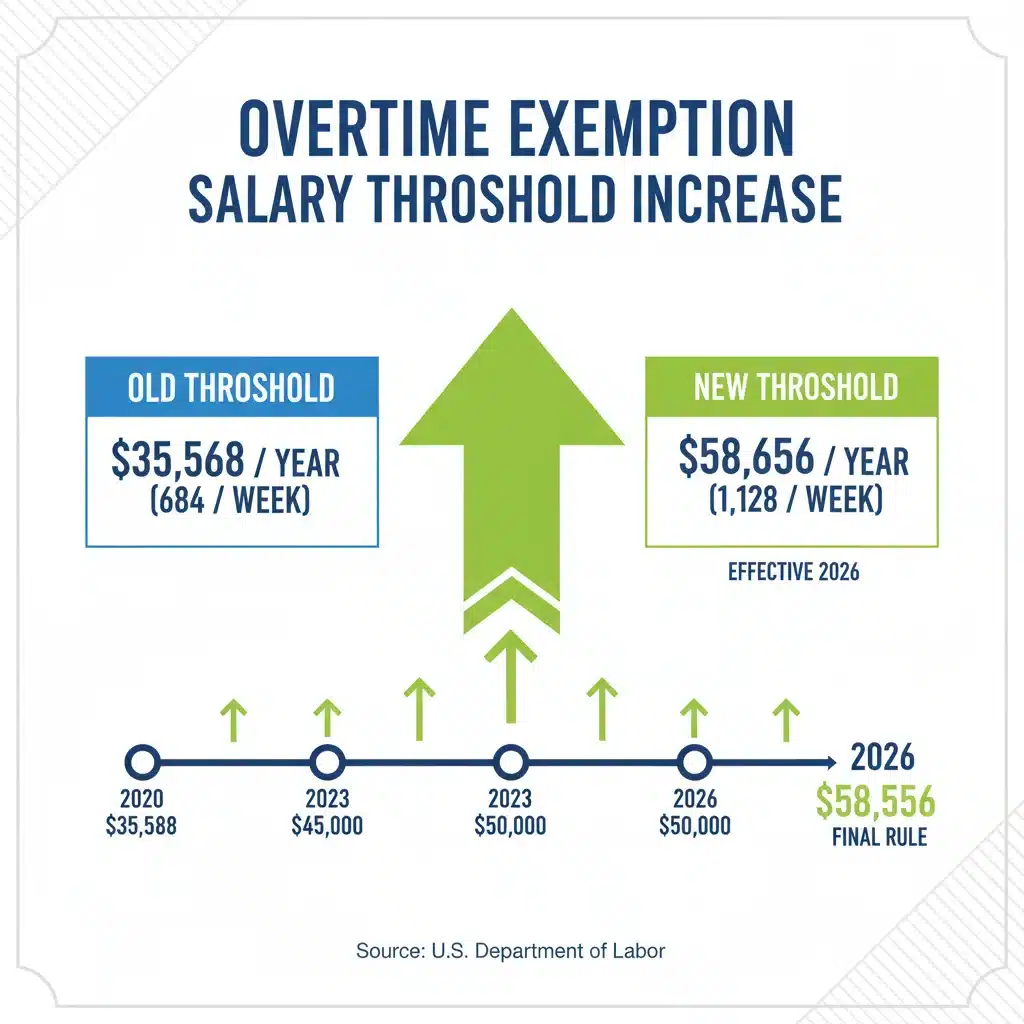
The new DOL overtime rules primarily target the ‘salary level test,’ dramatically raising the bar for who can be considered exempt. The current federal salary threshold for EAP exemptions is $35,568 per year ($684 per week). This figure has been widely criticized for being outdated and failing to keep pace with inflation and rising living costs. The DOL’s objective is to ensure that only genuinely high-earning managerial or professional employees are exempt from overtime, preventing employers from misclassifying lower-paid workers as exempt simply by paying them a salary slightly above the previous low threshold.
The new regulations propose a two-tiered increase. The first increase will occur on July 1, 2024, raising the standard salary level to $43,888 per year ($844 per week). However, the more significant and far-reaching change, which is the focus of this article, will be implemented on January 1, 2025, when the standard salary level will jump to $58,656 per year ($1,128 per week). This substantial increase is what will bring an estimated 4.5 million currently exempt workers into eligibility for overtime pay. Furthermore, the rules introduce an automatic update mechanism every three years, ensuring the threshold remains relevant by adjusting it based on current wage data.
These changes also extend to the highly compensated employee (HCE) exemption. The HCE exemption allows for a streamlined duties test for employees who perform office or non-manual work and are paid a much higher total annual compensation. The current HCE threshold is $107,432 per year. Under the new DOL overtime rules, this will increase to $132,964 on July 1, 2024, and then to $151,164 on January 1, 2025. This ensures that even highly compensated individuals are subject to a more rigorous standard for exemption, preventing loopholes.
The primary driver behind these updates is the DOL’s commitment to protecting workers’ wages and preventing erosion of overtime protections. The department asserts that the previous thresholds were too low, allowing employers to avoid paying overtime to employees who, despite being on a salary, were performing tasks more akin to hourly workers and earning wages that did not reflect a true executive, administrative, or professional standing. By raising the threshold, the DOL aims to restore the original intent of the FLSA, ensuring that millions of workers receive fair compensation for their extra efforts.
Who is Affected by the New DOL Overtime Rules?
The impact of these updated DOL overtime rules will be widespread, touching nearly every industry and business size. While the 4.5 million figure represents a national estimate, the specific effects will vary based on regional wage levels, industry practices, and existing compensation structures. Here’s a breakdown of who is most likely to be affected:
Employees Becoming Newly Eligible for Overtime
The most direct impact will be on employees currently classified as exempt under the EAP exemptions but whose salaries fall between the current threshold ($35,568) and the new 2025 threshold ($58,656). These individuals, who previously worked beyond 40 hours without additional compensation, will now either need to be reclassified as non-exempt (and thus eligible for overtime) or have their salaries raised above the new threshold to maintain their exempt status. Common roles that might fall into this category include:
- Entry-level managers or supervisors in retail, hospitality, and food service.
- Certain administrative coordinators or office managers.
- Junior professionals in fields like marketing, finance, or HR.
- Project managers or team leads in some sectors.
These employees will experience a significant change in their earning potential, as their hours worked beyond 40 will now translate into higher pay. This could lead to increased financial security and improved work-life balance for many.
Small and Medium-Sized Businesses (SMBs)
While large corporations often have robust HR departments and legal counsel to navigate such changes, SMBs might find the transition more challenging. Many SMBs operate on tighter margins and may have a higher proportion of employees whose salaries are close to the current threshold. The decision to raise salaries or reclassify employees will have a direct impact on their operational costs. SMBs will need to:
- Analyze their workforce: Identify all exempt employees whose salaries are below the new threshold.
- Evaluate options: Determine whether to raise salaries to maintain exemption or reclassify to non-exempt.
- Budget for increased labor costs: Account for potential overtime pay or salary increases.
- Update timekeeping systems: Ensure accurate tracking of hours for newly non-exempt employees.
- Train managers: Educate managers on new policies, timekeeping requirements, and avoiding unauthorized overtime.
The administrative burden and potential financial strain on SMBs are significant considerations, prompting many to begin planning well in advance of the 2026 effective date.
Industries with High Overtime Reliance
Certain industries traditionally rely heavily on salaried exempt employees working more than 40 hours per week, often without additional compensation, to meet operational demands. These include:
- Retail: Store managers, assistant managers.
- Hospitality: Hotel managers, restaurant managers.
- Healthcare: Certain administrative roles, mid-level supervisors.
- Non-profit: Program coordinators, development staff.
- Manufacturing: Production supervisors, team leads.
These sectors will need to re-evaluate their staffing models, scheduling practices, and compensation strategies to comply with the new DOL overtime rules without severely impacting their service delivery or financial viability. Some businesses might opt for hiring additional staff to reduce overtime hours, while others might restructure roles or responsibilities.
Strategies for Employers to Ensure Compliance with DOL Overtime Rules
Compliance with the new DOL overtime rules is not merely a legal obligation; it’s an opportunity for employers to review and optimize their compensation practices. Proactive planning is key to mitigating risks and ensuring a smooth transition. Here are several strategic approaches:
1. Conduct a Comprehensive Audit of Your Workforce
The first step is to identify all employees currently classified as exempt under the EAP or HCE exemptions. For each such employee, determine their current annual salary. Compare these salaries against the new thresholds set for January 1, 2025 ($58,656 for EAP, $151,164 for HCE). This audit will clearly show which employees will be impacted.
2. Reclassify or Raise Salaries
For each impacted employee, employers have two primary options:
- Raise Salary to Meet the New Threshold: If an employee’s salary is close to the new threshold and their duties clearly meet the EAP or HCE tests, raising their salary might be the most straightforward option. This preserves their exempt status and avoids the complexities of tracking their hours.
- Reclassify to Non-Exempt: If an employee’s salary is significantly below the new threshold, or if their duties are questionable for exemption, reclassifying them as non-exempt is often the most appropriate choice. This means they will be eligible for overtime pay for hours worked over 40. Employers will then need to implement robust timekeeping systems and train employees and managers on accurate hour tracking.
The decision between these two options should consider the employee’s typical workweek hours, the cost implications of potential overtime, and the administrative burden of time tracking versus a salary increase.
3. Review and Adjust Compensation Structures
Beyond individual employee decisions, employers should evaluate their overall compensation philosophy. This might involve:
- Restructuring pay: Some employers might opt to convert some current salary to an hourly rate plus a fixed stipend to manage costs while ensuring compliance.
- Minimizing overtime: For newly non-exempt employees, employers might need to adjust workloads, improve efficiency, or hire additional staff to reduce the need for overtime hours.
- Communication: Clearly communicate changes to affected employees, explaining why their classification or pay structure is changing and how it will impact them. Transparency can help alleviate concerns and maintain morale.
4. Update Policies and Procedures
The new DOL overtime rules necessitate updates to various internal policies:
- Timekeeping: Implement or enhance accurate timekeeping systems for all non-exempt employees. Ensure employees understand their responsibility to record all hours worked, including any work performed outside of regular office hours.
- Overtime Authorization: Establish clear policies for authorizing overtime work. Managers should be trained to understand that unauthorized overtime, even if worked, must still be paid, though disciplinary action for policy violations may be permissible.
- Employee Handbooks: Update employee handbooks to reflect new classification statuses, pay policies, and timekeeping requirements.
5. Train Managers and Supervisors
Managers are on the front lines of compliance. They need to understand:
- Who is exempt and who is non-exempt: They must know which employees are eligible for overtime.
- Timekeeping rules: How to properly track and approve hours for non-exempt staff.
- Managing workloads: Strategies to manage projects and tasks to minimize the need for overtime, or to ensure overtime is appropriately authorized and budgeted.
- Avoiding ‘off-the-clock’ work: Emphasize that all work performed by non-exempt employees must be compensated, even if it’s outside of scheduled hours or not explicitly authorized.
Investing in comprehensive training can prevent costly violations and foster a culture of compliance.
6. Seek Legal Counsel
Given the complexity and potential legal ramifications, employers, especially SMBs or those in highly regulated industries, should consult with labor law attorneys or HR consultants. Professional guidance can help ensure that specific company practices align with federal and state regulations, which may have their own overtime rules that are more stringent than federal requirements.

Implications for Employees Under the New DOL Overtime Rules
For the millions of workers affected, the updated DOL overtime rules bring both opportunities and responsibilities. Understanding these implications is vital for navigating the changes effectively.
Increased Earning Potential and Work-Life Balance
The most immediate benefit for newly non-exempt employees is the potential for increased earnings. If they regularly work more than 40 hours per week, they will now be compensated at time-and-a-half for those extra hours. This could significantly boost their take-home pay. Furthermore, employers, seeking to manage overtime costs, may implement stricter controls on hours worked. This could inadvertently lead to a better work-life balance for employees, as there might be less pressure to work excessive hours without additional pay.
Understanding Your Classification and Rights
Employees should be aware of their classification status. If you were previously salaried exempt and your salary falls below the new threshold, you should expect either a salary increase or reclassification to non-exempt. If reclassified, it is crucial to understand your rights regarding:
- Timekeeping: You are responsible for accurately recording all hours worked. Do not work ‘off the clock.’
- Overtime Authorization: Understand your company’s policy on requesting and authorizing overtime.
- Pay Stubs: Review your pay stubs to ensure that all hours worked, including overtime, are correctly reflected and compensated.
If you believe you have been misclassified or are not receiving appropriate overtime pay, it is important to communicate with your HR department or seek advice from a labor rights organization.
Potential for Changes in Job Duties or Structure
To manage costs, some employers might choose to redistribute tasks, hire additional staff, or adjust job descriptions for newly non-exempt roles. While the ‘duties test’ for exemption remains unchanged, the practical application of these roles might evolve. Employees should be open to these potential changes and understand how they might impact their daily responsibilities.
The Importance of Documentation
For newly non-exempt employees, meticulous documentation of hours worked is paramount. This includes clocking in and out accurately, recording any time spent on work-related tasks outside of regular hours (e.g., checking emails, taking calls), and keeping records of communication regarding overtime authorization. Such documentation serves as a safeguard in case of disputes over wages.
The Broader Economic and Social Impact of the DOL Overtime Rules
Beyond individual businesses and workers, the updated DOL overtime rules are expected to have broader economic and social ramifications. The DOL estimates that these changes will lead to billions of dollars in increased wages for workers over the next decade, injecting more money into the economy through consumer spending.
Economic Stimulus and Wage Growth
By increasing the purchasing power of millions of workers, the rules could provide a modest stimulus to local and national economies. For businesses, while there are initial compliance costs, some economists argue that increased worker morale and productivity, coupled with reduced turnover, could offset some of these expenses in the long run. The changes also push companies to invest more in efficiency and potentially create more jobs to manage workloads without incurring significant overtime costs.
Addressing Income Inequality
The previous low salary threshold disproportionately affected lower-paid salaried workers, often those in entry-level management or administrative roles. By raising the threshold, the DOL aims to address a facet of income inequality, ensuring that those working long hours are fairly compensated, rather than being effectively paid below minimum wage for their extra time. This aligns with broader policy goals of strengthening the middle class and improving economic security for working families.
Challenges and Criticisms
Despite the intended benefits, the new DOL overtime rules have faced criticism. Some business groups argue that the increased labor costs will force companies, especially SMBs, to cut jobs, reduce benefits, or slow hiring. They contend that the automatic updates every three years create uncertainty and make long-term financial planning difficult. Concerns have also been raised about the administrative burden of tracking hours for employees who previously enjoyed the flexibility of salaried work, potentially impacting morale or the perceived status of certain positions.
The potential for legal challenges also looms. Similar attempts by previous administrations to update overtime rules have faced court battles, leading to delays or even injunctions. While the DOL has likely learned from past experiences and crafted these rules to be more legally defensible, the possibility of judicial intervention cannot be entirely ruled out.
Conclusion: Navigating the Future of Overtime with the New DOL Overtime Rules
The Department of Labor’s updated DOL overtime rules, set to fully impact the workforce by 2026, represent a monumental shift in the American employment landscape. With an estimated 4.5 million workers nationally affected, these changes will redefine compensation practices, operational strategies, and the very relationship between employers and employees. For businesses, proactive auditing, strategic reclassification or salary adjustments, and robust training programs are not just recommendations but necessities for ensuring compliance and minimizing disruptions. For employees, understanding these rules is crucial for advocating for fair pay and recognizing their enhanced rights under the FLSA.
While the transition may present challenges, particularly for small and medium-sized enterprises, the overarching goal of these regulations is to strengthen worker protections and ensure that hard work is met with fair compensation. As the effective date approaches, continuous monitoring of DOL guidance, consultation with legal and HR experts, and open communication within organizations will be paramount. The future of overtime pay is changing, and those who prepare diligently will be best positioned to thrive in this evolving regulatory environment.