

Unemployment Benefits 2026: Navigating State-by-State Changes in Claim Durations and Work Search Rules
The economic landscape is in constant flux, and with it, the policies governing social safety nets like unemployment benefits. As we look ahead to Unemployment Benefits 2026, understanding the potential shifts in state-by-state regulations, extended claim durations, and work search rules becomes paramount for both job seekers and policymakers. This comprehensive guide aims to shed light on what individuals can expect, offering a detailed analysis of the evolving unemployment insurance (UI) system across the United States.
Unemployment insurance serves as a critical lifeline for millions of Americans who find themselves temporarily out of work. It provides financial assistance, allowing individuals to cover essential expenses while they actively seek new employment. However, the specifics of these benefits—including how long they last, how much they pay, and what requirements claimants must meet—are largely determined at the state level. This decentralized approach means that navigating Unemployment Benefits 2026 will require a keen awareness of your specific state’s policies.
The past few years have seen unprecedented changes to unemployment programs, driven by economic downturns and recovery efforts. While some of the emergency measures have expired, their impact has undoubtedly influenced ongoing discussions about the future structure of UI. Therefore, anticipating the landscape of Unemployment Benefits 2026 involves examining current trends, legislative proposals, and the broader economic outlook.
This article will delve into key areas:
- Understanding the Basics of Unemployment Insurance
- Anticipated Changes in Claim Durations for Unemployment Benefits 2026
- Evolving Work Search Requirements and Eligibility Criteria
- State-by-State Spotlight: What to Expect Across the Nation
- Tips for Navigating the Unemployment System in 2026
- The Role of Technology in Future Unemployment Claims
- Advocacy and Future Reforms in Unemployment Benefits
Understanding the Basics of Unemployment Insurance
Before diving into the specifics of Unemployment Benefits 2026, it’s essential to grasp the fundamental principles of unemployment insurance. UI is a joint federal-state program that provides temporary financial payments to eligible workers who are unemployed through no fault of their own. Funding for these benefits comes from taxes paid by employers.
Eligibility typically hinges on several factors:
- Past Earnings: You must have earned a certain amount of wages during a specified base period (usually the first four of the last five completed calendar quarters before you filed your claim).
- Reason for Unemployment: You must be unemployed through no fault of your own (e.g., laid off due to lack of work, not fired for misconduct).
- Availability and Ability to Work: You must be able to work, available for work, and actively seeking work.
The amount of benefit you receive and the duration of those benefits are calculated based on your past earnings and the laws of your state. Most states offer up to 26 weeks of regular unemployment benefits. However, during periods of high unemployment, federal programs or state-specific extensions can provide additional weeks of aid. This is a crucial area to monitor for Unemployment Benefits 2026.
Understanding these foundational elements is the first step in preparing for any future changes. The core principles of eligibility and funding are likely to remain, but the nuances of duration and requirements are where states often exercise their autonomy and where significant shifts for Unemployment Benefits 2026 could occur.
Anticipated Changes in Claim Durations for Unemployment Benefits 2026
One of the most frequently discussed aspects of unemployment insurance is the duration of benefits. While the standard 26 weeks is common, it’s not universal, and states have the flexibility to offer more or fewer weeks. For Unemployment Benefits 2026, several factors could influence these durations:
- State Legislative Actions: Many states periodically review and adjust their UI laws. Some may consider shortening durations to encourage faster re-employment or to manage state trust fund solvency. Others might explore extensions for specific industries or economic conditions.
- Economic Indicators: The overall health of the national and state economies will play a significant role. If unemployment rates remain low, there’s less pressure to extend benefits. Conversely, an unexpected economic downturn could trigger calls for federal intervention or state-level extensions.
- Federal Programs: Historically, federal programs like Extended Benefits (EB) or temporary pandemic-era programs have supplemented state benefits during recessions. While it’s difficult to predict specific federal actions for Unemployment Benefits 2026, the framework for such programs often exists and could be activated if severe economic conditions arise.
- Trust Fund Solvency: Each state maintains an unemployment insurance trust fund. The solvency of these funds, impacted by employer contributions and benefit payouts, can influence a state’s willingness or ability to offer longer benefit durations. States with healthier trust funds might have more flexibility.
For individuals planning for Unemployment Benefits 2026, it will be vital to consult their state’s specific Department of Labor or equivalent agency website closer to the time. These agencies are the definitive source for current and upcoming policy changes regarding benefit durations.
Evolving Work Search Requirements and Eligibility Criteria
Work search requirements are a cornerstone of the unemployment insurance system, designed to ensure that claimants are actively seeking new employment. These requirements can vary significantly by state and have often been subject to modification, particularly during economic crises. As we approach Unemployment Benefits 2026, claimants should be prepared for potentially stricter or more clearly defined work search mandates.
Common work search requirements include:
- Number of Contacts: A minimum number of job applications or employer contacts per week.
- Types of Contacts: Requirements for different types of job search activities (e.g., applying for jobs, attending job fairs, networking, creating a resume).
- Documentation: Maintaining a detailed log of all work search activities, which may be subject to audit.
For Unemployment Benefits 2026, some states might:
- Increase the Number of Required Contacts: To accelerate re-employment, states might mandate more weekly job search activities.
- Introduce Skills-Based Matching: Leverage technology to match claimants with suitable job openings more effectively, potentially making participation in such systems mandatory.
- Enhance Reporting Mechanisms: Require more frequent or detailed reporting of work search efforts, possibly through online portals.
- Reinstate or Stricter Interview Requirements: Some states may revert to or strengthen requirements for claimants to attend interviews or workshops.
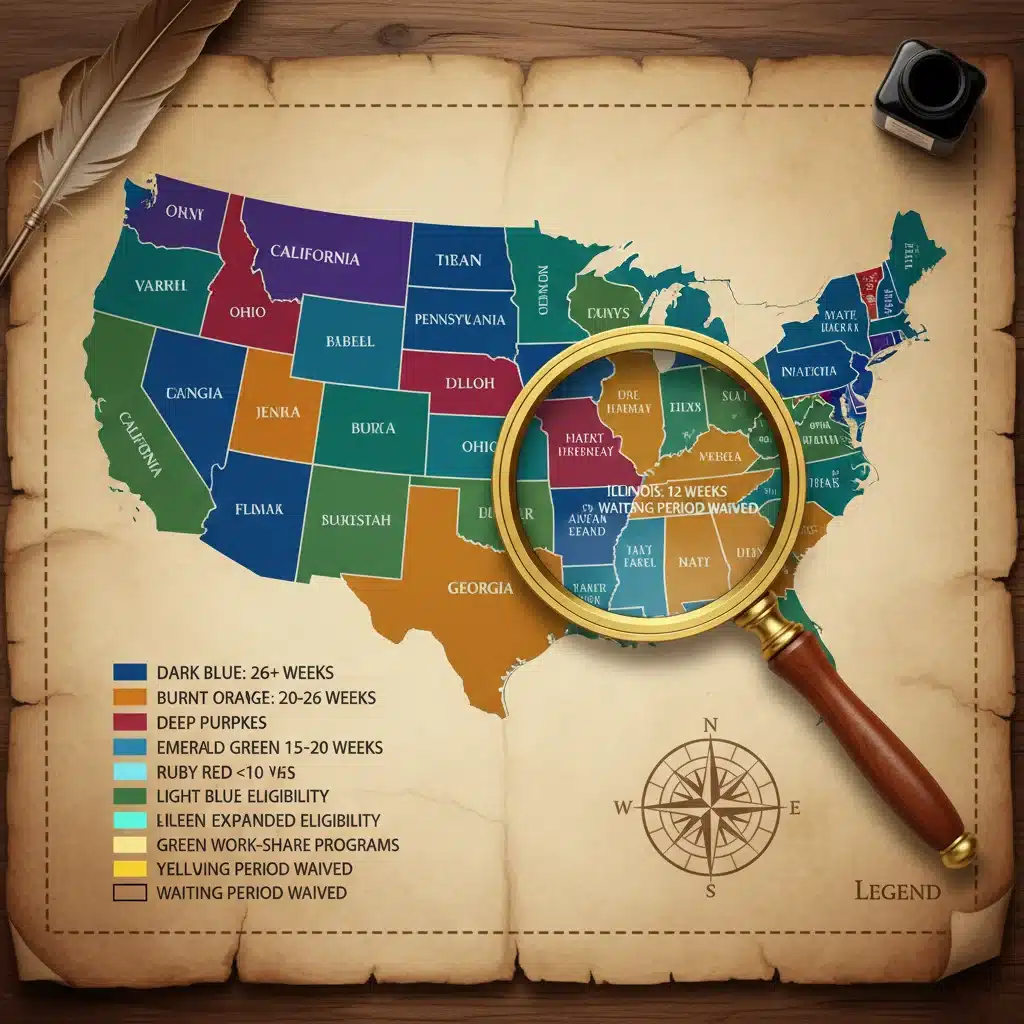
Beyond work search, eligibility criteria can also evolve. While the core tenets of being unemployed through no fault of your own and having sufficient past earnings are unlikely to change drastically, states might refine definitions of ‘suitable work’ or ‘availability for work.’ For instance, there could be more stringent rules around refusing suitable job offers or stricter definitions of what constitutes self-employment while receiving benefits.
It’s crucial for anyone considering applying for Unemployment Benefits 2026 to thoroughly review their state’s Department of Labor website for the most current work search and eligibility guidelines before filing a claim and continuously throughout their benefit period.
State-by-State Spotlight: What to Expect Across the Nation
Given the state-centric nature of unemployment benefits, a one-size-fits-all prediction for Unemployment Benefits 2026 is impossible. However, we can highlight general trends and provide examples of how different states might approach these issues.
Northeastern States (e.g., New York, Massachusetts)
Historically, many Northeastern states have offered more generous benefits and durations. For Unemployment Benefits 2026, these states may continue to focus on robust support, but could also implement technology-driven improvements for claim processing and work search verification. They might explore targeted programs for specific industries experiencing structural changes.
Southeastern States (e.g., Florida, North Carolina)
Some Southeastern states have traditionally had shorter benefit durations and stricter eligibility rules. For Unemployment Benefits 2026, expect these states to maintain a focus on rapid re-employment. There might be an emphasis on workforce development programs linked directly to unemployment benefits, ensuring claimants are quickly re-skilled for available jobs. Work search requirements could be quite rigorous.
Midwestern States (e.g., Ohio, Michigan)
The industrial heartland often sees fluctuations tied to manufacturing and automotive sectors. For Unemployment Benefits 2026, these states might prioritize programs that support workers transitioning from declining industries to growing ones. Flexibility in work search requirements for those undergoing approved training could be a feature. Trust fund solvency will likely remain a key consideration.
Western States (e.g., California, Washington)
With diverse economies ranging from tech to agriculture, Western states often face unique challenges. For Unemployment Benefits 2026, expect continued innovation in online application processes and potentially more flexible work search rules for gig workers or those in emerging industries. California, for example, often leads in implementing new protections or expanding benefit access, which could influence its approach to Unemployment Benefits 2026.
Southwestern States (e.g., Texas, Arizona)
States in the Southwest often experience rapid population growth and diverse labor markets. For Unemployment Benefits 2026, these states may focus on streamlining the application process and ensuring efficient benefit delivery. Work search requirements could be tied to local job market demands, with an emphasis on connecting claimants to available positions quickly.
It is imperative for individuals to check their specific state’s Department of Labor or Employment Security website for the most accurate and up-to-date information regarding Unemployment Benefits 2026. State laws can change annually, and these agencies will publish any modifications well in advance.
Tips for Navigating the Unemployment System in 2026
Regardless of where you live, proactively preparing for and navigating the unemployment system in 2026 can significantly improve your experience and ensure you receive the benefits you’re entitled to.
- Understand Your State’s Specific Rules: This cannot be stressed enough. Every state is different. Before you even think about applying, visit your state’s unemployment agency website. Look for sections on eligibility, claim duration, and work search requirements for Unemployment Benefits 2026.
- Gather Documentation Proactively: If you anticipate needing to file, start gathering necessary documents. This includes your Social Security number, driver’s license or state ID, employment history (employer names, addresses, phone numbers, dates of employment, reasons for separation), and wage information (pay stubs, W-2 forms).
- File Your Claim Immediately: Do not delay. Unemployment benefits are usually not retroactive to the date you became unemployed, but rather to the week you file your claim.
- Be Diligent with Work Search: Maintain a meticulous record of all your job search activities. This includes dates, employer names, contact methods, job titles, and outcomes. Many states require this documentation and may audit it. This will be a critical component of Unemployment Benefits 2026.
- Report All Earnings: Even if you pick up part-time work or freelance gigs, report all earnings accurately. Failure to do so can lead to penalties, including having to repay benefits.
- Respond Promptly to Communications: If your state unemployment agency contacts you, respond immediately. Delays can lead to interruptions or cessation of benefits.
- Utilize State Workforce Services: Most states offer free resources like resume writing assistance, interview coaching, and job placement services. These can be invaluable in your job search and help fulfill work search requirements.
- Stay Informed: Follow official state channels for updates. Economic conditions or legislative changes could impact Unemployment Benefits 2026 throughout the year.
The Role of Technology in Future Unemployment Claims
Technology has already played a transformative role in the administration of unemployment benefits, and its influence is only expected to grow for Unemployment Benefits 2026. The shift towards digital platforms offers both opportunities for efficiency and challenges related to access and equity.
- Online Portals: Most states now offer comprehensive online portals for filing claims, certifying weekly benefits, and managing accounts. These are likely to become even more sophisticated, offering personalized dashboards and automated reminders.
- AI and Chatbots: Expect to see increased use of artificial intelligence (AI) and chatbots to answer common questions, guide claimants through the application process, and provide immediate support, freeing up human agents for more complex issues.
- Data Analytics: States will likely leverage advanced data analytics to identify potential fraud, streamline processes, and even predict future unemployment trends, allowing for more proactive policy adjustments.
- Digital Identity Verification: Enhanced digital identity verification methods will become more common to prevent fraud and ensure that benefits go to legitimate claimants.
- Virtual Job Fairs and Training: The pandemic accelerated the adoption of virtual job fairs and online training programs. These are likely to remain integral components of work search and re-employment strategies for Unemployment Benefits 2026.

While technology can make the process more efficient, it also presents challenges. Ensuring equitable access for individuals without reliable internet access or digital literacy will be a continuing concern. States will need to balance technological advancements with maintaining accessible human support channels.
Advocacy and Future Reforms in Unemployment Benefits
The discussion around Unemployment Benefits 2026 is not just about current policies but also about ongoing advocacy for future reforms. Various organizations, labor unions, and policy think tanks continually propose changes to the UI system to make it more responsive, equitable, and effective.
Key areas of reform advocacy often include:
- Modernizing Trust Funds: Proposals to ensure state UI trust funds are adequately funded to withstand economic downturns without requiring massive federal intervention.
- Expanding Eligibility: Calls to expand UI eligibility to cover more types of workers, such as gig workers, independent contractors, and those who leave jobs for compelling family reasons.
- Increasing Benefit Adequacy: Arguments for increasing weekly benefit amounts to better reflect the cost of living and provide more substantial support to unemployed individuals.
- Standardizing Durations: Some advocates push for more standardized benefit durations across states, reducing the disparity in support based on geography.
- Rethinking Work Search: Debates continue on how to make work search requirements more effective and less burdensome, focusing on quality job search activities over mere quantity.
These discussions will undoubtedly shape the legislative landscape leading up to and during Unemployment Benefits 2026. Individuals and advocacy groups will continue to play a vital role in influencing these reforms, striving for a UI system that is robust, fair, and adaptable to future economic challenges.
Conclusion
Navigating Unemployment Benefits 2026 will require vigilance, adaptability, and a clear understanding of state-specific regulations. While the core purpose of unemployment insurance—to provide temporary financial relief to those out of work through no fault of their own—will remain, the details surrounding claim durations, eligibility criteria, and work search requirements are subject to continuous evolution at the state level.
By staying informed through official state Department of Labor websites, diligently adhering to all requirements, and leveraging available resources, individuals can effectively navigate the unemployment system. The ongoing integration of technology promises more efficient processes, while continued advocacy aims to refine and strengthen the UI safety net for all Americans. As we move closer to Unemployment Benefits 2026, proactive engagement and accurate information will be your most valuable assets.