Unemployment Benefits 2026: State-by-State Maximum Payouts
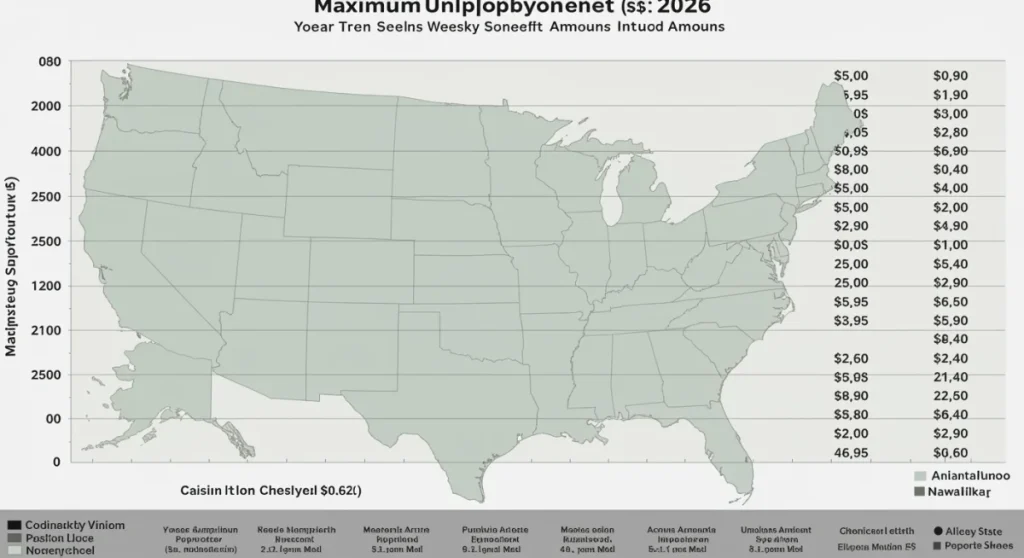
In 2026, maximum weekly unemployment benefits vary significantly across U.S. states, with eligibility and duration largely determined by individual state laws and prior earnings.
Navigating the complexities of unemployment benefits can be challenging, especially when considering the significant differences that exist from one state to another. This article delves into a crucial topic for many American workers: State-by-State Unemployment Benefits: A 2026 Comparison of Maximum Weekly Payouts. Understanding these variations is essential for anyone facing potential job loss or simply seeking to be informed about the safety nets available. We will explore how different states structure their support, what factors influence the maximum weekly payouts, and what you can expect in the coming year.
Understanding the basics of unemployment insurance
Unemployment insurance (UI) is a joint state and federal program designed to provide temporary financial assistance to eligible workers who are unemployed through no fault of their own. While the federal government sets broad guidelines, each state administers its own UI program, leading to substantial differences in benefit amounts, eligibility requirements, and duration of benefits. These state-specific rules are crucial for anyone seeking to understand their potential support.
The primary goal of UI is to offer a safety net, allowing individuals to cover basic living expenses while they actively search for new employment. It helps stabilize local economies during downturns by maintaining consumer spending power. The funding for these benefits typically comes from taxes paid by employers, not from the employees themselves.
Eligibility criteria across states
To qualify for unemployment benefits, applicants must generally meet specific criteria, which can vary widely by state. These often include:
- Having sufficient past earnings during a specified “base period.”
- Being unemployed through no fault of your own (e.g., laid off, not fired for misconduct).
- Being able, available, and actively seeking work.
- Registering with the state’s workforce agency.
Each state defines these terms differently, impacting who qualifies and for how much. For example, some states may have higher minimum earnings requirements in the base period than others, creating a barrier for those with lower-paying jobs or intermittent work histories.
Understanding the fundamental structure of unemployment insurance is the first step in appreciating the nuances of state-by-state variations. While the federal framework provides the backbone, the specific details that truly matter to an individual are found in their state’s particular regulations.
Factors influencing maximum weekly payouts in 2026
The maximum weekly unemployment benefit an individual can receive in 2026 is not a uniform figure across the United States. Several factors contribute to these significant variations, making it imperative to understand the underlying mechanisms that determine these amounts. These factors primarily revolve around state economic conditions, legislative priorities, and the cost of living.
Each state periodically reviews and adjusts its maximum benefit levels, often in response to economic indicators or legislative changes. These adjustments aim to keep benefits relevant to the current economic climate and the needs of unemployed workers, though the effectiveness of these adjustments can be debated.
State economic health and legislative priorities
A state’s economic health plays a substantial role in determining its maximum weekly payout. States with stronger economies and higher average wages tend to offer higher maximum benefits, reflecting the higher earning potential of their workforce. Conversely, states with lower average wages or more volatile economies might set lower maximums to manage their UI trust funds more conservatively.
- Wage indexation: Many states tie maximum benefits to a percentage of the state’s average weekly wage.
- Budgetary constraints: State legislatures must balance benefit levels with the solvency of their unemployment insurance trust fund.
- Political climate: Legislative priorities can shift, leading to increases or decreases in benefit levels based on current political agendas.
Beyond economic health, legislative priorities are critical. Some states prioritize maintaining a robust safety net, while others focus on minimizing employer contributions, which can lead to lower maximum benefits. These legislative decisions are often influenced by lobbying efforts from both business and labor groups.
The interplay of these factors creates a dynamic landscape where maximum weekly unemployment benefits are constantly subject to review and potential change. For 2026, these influences continue to shape the financial support available to unemployed individuals across the nation.
A 2026 projection: high and low benefit states
As we look towards 2026, projections indicate a continued disparity in maximum weekly unemployment benefits across states. While precise figures can fluctuate with legislative updates and economic shifts, historical trends and current state policies provide a strong basis for anticipating which states will offer the highest and lowest payouts. This section aims to provide a snapshot of these anticipated extremes.
Understanding these potential high and low benefit states is crucial for individuals who might be considering relocation for work or those who simply want to be informed about the varying levels of support available within the U.S. economic landscape.

States with anticipated higher maximum benefits
Typically, states with higher average wages and a higher cost of living tend to have more generous maximum weekly unemployment benefits. These states often include:
- Massachusetts: Known for its robust social safety net and high average wages.
- New Jersey: Consistently ranks among states with higher maximum benefits.
- Washington: Reflects the high earning potential in its tech and aerospace industries.
- Connecticut: Another state with a higher cost of living and strong benefit structure.
These states often index their benefits to a higher percentage of the claimant’s past wages, or they simply have a higher statutory maximum dollar amount. The underlying economic strength and a legislative commitment to supporting unemployed workers contribute to these higher figures.
States with anticipated lower maximum benefits
Conversely, states with lower average wages and a lower cost of living, or those with more conservative fiscal policies, typically offer lower maximum weekly unemployment benefits. Examples often include:
- Mississippi: Generally has one of the lowest maximum benefit amounts.
- Arizona: Tends to have lower benefits and shorter duration compared to many other states.
- Florida: Known for its relatively low maximum weekly payouts.
- Louisiana: Often falls into the lower tier for unemployment benefits.
These states may have lower statutory caps or calculate benefits based on a lower percentage of prior earnings. The economic realities and policy choices in these regions create a distinct difference in the financial support provided during periods of unemployment. The 2026 landscape will likely continue to reflect these established patterns, with only minor adjustments expected.
Duration of benefits: a critical component
Beyond the maximum weekly payout, the duration of unemployment benefits is another critical component that varies significantly from state to state. While most states offer a standard duration, there are often provisions for extensions during periods of high unemployment, though these are typically federally funded or co-funded programs that can change rapidly. Understanding how long benefits can be received is just as important as knowing the weekly amount.
The standard duration for unemployment benefits in most states is 26 weeks. However, this is not a universal rule, and some states have adjusted this period based on their specific economic conditions or legislative decisions. This variability means that an individual in one state might receive benefits for a longer or shorter period than someone in an identical situation in another state.
State-specific duration policies
While 26 weeks is common, it’s not a fixed standard across all states. Some states have enacted laws that shorten the maximum duration, especially during periods of low unemployment, linking the number of weeks available to the state’s unemployment rate. This approach aims to conserve state UI trust funds when job opportunities are more abundant.
- Variable duration: Some states, like Florida, have implemented systems where the duration of benefits can fluctuate based on the state’s average unemployment rate.
- Fixed duration: Other states maintain a fixed number of weeks, regardless of current economic conditions, often defaulting to the 26-week standard.
- Extended benefits: Federal programs can trigger extended benefits during periods of severe economic downturns, adding weeks beyond the standard state limits. However, these are not permanent features of state UI laws.
The duration of benefits directly impacts an individual’s financial stability during unemployment. A shorter duration can force individuals into accepting less suitable work or facing greater financial hardship. Therefore, when comparing State-by-State Unemployment Benefits: A 2026 Comparison of Maximum Weekly Payouts, it’s crucial to also consider how long that financial lifeline will last.
The interplay of weekly payout and duration paints a complete picture of the support system available, highlighting the need for individuals to be fully aware of their state’s specific rules.
Application process and state agency resources
Applying for unemployment benefits can seem daunting, but understanding the general process and knowing where to find state-specific resources can significantly streamline the experience. While the core requirements are similar across the U.S., each state’s application portal and support services are unique. This section will guide you through the typical application journey and highlight the importance of leveraging state agency resources.
The goal of these state agencies is not only to process claims but also to assist unemployed individuals in returning to the workforce. They often provide a range of services beyond just benefits, including job search assistance, training programs, and career counseling.
Steps in applying for benefits
The application process generally involves several key steps, regardless of the state. It’s important to gather all necessary documentation before starting to ensure a smooth application:
- Gather required information: This typically includes your Social Security number, driver’s license or state ID, employment history (employer names, addresses, dates of employment, reasons for separation), and bank account information for direct deposit.
- File your claim: Most states offer online portals for filing initial claims. Some also provide phone or in-person options.
- Respond to requests: The state unemployment agency may request additional information or schedule an interview to verify your eligibility. Prompt responses are crucial.
- Certify for benefits: After approval, you will typically need to certify your eligibility weekly or bi-weekly, confirming you are able, available, and actively seeking work.
Each state’s website will have detailed instructions specific to their process. For example, some states require a waiting week before benefits begin, while others do not. Paying close attention to these state-specific nuances is vital.
Leveraging state unemployment agency resources
State unemployment agencies are more than just benefit distributors; they are comprehensive resources for job seekers. Many offer:
- Job search assistance: Databases of job openings, resume workshops, and interview coaching.
- Training programs: Opportunities to acquire new skills or certifications to improve employability.
- Career counseling: Guidance on career paths and labor market trends.
- Reemployment services: Programs specifically designed to help long-term unemployed individuals find work.
Engaging with these resources can not only help you fulfill the “actively seeking work” requirement but also significantly improve your chances of securing new employment. The support provided by state agencies is an integral part of the overall unemployment insurance system, aiming to get individuals back on their feet as quickly as possible.
Impact of federal policies on state benefits
While state laws primarily govern unemployment benefits, federal policies and legislation can significantly influence these programs, particularly during economic crises. The federal government often steps in to provide additional funding or mandates, expanding the scope and duration of benefits beyond what states typically offer. Understanding this federal layer is crucial for a complete picture of the State-by-State Unemployment Benefits: A 2026 Comparison of Maximum Weekly Payouts.
These federal interventions are usually temporary and designed to address widespread economic distress, acting as a critical supplement to state programs when state resources are strained. However, their absence during stable economic periods means states revert to their own established rules.
Federal-state extended benefits (EB)
The Federal-State Extended Benefits (EB) program is a prime example of federal influence. This program provides additional weeks of benefits during periods of high unemployment, triggered when a state’s insured unemployment rate reaches certain thresholds. The cost of EB is typically shared between the federal and state governments.
- Trigger mechanisms: EB is not always active; it is triggered by specific unemployment rate criteria within each state.
- Additional weeks: It can provide up to 13 or 20 additional weeks of benefits beyond the standard state duration.
- Federal share: The federal government typically pays 50% of the cost of EB, with states covering the remainder.
During the COVID-19 pandemic, Congress passed various relief acts that dramatically expanded unemployment benefits, introducing programs like Pandemic Unemployment Assistance (PUA) for self-employed individuals and Pandemic Emergency Unemployment Compensation (PEUC) for additional weeks of benefits. While these specific programs have ended, they highlight the federal government’s capacity to significantly alter the unemployment landscape.
For 2026, assuming a stable economic environment, it is less likely that extensive federal emergency programs will be in place. This means state-specific rules and maximum payouts will be the primary determinants of eligibility and benefit amounts. However, the potential for future federal intervention always remains, especially in unforeseen economic circumstances.
Planning for unemployment: financial preparedness
Given the significant variations in State-by-State Unemployment Benefits: A 2026 Comparison of Maximum Weekly Payouts, proactive financial planning is essential. Relying solely on unemployment benefits can be insufficient for many households, making personal financial preparedness a critical component of economic resilience. This planning involves creating an emergency fund, understanding personal expenses, and exploring supplementary income options.
Even in states with higher maximum benefits, these payouts are often significantly less than an individual’s regular wages, typically replacing only a portion of lost income. Therefore, having a personal financial buffer is paramount to navigate periods of joblessness without severe hardship.
Building a robust emergency fund
The cornerstone of financial preparedness for unemployment is a well-funded emergency savings account. This fund should ideally cover several months of essential living expenses, providing a cushion that unemployment benefits alone cannot.
- Target amount: Aim for 3-6 months of living expenses, or more if your job security is volatile.
- Accessible savings: Keep this fund in a separate, easily accessible savings account.
- Prioritize contributions: Make regular contributions to your emergency fund a priority, even small amounts add up over time.
An emergency fund allows you to cover necessities like housing, food, and utilities without immediately dipping into retirement savings or incurring high-interest debt.
Budgeting and exploring supplementary income
Understanding your monthly expenses is the next step. Create a detailed budget to identify essential costs versus discretionary spending. During unemployment, you will likely need to adjust your budget significantly.
- Track expenses: Know where your money goes to make informed cuts if necessary.
- Cut discretionary spending: Identify areas where you can reduce costs immediately, such as dining out, entertainment, or subscriptions.
- Explore temporary work: Consider part-time, freelance, or gig economy opportunities to supplement unemployment benefits.
Even small amounts of supplementary income can make a big difference in extending the life of your savings and reducing financial stress. Planning for unemployment means taking control of your financial future rather than being solely dependent on external support systems. The variations in 2026 benefits only underscore the importance of this personal responsibility.
| Key Point | Brief Description |
|---|---|
| State Variation | Maximum weekly unemployment benefits differ significantly by state due to local laws and economic conditions. |
| Eligibility Factors | Eligibility depends on prior earnings, reason for job separation, and active job search requirements, all state-specific. |
| Benefit Duration | Standard duration is often 26 weeks, but some states offer shorter or variable periods based on unemployment rates. |
| Federal Influence | Federal policies can expand benefits during crises, but state laws primarily govern during stable economic times. |
Frequently asked questions about unemployment benefits in 2026
The typical maximum weekly benefit varies widely, from around $200-$300 in lower-paying states to over $800-$1,000 in higher-paying states. These figures are subject to state legislative changes and economic conditions in 2026.
Eligibility typically depends on your past wages during a ‘base period,’ being unemployed through no fault of your own, and actively seeking new employment. Specific earnings thresholds and reasons for separation are state-dependent.
Standard benefit duration is often 26 weeks, but some states have variable durations. Federal-State Extended Benefits (EB) can provide additional weeks during periods of high unemployment, triggered by specific state economic conditions.
You’ll generally need your Social Security number, driver’s license, employment history (employer names, addresses, dates, reasons for separation), and bank information for direct deposit. Specific requirements may vary by state.
As of now, no widespread federal emergency unemployment programs are anticipated for 2026, assuming stable economic conditions. Federal intervention typically occurs during severe economic downturns to supplement state benefits.
Conclusion
The landscape of State-by-State Unemployment Benefits: A 2026 Comparison of Maximum Weekly Payouts clearly demonstrates a mosaic of regulations and financial support levels across the United States. While the core objective of unemployment insurance remains constant—providing a temporary safety net—the execution varies dramatically by state, influenced by economic health, legislative decisions, and cost of living. Understanding these differences is not merely an academic exercise; it’s a vital step for individuals to adequately prepare for potential job loss and to effectively navigate the resources available to them. Proactive financial planning, coupled with a clear understanding of state-specific eligibility and benefit structures, empowers individuals to build greater economic resilience in an ever-changing job market.
Author