Treasury Bonds: 10-Year Yields Above 4.0% – Investment Guide 2026

Optimizing Your Investment Portfolio with Treasury Bonds: A Guide to 10-Year Yields Above 4.0% in 2026
In the dynamic world of finance, investors are constantly seeking avenues to optimize their portfolios, balancing risk and reward. As we look towards 2026, the prospect of 10-year Treasury Bond yields potentially rising above 4.0% presents a compelling opportunity for both conservative and growth-oriented investors. This comprehensive guide delves into the intricacies of Treasury Bond Investment, offering insights into why these instruments might become a cornerstone of your financial strategy in the coming years. Understanding the nuances of these government-backed securities is crucial for making informed decisions that can significantly impact your long-term financial health.
The global economic landscape is continually evolving, influenced by inflation, central bank policies, geopolitical events, and market sentiment. These factors collectively shape the trajectory of interest rates and, consequently, bond yields. For investors, monitoring these trends is not merely an academic exercise; it’s a practical necessity for identifying profitable opportunities and mitigating potential risks. The anticipation of 10-year Treasury yields exceeding 4.0% in 2026 is based on a confluence of economic forecasts and historical patterns, signaling a potentially lucrative period for fixed-income investments.
This article aims to demystify Treasury Bonds, explaining their role, benefits, and how they can be strategically integrated into a diversified investment portfolio. We will explore the factors driving these yield predictions, discuss the various types of Treasury securities, and provide actionable advice on how to approach Treasury Bond Investment in the current and projected economic climate. Whether you are a seasoned investor or new to the world of bonds, this guide will equip you with the knowledge needed to navigate the fixed-income market effectively and capitalize on the opportunities that 2026 may bring.
What Are Treasury Bonds? A Foundation for Your Portfolio
Treasury Bonds, often referred to as T-Bonds, are long-term debt securities issued by the U.S. Department of the Treasury to finance government spending. They are considered one of the safest investments globally because they are backed by the full faith and credit of the U.S. government, meaning the risk of default is virtually zero. T-Bonds typically have maturities ranging from 10 to 30 years, paying interest every six months until maturity, at which point the principal amount is returned to the investor.
The Role of Treasury Bonds in a Diversified Portfolio
For decades, Treasury Bonds have been a staple in diversified investment portfolios due to their stability and perceived safety. They serve several critical functions:
- Capital Preservation: As a low-risk asset, T-Bonds help protect an investor’s principal, especially during periods of market volatility when other asset classes like stocks may experience significant declines.
- Income Generation: The semi-annual interest payments provide a steady stream of income, making them attractive to retirees or those seeking consistent cash flow.
- Diversification: T-Bonds often exhibit a low or even negative correlation with stocks, meaning they tend to perform well when stocks perform poorly. This inverse relationship helps to reduce overall portfolio risk and volatility.
- Liquidity: The market for Treasury securities is highly liquid, allowing investors to buy or sell their bonds relatively easily before maturity if needed.
Understanding these fundamental aspects is the first step in appreciating the value of Treasury Bond Investment as a strategic component of your financial planning. As we anticipate higher yields, their role in providing both stability and attractive returns becomes even more pronounced.
Understanding Yields: Why 4.0%+ on 10-Year Treasuries Matters
The yield on a bond represents the total return an investor receives from the bond over its life. For a 10-year Treasury Bond, a yield above 4.0% signifies a significant return, especially when compared to historical averages or other low-risk investment options. But what drives these yields, and why is this particular threshold important for investors?
Factors Influencing Treasury Yields
Several macroeconomic factors play a crucial role in determining Treasury yields:
- Inflation Expectations: When investors anticipate higher inflation, they demand higher yields to compensate for the erosion of purchasing power over time. If inflation is expected to remain elevated, bond yields will likely follow suit.
- Federal Reserve Policy: The Federal Reserve’s monetary policy, particularly its decisions on the federal funds rate, has a direct impact on bond yields. When the Fed raises rates, it generally pushes up yields across the board. Conversely, rate cuts tend to lower yields.
- Economic Growth: A strong economy can lead to higher demand for credit, which can put upward pressure on interest rates and bond yields. However, strong growth can also lead to increased equity valuations, potentially drawing capital away from bonds.
- Supply and Demand: Like any other market, the bond market is influenced by supply and demand. Increased government borrowing (higher supply of bonds) without a corresponding increase in demand can lead to higher yields.
- Global Economic Conditions: International capital flows and global economic stability can also affect U.S. Treasury yields, as foreign investors seek safe havens or higher returns.
The forecast for 10-year Treasury yields to exceed 4.0% by 2026 is often predicated on expectations of persistent inflation, continued economic growth, and potentially further tightening by the Federal Reserve. For investors, this translates into an opportunity to lock in attractive returns for a relatively safe asset, enhancing the appeal of Treasury Bond Investment.
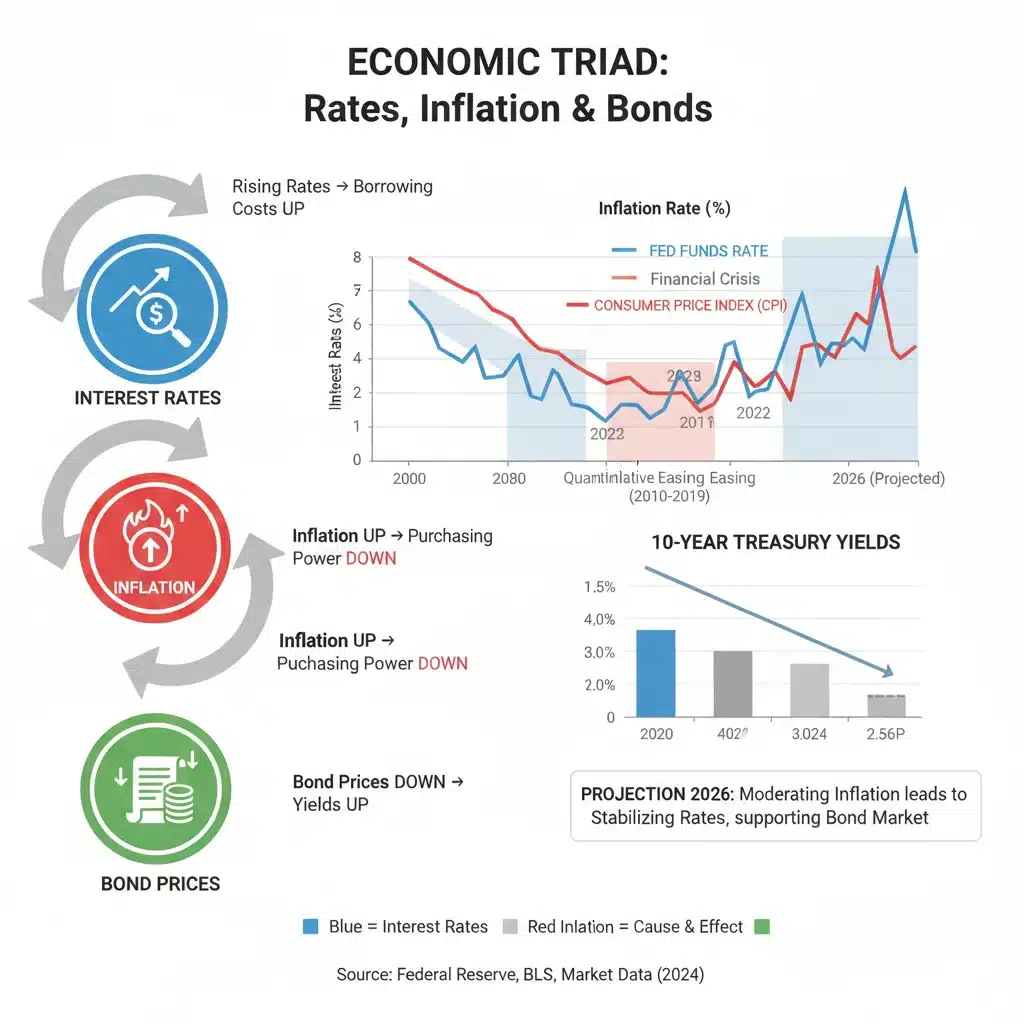
The Significance of the 4.0% Threshold
A 4.0% yield on a 10-year Treasury Bond is significant for several reasons. Historically, such yields have often been associated with periods of moderate economic growth and controlled inflation. For many investors, especially those focused on income, this level of return from a virtually risk-free asset is highly attractive. It provides a benchmark against which other investments are often measured. Furthermore, for pension funds, insurance companies, and other institutional investors with long-term liabilities, securing such yields can greatly assist in meeting their financial obligations.
This threshold can also influence broader market dynamics. Higher Treasury yields can make equities less attractive, as investors might shift capital from riskier stocks to safer bonds offering competitive returns. This phenomenon, often referred to as the ‘bond-equity seesaw,’ is a critical consideration for portfolio managers when evaluating Treasury Bond Investment strategies.
Types of Treasury Securities: Beyond the 10-Year Bond
While this guide focuses on 10-year Treasury Bonds, it’s important to understand the broader landscape of Treasury securities. The U.S. Treasury offers a variety of debt instruments, each with different maturities and characteristics, catering to diverse investor needs.
- Treasury Bills (T-Bills): Short-term securities with maturities ranging from a few days to 52 weeks. They are sold at a discount from their face value and do not pay interest; instead, the return comes from the difference between the purchase price and the face value received at maturity.
- Treasury Notes (T-Notes): Intermediate-term securities with maturities of 2, 3, 5, 7, and 10 years. They pay interest every six months, similar to T-Bonds. The 10-year Treasury Note is a key benchmark for interest rates globally.
- Treasury Bonds (T-Bonds): Long-term securities with maturities of 20 or 30 years. They also pay interest semi-annually and are often sought by investors looking for long-duration income streams.
- Treasury Inflation-Protected Securities (TIPS): These are special types of Treasury securities designed to protect investors from inflation. The principal value of a TIPS adjusts with changes in the Consumer Price Index (CPI), and the interest payments are then calculated on the adjusted principal.
- Floating Rate Notes (FRNs): These securities have a variable interest rate that adjusts periodically based on a benchmark rate, such as the highest accepted discount rate in the most recent 13-week T-bill auction.
For investors considering Treasury Bond Investment, understanding these different options allows for a more tailored approach to portfolio construction, matching specific financial goals and risk tolerances with the appropriate Treasury instrument. While 10-year T-Bonds are a strong focus due to their liquidity and benchmark status, other Treasury securities can also play vital roles in a well-rounded portfolio.
Strategic Approaches to Treasury Bond Investment in 2026
Given the projection of 10-year Treasury yields above 4.0% in 2026, investors have several strategic considerations to optimize their Treasury Bond Investment. These strategies can help maximize returns while managing the inherent risks associated with fixed-income investments.
Laddering Strategy
A bond ladder involves investing in bonds with staggered maturities. For example, an investor might buy T-Bonds that mature in 2, 4, 6, 8, and 10 years. As each bond matures, the proceeds can be reinvested into a new 10-year bond. This strategy offers several benefits:
- Interest Rate Risk Mitigation: It reduces the impact of interest rate fluctuations. If rates rise, the maturing bonds can be reinvested at higher yields. If rates fall, the longer-term bonds in the ladder continue to provide their original higher yield.
- Consistent Income: Provides a steady stream of income as bonds mature at regular intervals.
- Liquidity: Offers periodic access to capital as bonds mature, without having to sell bonds prematurely.
Barbell Strategy
The barbell strategy involves investing in both short-term and long-term bonds, while avoiding intermediate-term bonds. For instance, an investor might allocate a significant portion to T-Bills (short-term) and another significant portion to 20- or 30-year T-Bonds (long-term). This approach aims to capture the liquidity of short-term bonds and the higher yields of long-term bonds.
- Flexibility: The short-term component provides liquidity and allows for quick adjustments to interest rate changes.
- Higher Returns: The long-term component offers potentially higher yields, especially if rates are expected to decline after an initial rise.
Bullet Strategy
A bullet strategy involves investing in bonds that all mature around the same target date. This is particularly useful for investors with a specific future liability, such as a child’s college tuition or a retirement date. By purchasing bonds that mature when the funds are needed, investors can ensure capital availability without reinvestment risk.
Each of these strategies offers a unique way to approach Treasury Bond Investment, allowing investors to tailor their approach to their specific financial goals, risk tolerance, and market outlook. The projected higher yields in 2026 make these strategies even more appealing for locking in favorable returns.
Risks and Considerations in Treasury Bond Investment
While Treasury Bonds are considered among the safest investments, they are not entirely without risk. Understanding these risks is crucial for any investor contemplating Treasury Bond Investment.
Interest Rate Risk
This is the primary risk associated with bonds. When interest rates rise, the market value of existing bonds with lower fixed interest rates falls. This is because new bonds issued at higher rates become more attractive, making older, lower-yielding bonds less desirable to potential buyers. Conversely, if interest rates fall, the market value of existing bonds increases.
For investors holding bonds to maturity, interest rate fluctuations are less of a concern, as they will still receive their principal and coupon payments. However, for those who might need to sell their bonds before maturity, rising rates can lead to capital losses.
Inflation Risk
Although Treasury Bonds offer a fixed income stream, inflation can erode the purchasing power of those future payments. If inflation rises unexpectedly, the real return (adjusted for inflation) on a bond can be lower than anticipated. This is where instruments like Treasury Inflation-Protected Securities (TIPS) can offer a hedge against inflation risk.
Reinvestment Risk
This risk arises when interest rates fall, and an investor has to reinvest coupon payments or the principal from a maturing bond at a lower rate. While the prospect of higher yields in 2026 might mitigate this for newly purchased bonds, it’s a factor to consider for any long-term bond strategy.
Liquidity Risk (Minimal for Treasuries)
While the U.S. Treasury market is highly liquid, in extreme market conditions, there could be temporary disruptions. However, compared to corporate bonds or other less liquid assets, Treasury securities generally pose minimal liquidity risk.
By being aware of these risks, investors can make more informed decisions and implement strategies, such as laddering, to mitigate their impact, ensuring that their Treasury Bond Investment aligns with their overall financial goals and risk tolerance.
Integrating Treasury Bonds into Your 2026 Portfolio
The strategic integration of Treasury Bonds, especially with projected yields above 4.0%, can significantly enhance the resilience and performance of your investment portfolio. The key lies in understanding how these bonds interact with other asset classes and aligning them with your personal financial objectives.
Balancing Risk and Return
A well-diversified portfolio aims to balance risk and return across various asset classes. Treasury Bonds serve as a crucial component for risk reduction, providing a stable foundation that can cushion against volatility in more aggressive investments like stocks. When 10-year Treasury yields are attractive, they offer a compelling alternative or complement to equities, especially for investors nearing or in retirement who prioritize income and capital preservation.

Consider your investment horizon, risk tolerance, and income needs. Younger investors with a longer time horizon might allocate a smaller portion to bonds, focusing more on growth assets. However, even for these investors, a strategic allocation to bonds can provide stability during market downturns, preventing impulsive and potentially detrimental decisions. Older investors, or those with a shorter time horizon, may opt for a larger allocation to Treasury Bond Investment to secure income and preserve capital.
The Role of Financial Advisors
Navigating the complexities of the bond market and tailoring a portfolio to your specific needs can be challenging. A qualified financial advisor can provide invaluable guidance, helping you:
- Assess your risk profile: Determine your comfort level with risk and design a bond allocation that suits you.
- Develop a personalized strategy: Implement strategies like laddering or barbell to optimize your bond holdings.
- Monitor market conditions: Stay informed about interest rate changes, inflation trends, and other factors affecting bond yields.
- Integrate bonds with other assets: Ensure your Treasury Bond Investment complements your stock, real estate, and other holdings for optimal diversification.
Professional advice can be particularly beneficial when considering the timing of bond purchases, especially in a fluctuating interest rate environment. They can help you capitalize on the opportunities presented by projected higher yields in 2026 while mitigating potential downsides.
The Economic Outlook for 2026 and Beyond
The prediction of 10-year Treasury yields above 4.0% in 2026 is rooted in various economic forecasts and expectations. Understanding the broader economic outlook is crucial for appreciating the context of this Treasury Bond Investment opportunity.
Inflationary Pressures
Many economists anticipate that inflationary pressures, while potentially moderating from recent peaks, will remain somewhat elevated compared to pre-pandemic levels. Factors such as supply chain adjustments, geopolitical tensions, and structural shifts in labor markets could contribute to persistent inflation. To combat this, central banks may need to maintain a tighter monetary policy stance, keeping interest rates, and consequently bond yields, higher.
Federal Reserve’s Stance
The Federal Reserve’s commitment to achieving its inflation target will be a primary driver of interest rate policy. If inflation proves sticky, the Fed may need to keep the federal funds rate higher for longer, which would directly impact short-term Treasury yields and indirectly influence long-term yields. The market’s anticipation of the Fed’s future actions plays a significant role in shaping current bond prices and yields.
Economic Growth Trajectory
The pace of economic growth will also be a critical factor. A robust economy typically implies higher demand for capital, which can push up interest rates. However, if growth slows significantly, it could lead to a ‘flight to safety’ into Treasuries, potentially putting downward pressure on yields. The balance between growth and inflation will largely dictate the path of bond yields.
For investors, closely monitoring these macroeconomic indicators and central bank communications is essential. These insights will help in making timely and informed decisions regarding Treasury Bond Investment, ensuring that your portfolio is positioned to benefit from the prevailing economic conditions in 2026 and beyond.
How to Buy Treasury Bonds
Investing in Treasury Bonds is a straightforward process, accessible to both individual and institutional investors. There are primarily two ways to purchase these securities:
1. Directly from the U.S. Treasury (TreasuryDirect)
TreasuryDirect is an online platform managed by the U.S. Department of the Treasury that allows individuals to buy Treasury securities directly without paying commissions or fees. This is an excellent option for long-term investors who plan to hold their bonds to maturity.
- Account Setup: You’ll need to create an account on the TreasuryDirect website, which requires personal information and banking details.
- Purchase Process: You can purchase T-Bills, T-Notes, T-Bonds, and TIPS directly. You can set up recurring purchases or buy individual securities as they are auctioned.
- Benefits: No fees, convenient, and direct ownership.
- Limitations: Limited secondary market trading capabilities; primarily for buy-and-hold investors.
2. Through a Brokerage Firm
Most major brokerage firms offer access to the primary and secondary markets for Treasury securities. This option is suitable for investors who prefer to manage all their investments in one place, or who may wish to trade bonds before maturity.
- Brokerage Account: You’ll need an investment account with a reputable brokerage firm.
- Purchase Process: You can buy newly issued Treasuries at auction or purchase existing bonds in the secondary market. Brokerage firms often provide research tools and professional guidance.
- Benefits: Access to a wider range of securities, including those in the secondary market, and integrated portfolio management.
- Limitations: May involve commissions or fees, though many firms offer commission-free bond trading.
Regardless of the method chosen, understanding the mechanics of purchasing Treasury Bonds is a vital step in executing your Treasury Bond Investment strategy. With 10-year yields potentially above 4.0% in 2026, now is an opportune time to explore these avenues.
Conclusion: Seizing the Treasury Bond Opportunity in 2026
The anticipation of 10-year Treasury Bond yields surpassing 4.0% in 2026 presents a significant and potentially transformative opportunity for investors. These government-backed securities, renowned for their safety and stability, could offer attractive returns in an economic environment characterized by persistent inflation and evolving monetary policies. By understanding the fundamentals of Treasury Bonds, the factors influencing their yields, and the various strategic approaches to investment, you can position your portfolio for enhanced performance and resilience.
Whether you are looking to preserve capital, generate a steady income stream, or diversify your holdings against market volatility, Treasury Bond Investment can play a crucial role. While risks such as interest rate and inflation risk exist, they can be effectively managed through informed decision-making and strategic planning, potentially with the guidance of a financial advisor. The ability to lock in yields above 4.0% on a virtually risk-free asset is a compelling proposition that merits serious consideration for any forward-looking investment strategy.
As we move towards 2026, staying informed about macroeconomic developments, central bank actions, and market sentiment will be paramount. The landscape of fixed-income investments is dynamic, but with a clear understanding of Treasury Bonds and a well-thought-out investment plan, you can confidently navigate these waters and capitalize on the opportunities that lie ahead. Embrace the potential of higher Treasury yields to fortify and optimize your investment portfolio for the future.