
The Impact of Current Inflation on Your Investment Portfolio: Strategies to Protect 15% of Your Savings in 2026
In an ever-evolving global economy, understanding and adapting to macroeconomic shifts is paramount for safeguarding your financial future. One of the most pervasive and challenging phenomena currently impacting global markets is inflation. This article delves deep into the multifaceted impact of current inflation on your investment portfolio and, more importantly, outlines actionable, strategic approaches to protect investments inflation, aiming to secure at least 15% of your savings by 2026. The goal is not just to weather the storm but to emerge stronger, with a resilient and inflation-resistant portfolio.
Inflation, at its core, represents a general increase in prices and a fall in the purchasing value of money. While a moderate level of inflation is often seen as a sign of a healthy, growing economy, persistent and high inflation can significantly erode the value of your savings and investment returns. The current inflationary environment, fueled by a confluence of factors including supply chain disruptions, geopolitical tensions, unprecedented fiscal and monetary stimuli, and shifting consumer demand patterns, presents unique challenges for investors worldwide. Understanding these underlying drivers is the first step towards developing effective mitigation strategies.
For many years, investors have benefited from relatively low inflation and interest rates, creating an environment conducive to growth in various asset classes. However, the paradigm has shifted. Today, the purchasing power of every dollar you hold or invest is under constant threat. This erosion of value affects everything from your cash savings to your fixed-income investments and even the real returns on your equity holdings. Therefore, it is no longer sufficient to merely seek returns; one must actively seek real returns – returns that outpace inflation – to truly grow wealth.
Understanding the Current Inflationary Landscape and Its Effects
The current wave of inflation is not a monolithic phenomenon; it has diverse roots and manifests differently across various sectors. Energy prices, food costs, housing, and services have all seen significant increases. This broad-based inflation means that the cost of living is rising, directly impacting household budgets and, by extension, consumer spending patterns, which are a major driver of economic growth. From an investment perspective, this translates into several key challenges.
Firstly, traditional safe-haven assets like cash become less attractive. Holding large sums in a savings account offering minimal interest rates means that your money is effectively losing value in real terms. Secondly, fixed-income investments, such as bonds, are particularly vulnerable. When inflation rises, the fixed payments from these instruments become less valuable over time, and if interest rates rise in response to inflation, existing bonds with lower coupon rates see their market value decline. Thirdly, even equities, while historically offering some protection against inflation through pricing power, can suffer if inflation becomes too high, leading to reduced corporate profits, higher borrowing costs, and dampened consumer demand.
Moreover, the psychological impact of inflation cannot be underestimated. Uncertainty about future prices can lead to hesitant consumer spending and business investment, potentially slowing economic activity. For investors, this uncertainty can lead to increased market volatility, making it even more crucial to have a well-thought-out strategy to protect investments inflation.
The current economic climate demands a proactive approach. Waiting for inflation to subside without taking action is akin to watching your wealth slowly diminish. The strategies we will explore are designed to be robust, adaptable, and focused on preserving and growing your capital in real terms, ensuring you are well-positioned for 2026 and beyond.
Strategic Pillars to Protect Investments Inflation by 2026
To effectively combat the erosive effects of inflation, a multi-pronged approach is essential. Our goal is to outline practical strategies that can help you protect a significant portion, specifically 15%, of your savings by 2026. This isn’t just about mitigating losses; it’s about strategic positioning for growth.
Diversification: Your First Line of Defense
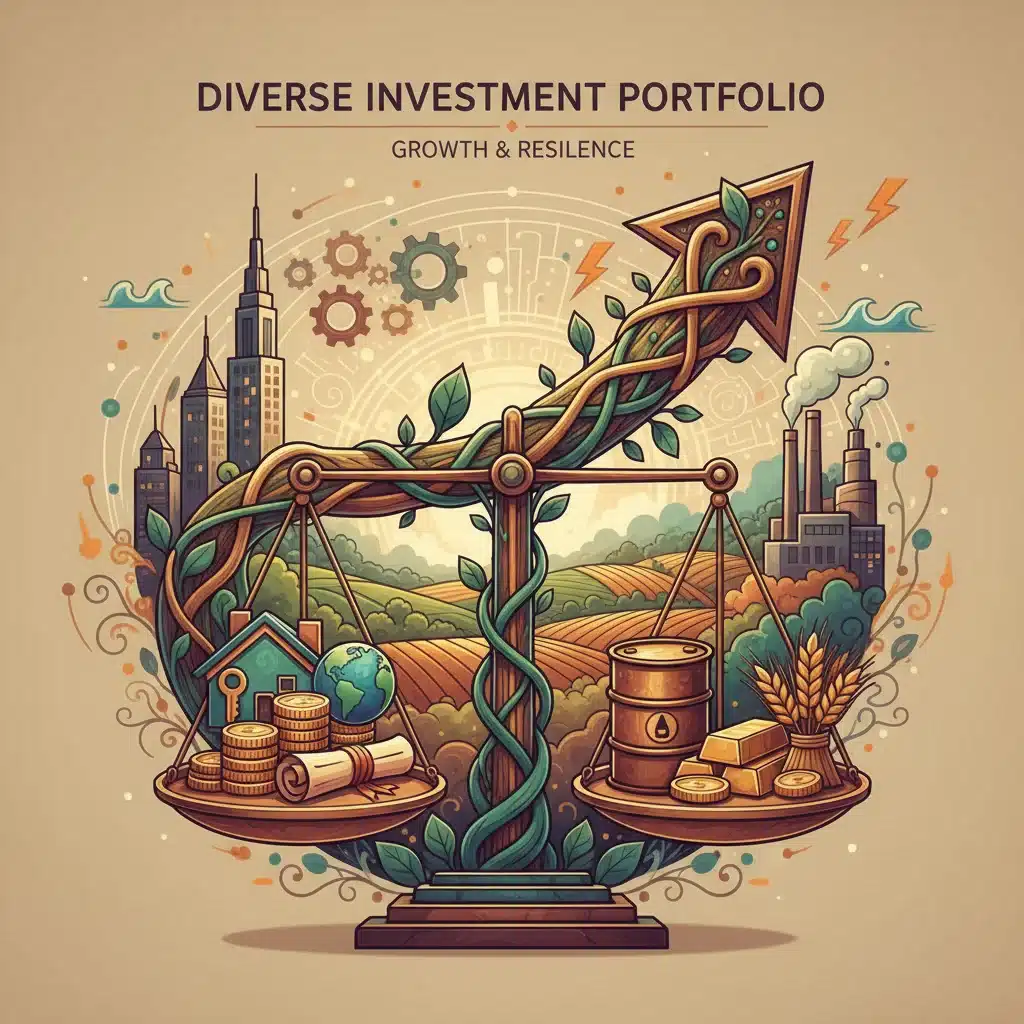
Diversification remains the cornerstone of any robust investment strategy, and its importance is amplified during inflationary periods. A well-diversified portfolio spreads risk across various asset classes, industries, and geographies, reducing the impact of poor performance in any single area. To effectively protect investments inflation, consider diversifying into assets that have historically performed well during inflationary times.
- Real Assets: These include real estate, commodities (gold, silver, oil, agricultural products), and infrastructure. Real assets tend to retain or even increase their value as the cost of living rises because their underlying value is tied to tangible goods that become more expensive. Investing in real estate investment trusts (REITs), commodity ETFs, or even direct ownership of property can be effective.
- Inflation-Protected Securities (TIPS): Treasury Inflation-Protected Securities (TIPS) are U.S. Treasury bonds that are indexed to inflation. Their principal value adjusts with the Consumer Price Index (CPI), providing a direct hedge against inflation. While their returns might not be spectacular, they guarantee that your principal will keep pace with inflation.
- Equities with Pricing Power: Not all stocks are created equal in an inflationary environment. Focus on companies that have strong pricing power – the ability to raise their prices without significantly impacting demand. These are typically established companies with strong brand loyalty, essential products or services, and low competition. Examples often include consumer staples, healthcare, and certain technology sectors.
- Global Diversification: Inflationary pressures can vary significantly from one country to another. Investing in international markets can provide an additional layer of diversification, especially if some economies are experiencing lower inflation or different economic cycles.
Evaluating and Adjusting Your Fixed-Income Holdings
As mentioned, fixed-income investments are particularly vulnerable to inflation. If a significant portion of your portfolio is in traditional bonds, it’s time for a critical review. While completely abandoning fixed income might not be advisable due to its role in portfolio stability, strategic adjustments are crucial.
- Short-Duration Bonds: Consider shifting towards shorter-duration bonds. These bonds are less sensitive to interest rate changes, which often accompany efforts to control inflation. When rates rise, shorter-duration bonds reprice faster, allowing you to reinvest at higher yields sooner.
- Floating-Rate Securities: These instruments have interest payments that adjust periodically based on a benchmark rate, such as the prime rate or LIBOR. As interest rates rise with inflation, the income generated by these securities also increases, providing a natural hedge.
- High-Yield Bonds (with caution): While higher-yielding bonds might seem attractive, they also carry higher credit risk. Approach these with caution and ensure they align with your overall risk tolerance. The spread over Treasury bonds can sometimes offer additional protection if managed carefully.
Reassessing Your Equity Portfolio for Resilience
Your equity holdings need to be scrutinized through an inflation lens. Companies that can pass on increased costs to consumers are better positioned to maintain profit margins. This is key to ensuring your equity investments continue to generate real returns.
- Value Stocks vs. Growth Stocks: In an inflationary environment, value stocks – companies trading at a lower price relative to their fundamentals – often outperform growth stocks. Growth stocks, whose valuations often rely heavily on future earnings, can be negatively impacted by higher discount rates (due to rising interest rates) and increased cost of capital.
- Sector-Specific Opportunities: Beyond broad categories, look at specific sectors. Energy companies, for example, often benefit from rising commodity prices. Utility companies, while regulated, can sometimes pass on increased costs. Financial institutions can benefit from higher interest rate margins, though this is not always a direct correlation to inflation.
- Dividend-Paying Stocks: Companies that consistently pay and grow their dividends can provide a stream of income that helps offset the erosion of purchasing power. Focus on companies with strong balance sheets and a history of dividend increases.
Advanced Strategies for Inflation Protection
Beyond the fundamental adjustments, several advanced strategies can further fortify your portfolio against inflation and help you protect investments inflation.
Considering Alternative Investments
Alternative investments, which include private equity, hedge funds, venture capital, and even collectibles, can offer diversification and potentially higher returns that are less correlated with traditional markets. However, they often come with higher risks, illiquidity, and higher fees, making them suitable for sophisticated investors or those with a higher risk tolerance.
- Private Equity: Investing in private companies can offer exposure to sectors and growth opportunities not available in public markets. These investments are less susceptible to daily market fluctuations and can potentially generate significant returns that outpace inflation.
- Hedge Funds: Certain hedge fund strategies, such as global macro or long/short equity, can be designed to perform well in various market conditions, including inflationary ones. Their flexibility allows them to take advantage of market dislocations.
- Real Estate Crowdfunding: For those who cannot directly invest in physical real estate, crowdfunding platforms offer a way to gain exposure to real estate projects with smaller capital commitments.
Leveraging Inflation-Indexed Annuities and Bonds
For individuals approaching retirement or those seeking guaranteed income streams, inflation-indexed annuities can be a valuable tool. These annuities provide payments that adjust with inflation, ensuring your purchasing power is maintained throughout your retirement years. Similarly, beyond TIPS, some corporate bonds or municipal bonds may offer inflation-linked features, though they are less common.
The Role of Gold and Precious Metals
Gold has historically been considered a safe-haven asset and a hedge against inflation. When the value of fiat currency erodes, investors often flock to gold, driving up its price. While gold does not generate income, it can serve as a store of value and a portfolio diversifier. However, its price can be volatile, and it’s essential to consider it as part of a broader diversification strategy rather than a sole solution to protect investments inflation.
Debt Management in an Inflationary Environment
While often overlooked in investment discussions, managing your debt effectively is a crucial component of protecting your overall financial health during inflation. Fixed-rate debt, such as a traditional mortgage, can become less burdensome over time as inflation erodes the real value of future payments. Conversely, variable-rate debt can become more expensive as interest rates rise in response to inflation. Prioritizing the repayment of high-interest, variable-rate debt can free up cash flow and reduce financial vulnerability.
Implementing Your Strategy: A Roadmap to 2026
Developing a strategy is one thing; effectively implementing it is another. Here’s a roadmap to guide your actions between now and 2026, focusing on how to protect investments inflation and achieve your 15% savings protection goal.
Step 1: Assess Your Current Portfolio and Risk Tolerance
Begin by conducting a thorough review of your existing investment portfolio. Understand your current asset allocation, identify areas of overexposure to inflation-vulnerable assets, and assess your personal risk tolerance. Are you comfortable with more volatile assets like commodities or certain equities, or do you prefer a more conservative approach? This self-assessment is critical for tailoring the right strategy.
Step 2: Set Clear, Measurable Goals
While the overall goal is to protect 15% of your savings, break this down into smaller, measurable objectives. For example, you might aim to reallocate a certain percentage of your fixed-income portfolio into TIPS or real assets each quarter. Specific goals make the process manageable and trackable.
Step 3: Gradual Rebalancing and Reallocation
Avoid drastic, sudden changes to your portfolio. Instead, implement a gradual rebalancing and reallocation strategy. This approach helps mitigate market timing risks and allows you to adapt as economic conditions evolve. For instance, instead of selling all your growth stocks at once, gradually trim positions and reallocate proceeds to value stocks or real assets over several months.
Step 4: Continuous Monitoring and Adjustment
The economic landscape is dynamic. Inflationary pressures can ebb and flow, and new factors can emerge. Therefore, continuous monitoring of your portfolio’s performance against inflation, as well as broader economic indicators, is essential. Be prepared to make adjustments to your strategy as needed. Regular reviews, perhaps quarterly or semi-annually, will ensure your portfolio remains aligned with your goals and the prevailing economic reality.
Step 5: Seek Professional Guidance
Navigating an inflationary environment can be complex. If you feel overwhelmed or unsure about the best course of action, consider consulting with a qualified financial advisor. A professional can provide personalized advice, help you analyze your portfolio, and develop a tailored strategy to protect investments inflation that aligns with your specific financial situation and goals.
The Long-Term Outlook: Beyond 2026
While our immediate focus is on protecting your investments by 2026, it’s crucial to adopt a long-term perspective. Inflation is a recurring economic phenomenon, and the lessons learned today will serve you well in future cycles. Building a portfolio that is inherently resilient to inflationary pressures involves cultivating a mindset of continuous learning, adaptation, and strategic foresight.
The strategies discussed – diversification, strategic asset allocation, and careful consideration of inflation-hedging assets – are not merely short-term fixes but foundational principles for long-term wealth preservation and growth. By embedding these principles into your investment philosophy, you can create a portfolio that not only withstands inflationary pressures but also capitalizes on opportunities that arise during periods of economic change.
Furthermore, consider the role of human capital. Investing in your skills, education, and career development can enhance your earning potential, providing another layer of defense against rising costs. A higher income stream offers greater flexibility to save and invest, further strengthening your financial position.

Conclusion: A Proactive Stance for Financial Security
The current inflationary environment presents significant challenges for investors, threatening to erode the purchasing power of hard-earned savings and investment returns. However, by adopting a proactive, strategic approach, it is entirely possible to protect investments inflation and safeguard a substantial portion of your wealth. Our target of protecting 15% of your savings by 2026 is ambitious yet achievable with diligent planning and execution.
Remember, the key lies in understanding inflation’s mechanisms, diversifying your portfolio across inflation-resilient assets, making judicious adjustments to your fixed-income and equity holdings, and exploring alternative investment opportunities where appropriate. Continuous monitoring, flexibility, and a willingness to seek expert advice will be your strongest allies in this journey.
By implementing these strategies, you are not just reacting to economic pressures; you are actively shaping your financial future, building a portfolio that is robust, adaptable, and capable of thriving even in challenging economic climates. Take control of your investments today, and position yourself for greater financial security and growth in the years leading up to and beyond 2026.