

The Future of Online Learning: 3 Key Trends Shaping US Higher Education by 2026
The educational landscape is undergoing a profound transformation, with online learning emerging as a dominant force. As we approach 2026, several critical trends are set to redefine how US higher education institutions deliver knowledge and how students acquire skills. This article explores three pivotal shifts that will shape the online learning future: personalized learning paths, AI-powered education, and the proliferation of micro-credentials.
Introduction: The Evolving Landscape of Higher Education
The past decade has witnessed an unprecedented acceleration in the adoption and sophistication of online learning. What was once a niche offering has become a cornerstone of higher education, driven by technological advancements, global connectivity, and a growing demand for flexible and accessible education. The COVID-19 pandemic further solidified online learning’s position, forcing institutions to innovate rapidly and demonstrating its scalability and resilience. However, the evolution is far from over. By 2026, we anticipate a more refined, technologically integrated, and student-centric approach to online education. Understanding these upcoming trends is crucial for institutions, educators, and students alike to prepare for the online learning future.
Traditional models of higher education are being challenged by the need for lifelong learning, rapid skill development, and diverse educational pathways. The rigid, one-size-fits-all approach is giving way to more adaptable and individualized experiences. This shift is not merely about digitizing existing courses; it’s about fundamentally rethinking pedagogy, assessment, and credentialing in a digital-first world. The focus is increasingly on outcomes, employability, and empowering learners to navigate complex career landscapes. This article will delve into the three most significant trends poised to reshape the online learning future in the US.
Trend 1: Hyper-Personalized Learning Paths and Adaptive Education
One of the most transformative trends for the online learning future is the move towards hyper-personalized learning paths. Gone are the days when every student followed an identical curriculum at the same pace. Modern educational technology, fueled by data analytics and machine learning, is enabling highly individualized learning experiences that cater to each student’s unique needs, preferences, and learning styles.
What is Hyper-Personalized Learning?
Hyper-personalized learning goes beyond simple adaptive quizzes. It involves dynamic curriculum adjustment, tailored content delivery, and customized feedback loops based on a student’s real-time performance, prior knowledge, career goals, and even emotional state. Learning platforms will leverage sophisticated algorithms to:
- Assess Strengths and Weaknesses: Continuously evaluate a student’s proficiency in various topics to identify areas requiring more attention or those where they can accelerate.
- Recommend Resources: Suggest specific articles, videos, simulations, or interactive exercises that are most relevant to a student’s learning gaps or interests.
- Adjust Pacing: Allow students to move through material at their optimal speed, providing additional support for struggling learners and advanced challenges for those who grasp concepts quickly.
- Tailor Learning Objectives: Align course content more closely with individual career aspirations, even within a broader degree program.
- Provide Adaptive Feedback: Deliver immediate, constructive feedback that is specific to a student’s errors and guides them towards correct understanding, rather than generic responses.
Impact on Students and Educators
For students, hyper-personalized learning means a more engaging, efficient, and effective educational journey. They are less likely to feel overwhelmed or bored, and more likely to stay motivated as they see the direct relevance of their studies to their personal and professional goals. This approach supports diverse learners, including those with disabilities, non-traditional students, and those balancing education with work or family commitments. The flexibility inherent in personalized paths is a cornerstone of the online learning future.
For educators, this trend shifts their role from content deliverers to facilitators, mentors, and instructional designers. They will focus more on guiding students, interpreting data from learning analytics, and designing rich, adaptable learning environments. While technology handles much of the personalization, the human element remains crucial for fostering critical thinking, creativity, and socio-emotional development. Institutions will need to invest in robust learning management systems (LMS) and professional development for faculty to fully harness the power of personalized education in the online learning future.
Challenges and Opportunities
Implementing hyper-personalized learning at scale presents challenges, including data privacy concerns, the need for sophisticated technological infrastructure, and the potential for increased development costs. However, the opportunities are immense: higher student retention rates, improved learning outcomes, and the ability to serve a broader and more diverse student population. The success of this trend will depend on careful ethical considerations and a commitment to equitable access to advanced learning technologies.
Trend 2: AI-Powered Education and Intelligent Tutoring Systems
Artificial Intelligence (AI) is not just a buzzword; it’s rapidly becoming an indispensable tool in shaping the online learning future. By 2026, AI will be deeply embedded in various aspects of online education, from administrative tasks to direct instructional support, creating more intelligent and responsive learning environments.
AI’s Role in Enhancing Online Learning
AI’s capabilities extend across several domains within online education:
- Intelligent Tutoring Systems (ITS): These systems use AI to mimic human tutors, providing one-on-one instruction, answering questions, offering hints, and adapting explanations based on a student’s understanding. They can identify misconceptions in real-time and provide targeted interventions.
- Automated Assessment and Feedback: AI can grade assignments, essays, and coding projects with remarkable accuracy and provide detailed feedback, freeing up educators’ time for more complex pedagogical tasks. Natural Language Processing (NLP) allows AI to understand and evaluate open-ended responses.
- Content Curation and Generation: AI algorithms can sift through vast amounts of information to curate relevant learning resources. Furthermore, generative AI can assist in creating new learning materials, practice problems, and even entire modules, significantly accelerating course development.
- Predictive Analytics: AI can analyze student data to identify those at risk of falling behind, allowing institutions to intervene proactively with support services. This predictive capability is vital for improving student success and retention in the online learning future.
- Virtual Assistants and Chatbots: AI-powered chatbots can handle routine student inquiries about course logistics, deadlines, or technical support, providing instant assistance 24/7.

Ethical Considerations and Human Oversight
While the potential of AI in education is immense, ethical considerations are paramount. Bias in AI algorithms, data privacy, and the potential for over-reliance on technology must be carefully managed. Human oversight remains critical. AI should augment, not replace, human educators, allowing them to focus on higher-order teaching functions like fostering critical thinking, creativity, and empathy. The balance between AI efficiency and human connection will define successful AI integration in the online learning future.
Preparing for an AI-Integrated Future
Institutions must invest in AI literacy for both faculty and students. Educators need to understand how to leverage AI tools effectively, while students need to learn to collaborate with AI and critically evaluate AI-generated content. Developing clear guidelines for AI use, ensuring transparency in algorithms, and prioritizing student well-being will be key to unlocking the full potential of AI in shaping the online learning future responsibly.
Trend 3: The Rise of Micro-Credentials and Stackable Qualifications
The traditional four-year degree, while still valuable, is increasingly being complemented and, in some cases, challenged by alternative credentialing models. Micro-credentials and stackable qualifications are emerging as a significant trend that will redefine the online learning future, offering flexibility, relevance, and immediate applicability in the workforce.
What are Micro-Credentials?
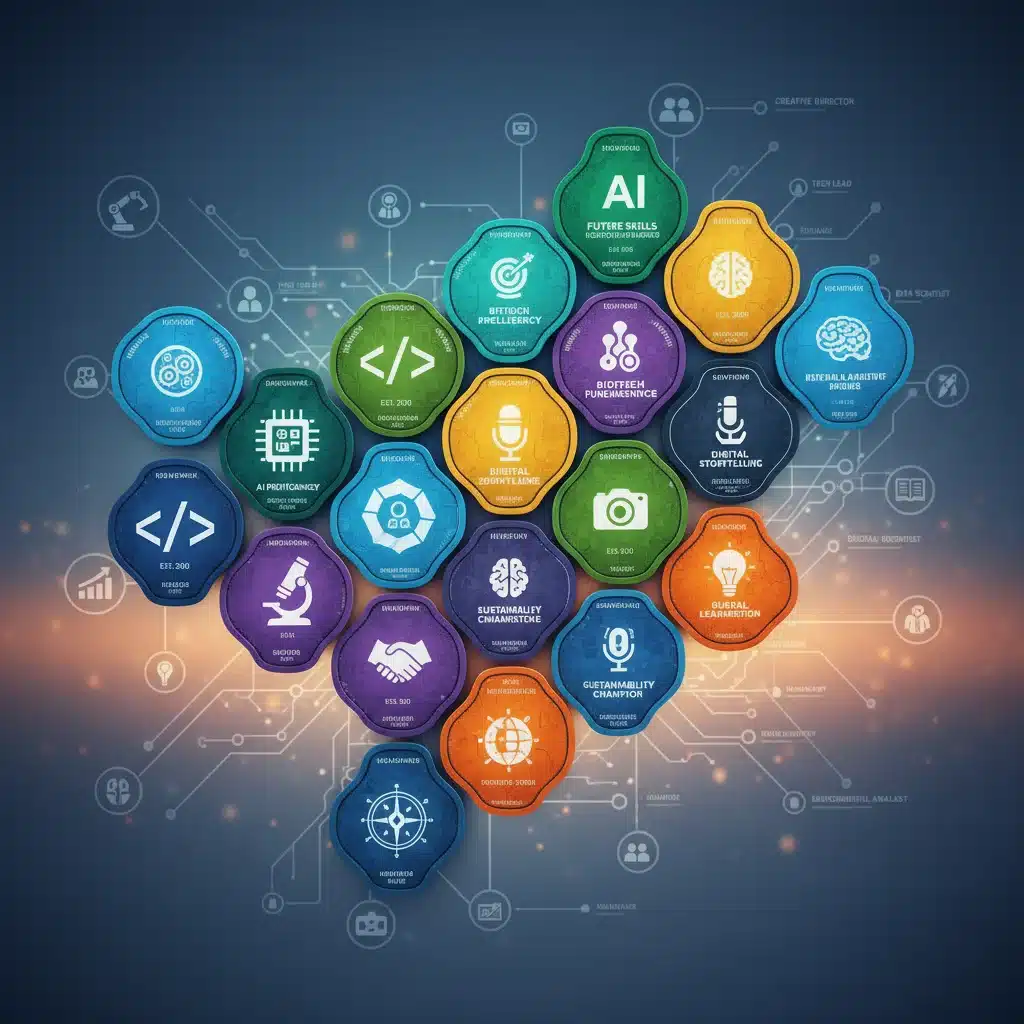
Micro-credentials are certifications that validate specific skills, competencies, or knowledge acquired through short, focused learning experiences. Unlike traditional degrees, which are broad and time-intensive, micro-credentials are:
- Targeted: Focused on a very specific skill or knowledge area (e.g., Python programming for data analysis, digital marketing analytics, project management fundamentals).
- Flexible: Often delivered online, allowing learners to acquire skills on their own schedule and at their own pace.
- Employer-Relevant: Designed in collaboration with industry partners to ensure the skills taught are directly applicable to current workforce needs.
- Verifiable: Typically issued as digital badges or certificates that can be easily shared and verified by employers.
The Concept of Stackable Qualifications
Stackable qualifications take the idea of micro-credentials a step further. They are a series of smaller credentials that, when combined, can build towards a larger qualification, such as a certificate, an associate’s degree, or even a bachelor’s degree. This modular approach provides several benefits:
- Career Agility: Allows individuals to upskill or reskill quickly in response to changing job market demands without committing to a full degree program.
- Lower Barrier to Entry: Students can earn valuable, employment-ready credentials in shorter periods, making education more accessible and affordable.
- Pathways to Higher Education: Provides clear pathways for learners to progressively build their qualifications, offering off-ramps and on-ramps into education as needed.
- Demonstrates Competence: Employers can easily identify candidates with specific, verified skills, making hiring more efficient.
Implications for US Higher Education
For US higher education institutions, the rise of micro-credentials and stackable qualifications presents both a challenge and an opportunity. Institutions that embrace this trend will:
- Expand Their Reach: Attract a new demographic of learners seeking targeted skill development.
- Enhance Employability: Better align their offerings with industry needs, improving graduate outcomes.
- Innovate Curriculum: Develop more modular and flexible course structures.
- Form New Partnerships: Collaborate with industry to co-create relevant credentials.
The online learning future will see a blend of traditional degrees and these agile, skill-based credentials, offering a more diverse and adaptable educational ecosystem. This shift requires institutions to rethink their accreditation processes, credit transfer policies, and overall value proposition.
Cross-Cutting Themes: Accessibility, Equity, and Global Reach
Beyond the three primary trends, several overarching themes will continue to be crucial in shaping the online learning future. Accessibility and equity are paramount. As technology advances, it’s vital to ensure that these innovations do not exacerbate existing educational disparities. Institutions must actively work to bridge the digital divide, provide assistive technologies, and design online experiences that are inclusive of all learners, regardless of their socio-economic background, location, or physical abilities.
The global reach of online learning is also expanding. US higher education institutions are increasingly serving an international student body online, and this trend is expected to grow. This brings opportunities for cultural exchange and diverse perspectives but also necessitates careful consideration of international regulations, language barriers, and cultural relevance in curriculum design. The online learning future is inherently global, demanding a more interconnected and culturally sensitive approach to education.
Furthermore, the focus on lifelong learning will intensify. The rapid pace of technological change and economic shifts means that individuals will need to continuously update their skills throughout their careers. Online learning, with its inherent flexibility and modularity, is perfectly positioned to meet this demand, offering accessible pathways for continuous professional development and personal growth. This ongoing need for learning reinforces the importance of the trends discussed, particularly micro-credentials and personalized learning paths, which enable agile skill acquisition.
Challenges and Opportunities for Institutions
Navigating the online learning future presents both significant challenges and unparalleled opportunities for US higher education institutions. On the challenge front, institutions must contend with the rapid pace of technological change, requiring continuous investment in infrastructure, software, and faculty development. Ensuring data security and privacy in an increasingly data-rich environment is another critical concern. Moreover, the competitive landscape is intensifying, with traditional universities, ed-tech companies, and even corporate learning platforms vying for learners.
However, the opportunities are equally compelling. Institutions that strategically embrace these trends can enhance their relevance, expand their reach, and improve student outcomes. By adopting personalized learning, they can cater to a broader range of student needs, leading to higher retention and completion rates. Integrating AI can streamline administrative tasks, provide superior student support, and free up faculty to focus on high-impact teaching. The adoption of micro-credentials allows institutions to tap into new markets, serve the needs of working professionals, and forge stronger connections with industry partners. The ability to innovate and adapt will be the hallmark of successful institutions in the evolving online learning future.
Collaboration will also be key. Partnerships between universities, technology providers, and industry leaders can accelerate innovation and ensure that educational offerings remain aligned with workforce demands. Shared resources and expertise can help overcome the financial and technical hurdles associated with implementing advanced online learning solutions. Furthermore, fostering a culture of continuous improvement and experimentation within institutions will be vital for staying ahead of the curve.
Conclusion: Preparing for a Dynamic Online Learning Future
The online learning future in US higher education is poised for remarkable transformation by 2026. Personalized learning paths, AI-powered education, and the rise of micro-credentials are not isolated phenomena but interconnected forces that will collectively reshape the educational experience. These trends promise a more flexible, efficient, and relevant approach to acquiring knowledge and skills, catering to the diverse needs of a modern workforce and student body.
Institutions that proactively engage with these trends, investing in technology, rethinking pedagogical approaches, and prioritizing student success, will be best positioned to thrive. The emphasis will be on creating adaptive, engaging, and outcome-oriented learning environments that prepare students not just for their first job, but for a lifetime of learning and career evolution. The journey ahead will demand innovation, collaboration, and a steadfast commitment to leveraging technology for the betterment of education. The online learning future is bright, dynamic, and full of potential for those ready to embrace its evolution.