
Understanding Federal Student Loan Refinancing Options: A 2026 Guide to Potentially Reducing Your Interest Rate by 1.5%
In the ever-evolving landscape of personal finance, managing student loan debt remains a paramount concern for millions of Americans. As we look towards 2026, the prospect of reducing your financial burden through federal loan refinancing becomes an increasingly appealing option. This comprehensive guide will delve into the intricacies of federal loan refinancing, exploring how it works, its potential benefits, and crucial considerations for those aiming to save money and simplify their repayment.
The allure of a lower interest rate is powerful. Imagine cutting your current interest rate by 1.5% – this seemingly small percentage can translate into thousands of dollars in savings over the life of your loan, freeing up valuable funds for other financial goals, or simply improving your monthly cash flow. However, navigating the world of student loan refinancing, especially for federal loans, requires a clear understanding of the nuances involved. Unlike federal consolidation, which combines multiple federal loans into one with a weighted average interest rate, refinancing typically involves replacing your existing federal loans with a new private loan, often at a lower interest rate. This distinction is critical, as it comes with both significant advantages and potential drawbacks.
Our goal with this guide is to equip you with the knowledge needed to make an informed decision about federal loan refinancing in 2026. We’ll cover everything from eligibility requirements and the application process to the trade-offs you might face. By the end, you’ll have a clearer picture of whether refinancing your federal student loans is the right move for your financial future.
What is Federal Loan Refinancing? Dispelling the Myths
Before we dive into the potential savings, let’s clarify what federal loan refinancing actually entails. It’s a common misconception that federal student loans can be ‘refinanced’ within the federal system to achieve a lower interest rate directly. In reality, when people talk about refinancing federal student loans, they are almost always referring to refinancing them with a private lender. This means a private bank or financial institution pays off your existing federal student loans, and you then owe the new loan to that private lender, under their terms and conditions.
This is distinct from federal loan consolidation. Federal direct loan consolidation allows you to combine multiple federal student loans into a single new Direct Consolidation Loan. The interest rate for a Direct Consolidation Loan is the weighted average of your original loans’ interest rates, rounded up to the nearest one-eighth of a percentage point. While this simplifies repayment by giving you one monthly bill and can extend your repayment period, it typically does not lower your interest rate. In fact, it might slightly increase it due to the rounding.
Key Differences: Refinancing vs. Consolidation
- Refinancing: Replaces federal loans with a new private loan. Potential for lower interest rate based on creditworthiness. Loss of federal loan benefits.
- Consolidation: Combines multiple federal loans into one new federal loan. Interest rate is a weighted average. Retains all federal loan benefits.
Understanding this fundamental difference is the first crucial step. The 1.5% interest rate reduction we refer to is primarily achievable when you move from a federal loan to a private refinanced loan, assuming you have excellent credit and a strong financial history. Private lenders assess your credit score, income, and debt-to-income ratio to determine your eligibility and the interest rate they can offer. This is where the opportunity for significant savings truly lies.
The Appeal of a Lower Interest Rate: Saving 1.5% and Beyond
A reduction of even 1.5% on your student loan interest rate can have a substantial impact on your financial well-being. Let’s consider a practical example. Imagine you have $50,000 in federal student loans with an average interest rate of 6.5%. With a 10-year repayment plan, your total interest paid would be approximately $18,400. If you manage to refinance and secure an interest rate of 5.0% (a 1.5% reduction), your total interest paid over the same 10-year period would drop to around $13,700. That’s a saving of approximately $4,700!
These savings can be even more pronounced with larger loan balances or longer repayment terms. Beyond the sheer monetary savings, a lower interest rate also means a lower monthly payment, which can free up cash for other financial priorities like saving for a down payment, investing, or simply building a stronger emergency fund. This improved cash flow can significantly reduce financial stress and provide greater flexibility in your budget.
Factors Influencing Your Refinancing Rate in 2026
Several factors will play a critical role in determining if you can secure a lower interest rate, particularly a 1.5% reduction or more, when pursuing federal loan refinancing in 2026:
- Credit Score: A strong credit score (typically 700+) is paramount. Private lenders view borrowers with excellent credit as less risky, leading to better rates.
- Income and Employment History: Lenders want to see stable employment and sufficient income to comfortably make your monthly payments.
- Debt-to-Income Ratio: A low debt-to-income ratio (DTI) indicates you have manageable debt relative to your earnings, which is favorable to lenders.
- Loan Term: Shorter loan terms often come with lower interest rates, but higher monthly payments. Longer terms might have slightly higher rates but offer lower monthly payments.
- Fixed vs. Variable Rates: You’ll have the option between a fixed rate (stays the same) or a variable rate (can change over time). Variable rates often start lower but carry more risk.
- Market Conditions: The general economic climate and prevailing interest rates set by the Federal Reserve will also influence the rates offered by private lenders in 2026.
It’s crucial to shop around and compare offers from multiple private lenders to find the most competitive rate. Each lender has its own underwriting criteria, so what one lender offers might differ significantly from another.
The Benefits of Refinancing Federal Student Loans with a Private Lender
While the potential loss of federal benefits is a serious consideration (which we’ll address shortly), the benefits of refinancing federal student loans with a private lender, especially when you can secure a significantly lower interest rate, are compelling for many borrowers.
1. Reduced Interest Costs
As highlighted, the primary benefit is the potential to save a substantial amount of money over the life of your loan. A 1.5% reduction, or even more for some, directly translates into less money paid to interest and more money kept in your pocket. This is particularly impactful for those with high loan balances.
2. Lower Monthly Payments
A lower interest rate, especially when combined with an extended loan term, can lead to a more manageable monthly payment. This can free up cash flow, making it easier to meet other financial obligations, save for future goals, or simply enjoy more discretionary income.
3. Simplified Repayment
If you have multiple federal student loans, refinancing can consolidate them into a single loan with one monthly payment. This simplifies your finances, reduces the chances of missing a payment, and makes budgeting much easier.
4. Release Co-signer
Many private lenders offer co-signer release options after a certain period of on-time payments. If your federal loans originally required a co-signer, refinancing could allow you to release them from their obligation, providing relief to both you and your co-signer.
5. Choice of Loan Terms
Private lenders often offer a wider range of repayment terms (e.g., 5, 7, 10, 15, 20 years) compared to federal options. This flexibility allows you to choose a term that best fits your financial goals, whether that’s paying off the loan quickly or minimizing monthly payments.

The Crucial Trade-Off: Losing Federal Loan Benefits
While the financial benefits of federal loan refinancing can be significant, it’s paramount to understand the trade-offs. The biggest drawback of refinancing federal student loans with a private lender is the loss of valuable federal protections and benefits. These benefits are not available with private loans, and their importance should not be underestimated, especially in uncertain economic times.
Federal Benefits You Will Forfeit:
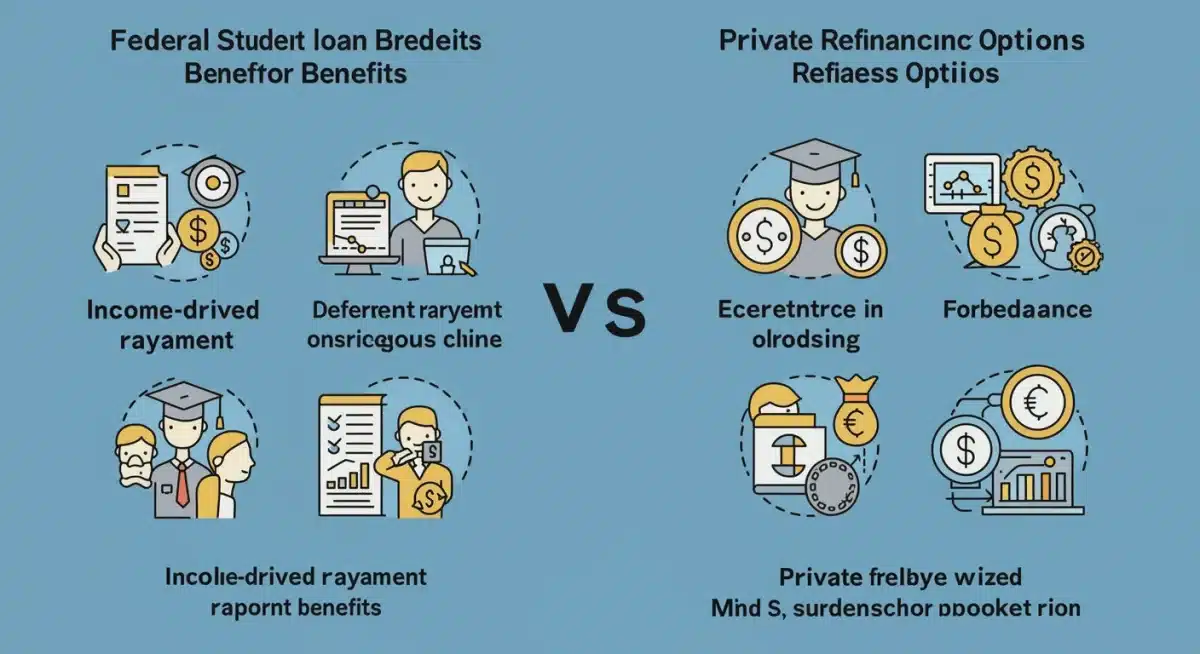
- Income-Driven Repayment (IDR) Plans: Federal loans offer several IDR plans (e.g., PAYE, REPAYE, IBR, ICR) that cap your monthly payments based on your income and family size. These plans can be a lifesaver if your income fluctuates or is low. Private loans do not offer these.
- Loan Forgiveness Programs: Public Service Loan Forgiveness (PSLF) and Teacher Loan Forgiveness are exclusive to federal student loans. If you are pursuing or might pursue a career in public service, refinancing federal loans would make you ineligible for these programs.
- Generous Deferment and Forbearance Options: Federal loans offer various deferment (postponing payments with no interest accrual on subsidized loans) and forbearance (postponing payments with interest accrual) options for situations like unemployment, economic hardship, or military service. Private lenders’ options are typically much more limited and less flexible.
- Death and Disability Discharge: Federal student loans can be discharged upon the death of the borrower or a total and permanent disability. Private loan terms for these situations vary widely and are often less comprehensive.
- Interest Subsidies: For subsidized federal loans, the government pays the interest while you’re in school, during your grace period, and during periods of deferment. This benefit is lost upon refinancing.
For some borrowers, particularly those in stable, high-income professions with good job security, the loss of these benefits might be a minor concern. However, for others, especially those whose income is unpredictable, who are pursuing PSLF, or who anticipate needing payment flexibility, retaining federal loan benefits can be more valuable than a lower interest rate.
It’s vital to weigh your personal financial situation, career trajectory, and risk tolerance against the potential savings. Consider what might happen if you lose your job or face an unexpected financial hardship. Would you be able to manage your private loan payments without the safety net of federal IDR plans or extensive deferment options?
Who Should Consider Federal Loan Refinancing in 2026?
Given the significant trade-offs, refinancing federal student loans is not for everyone. However, it can be an excellent strategy for specific borrower profiles in 2026:
Ideal Candidates for Refinancing:
- Excellent Credit Score: You have a credit score of 700 or higher (ideally 750+) and a solid credit history.
- Stable Income and Employment: You have a steady job with a reliable income that allows you to comfortably afford your current and potentially new monthly payments.
- Low Debt-to-Income Ratio: Your overall debt burden is manageable relative to your income.
- Not Pursuing PSLF or Other Loan Forgiveness: You are not working towards Public Service Loan Forgiveness or any other federal loan forgiveness program.
- Comfortable Forfeiting Federal Protections: You understand and are comfortable giving up income-driven repayment plans, generous deferment/forbearance options, and other federal benefits.
- High Interest Rates on Federal Loans: Your current federal loan interest rates are relatively high, and you can secure a significantly lower rate through private refinancing (e.g., a 1.5% reduction or more).
- Desire for Simplified Payments: You have multiple federal loans and want to consolidate them into a single monthly payment with a single lender.
Who Should Probably Avoid Refinancing Federal Loans:
- Those with poor credit or unstable income.
- Anyone pursuing PSLF or other federal loan forgiveness.
- Individuals who rely on or anticipate needing income-driven repayment plans.
- Those who foresee potential periods of unemployment or financial hardship.
- Borrowers with subsidized loans who benefit from interest subsidies during deferment.
If you’re on the fence, it’s always wise to speak with a financial advisor who specializes in student loans. They can help you analyze your specific situation and projected financial path to determine if federal loan refinancing aligns with your long-term goals.
The Process of Refinancing Federal Student Loans in 2026
If you’ve determined that federal loan refinancing is a viable option for you in 2026, here’s a general outline of the steps involved:
Step 1: Assess Your Financial Health
Before applying, get a clear picture of your credit score, income, and existing debt. Work on improving your credit score if it’s not in the ‘excellent’ range, as this will significantly impact the rates you’re offered. Ensure your income is stable and your debt-to-income ratio is favorable.
Step 2: Research and Compare Lenders
This is a critical step. Don’t just go with the first offer. Research multiple private lenders that offer student loan refinancing. Look at their advertised rates (fixed and variable), loan terms, fees (ensure there are no origination fees or prepayment penalties), co-signer release policies, and customer service reviews. Many lenders offer a pre-qualification process that allows you to see potential rates without a hard credit check, which won’t impact your credit score.
Step 3: Gather Necessary Documentation
Once you’ve narrowed down your choices, you’ll need to gather documents such as:
- Proof of income (pay stubs, tax returns).
- Loan statements for all federal student loans you wish to refinance.
- Identification (driver’s license, passport).
- Proof of graduation or enrollment.
Step 4: Submit Your Application
Complete the full application with your chosen lender. This will typically involve a hard credit inquiry, which will temporarily ding your credit score by a few points. If you’re applying with a co-signer, they will also need to provide their financial information.
Step 5: Review and Accept the Loan Offer
Carefully review the loan offer, paying close attention to the interest rate, monthly payment, total cost of the loan, and all terms and conditions. Ensure you understand any fees, repayment options, and what happens in case of hardship. If you’re satisfied, accept the offer.
Step 6: Lender Pays Off Your Old Loans
Once you accept, the private lender will disburse the funds directly to your federal loan servicers, paying off your existing federal student loans. You will then begin making payments to your new private lender.
The entire process can take a few weeks, so plan accordingly. Ensure you continue making payments on your federal loans until you receive confirmation that they have been fully paid off by the new lender to avoid any late payment penalties.
Maximizing Your Savings Post-Refinancing
Securing a lower interest rate through federal loan refinancing is a fantastic achievement, but the journey to maximize your savings doesn’t end there. Here are some strategies to get the most out of your new loan:
1. Make Extra Payments
Even with a lower interest rate, paying more than your minimum monthly payment can significantly reduce the total interest paid and shorten your repayment term. Direct any extra funds you have (bonuses, tax refunds, side hustle income) towards your principal balance. Most private loans do not have prepayment penalties.
2. Set Up Autopay
Many lenders offer a small interest rate discount (typically 0.25%) for setting up automatic payments. This not only saves you a little extra money but also ensures you never miss a payment, which is crucial for maintaining a good credit score.
3. Monitor Interest Rates
While you’ve just refinanced, the financial market is dynamic. Keep an eye on prevailing interest rates. If rates drop significantly again in the future and your credit profile has improved further, you might consider refinancing a second time to secure an even lower rate. This strategy, known as ‘refi-fi,’ can lead to even greater savings.
4. Maintain Good Financial Habits
Continue to build and maintain an excellent credit score, manage your debt responsibly, and build up your savings. A strong financial foundation provides flexibility and opens doors to better financial opportunities in the future.
2026 Outlook: What to Expect for Federal Loan Refinancing
The landscape for student loan refinancing is always subject to change, influenced by economic policies, interest rate trends set by the Federal Reserve, and legislative actions. As we project into 2026, here are some considerations:
Interest Rate Environment
The Federal Reserve’s monetary policy will heavily influence the interest rates offered by private lenders. If the Fed continues to raise rates to combat inflation, private loan rates may trend upwards. Conversely, a more stable or declining rate environment could present better opportunities for refinancing. Staying informed about economic forecasts will be key.
Lender Competition
The private student loan refinancing market is competitive, with many banks and online lenders vying for borrowers. This competition can be beneficial for consumers, as lenders often offer attractive rates and incentives to capture market share. This trend is likely to continue into 2026, so thorough shopping around remains essential.
Potential Policy Changes
While less common for already disbursed loans, federal student loan policies can evolve. However, any significant changes that would directly impact the benefits of refinancing federal loans into private ones are usually announced well in advance. It’s always wise to stay updated on any government announcements regarding student loan programs.
Economic Stability
A stable economic environment generally leads to more favorable lending conditions. If the economy is robust in 2026, lenders may be more willing to offer competitive rates to qualified borrowers. Conversely, economic downturns can lead to tighter lending standards.
For those considering federal loan refinancing in 2026, the key will be vigilance. Monitor interest rate trends, maintain an excellent credit profile, and be prepared to act when favorable conditions arise. The opportunity to reduce your interest rate by 1.5% or more is a realistic goal for many, provided they meet the criteria and are comfortable with the trade-offs.
Final Thoughts: Is Federal Loan Refinancing Right for You?
Deciding whether to refinance your federal student loans with a private lender is a significant financial decision that requires careful thought and analysis. While the prospect of reducing your interest rate by 1.5% or more and saving thousands of dollars is undeniably attractive, it comes at the cost of forfeiting valuable federal protections that could be crucial in times of financial hardship.
This 2026 guide to federal loan refinancing has aimed to provide you with a balanced perspective, detailing both the compelling benefits and the important drawbacks. There is no one-size-fits-all answer. Your personal financial situation, career stability, future income prospects, and risk tolerance should all factor into your decision.
Take the time to assess your current and projected financial health. Understand your federal loan benefits thoroughly and consider how important they are to your financial safety net. Shop around diligently, comparing offers from multiple private lenders to ensure you secure the best possible rate and terms if you decide to proceed.
Ultimately, federal loan refinancing can be a powerful tool for responsible debt management, but only when approached with a full understanding of its implications. For the right borrower, it offers a clear path to significant savings and a simplified financial future. For others, retaining federal benefits might be the more prudent choice. By carefully weighing your options, you can make the decision that best serves your long-term financial well-being in 2026 and beyond.