
Applying for college can be an overwhelming experience, and navigating the world of financial aid often adds another layer of complexity. Fortunately, significant changes are on the horizon for the Free Application for Federal Student Aid (FAFSA) in 2026. These reforms, part of the FAFSA Simplification Act, aim to make the process more user-friendly, expand eligibility for federal student aid, and provide a clearer picture of what families can expect. Understanding these FAFSA 2026 changes is crucial for any prospective student or their family planning for higher education.
The FAFSA is the gateway to billions of dollars in federal grants, scholarships, work-study funds, and low-interest loans. Historically, its lengthy and often confusing form has been a barrier for many. The upcoming FAFSA 2026 changes are designed to address these challenges head-on, promising a more streamlined and equitable system. This comprehensive guide will walk you through everything you need to know about the new simplified application process, key terminology updates, eligibility shifts, and strategies to maximize your college benefits. By the end of this article, you’ll be well-prepared to tackle the FAFSA 2026 application with confidence.
The Genesis of Change: Why FAFSA is Evolving
The FAFSA has undergone various revisions over the years, but the FAFSA Simplification Act represents one of the most substantial overhauls in decades. The primary motivations behind these FAFSA 2026 changes are multifaceted:
- Simplification: The previous FAFSA form was notorious for its length, often containing over 100 questions. This complexity led to errors, frustration, and, in some cases, deterred eligible students from applying for aid. The goal is to significantly reduce the number of questions and streamline the user experience.
- Increased Access: By simplifying the application, the Department of Education hopes to encourage more students, particularly those from underserved backgrounds, to apply for and receive federal financial aid. Many students who were eligible for aid did not apply due to the perceived difficulty of the process.
- Equity: The new methodology for calculating aid aims to be more equitable, better reflecting a family’s true ability to pay for college. This includes changes to how various income sources and family situations are considered.
- Modernization: The FAFSA process has been updated to better integrate with modern data-sharing capabilities, particularly with the IRS, to reduce the burden on applicants.
These FAFSA 2026 changes are not just cosmetic; they represent a fundamental shift in how federal student aid is calculated and delivered. Staying informed about these updates is paramount for anyone seeking financial assistance for college.
Key FAFSA 2026 Changes: What to Expect
The FAFSA 2026 application will look and feel significantly different from previous versions. Here’s a breakdown of the most impactful changes:
1. Shorter, Simpler Application Form
Perhaps the most anticipated change is the reduction in the number of questions. The FAFSA form is expected to be much shorter, making it quicker and easier to complete. This simplification is designed to reduce stress and prevent common errors that can delay aid processing. The aim is to make the FAFSA 2026 application accessible to everyone, regardless of their prior experience with financial forms.
2. New Terminology: SAI Replaces EFC
One of the most significant FAFSA 2026 changes is the replacement of the Expected Family Contribution (EFC) with the Student Aid Index (SAI). While both are indices used to determine aid eligibility, the SAI calculation methodology is different. The EFC could never be less than zero, but the SAI can be a negative number, reflecting a higher level of financial need and potentially allowing more students to qualify for maximum Pell Grant awards.
3. Direct Data Exchange with IRS
The new FAFSA 2026 application will mandate the use of the IRS Direct Data Exchange (DDX), formerly known as the IRS Data Retrieval Tool (DRT). This means that applicants (and their parents, if applicable) will be required to consent to the direct transfer of their tax information from the IRS. This streamlines the process, reduces the need for manual data entry, and minimizes errors. This is a crucial step in simplifying the FAFSA 2026 experience, ensuring accuracy and efficiency.
4. Expanded Pell Grant Eligibility
The FAFSA Simplification Act expands Pell Grant eligibility to more students and links eligibility to family size and the federal poverty level. This means more students from low-income backgrounds will qualify for Pell Grants, and some may receive the maximum award based on their SAI. This is one of the most impactful FAFSA 2026 changes for students with significant financial need.
5. Changes to Family Size Definition
The definition of "family size" (previously "household size") will now be primarily based on the number of individuals reported on the applicant’s (and parents’) federal tax return. This is a departure from the previous method, which allowed families to self-report, and could impact aid eligibility for some families. Understanding how your family size is now defined is important for the FAFSA 2026 application.
6. Treatment of Small Businesses and Family Farms
Under the old FAFSA, the net worth of small businesses and family farms with 100 or fewer employees was excluded from the asset calculation. With the FAFSA 2026 changes, this exclusion will be removed, meaning these assets will now be considered in the SAI calculation. This could affect aid eligibility for families who own such assets.
7. Impact of Multiple Children in College
One of the most significant changes for families with multiple children attending college simultaneously is the elimination of the "sibling discount." Previously, the EFC was divided among children attending college at the same time, effectively reducing the EFC per student. Under the new SAI methodology for FAFSA 2026, each student will receive an SAI based on their individual circumstances, without this division. This could mean less grant aid for families with multiple college-bound students.
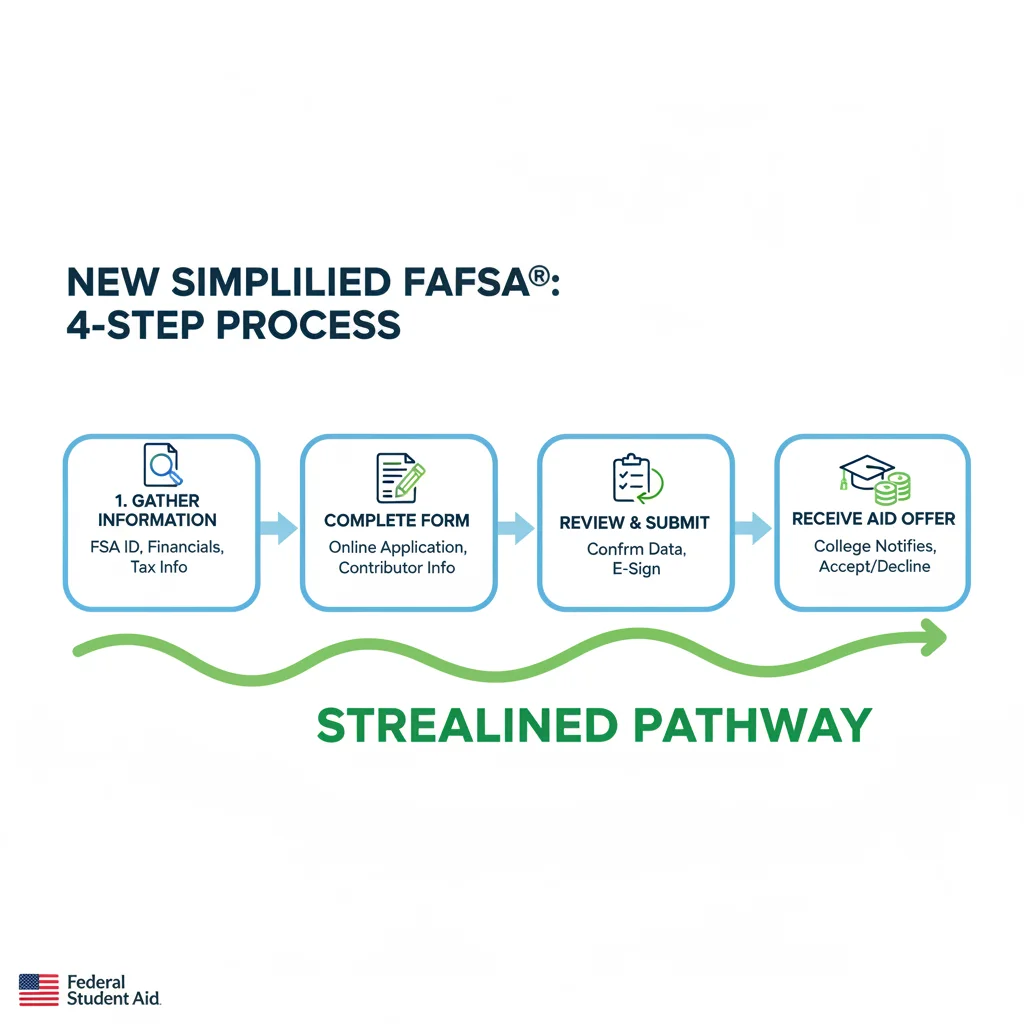
Navigating the New FAFSA 2026 Application Process
While the FAFSA 2026 application aims for simplicity, preparation is still key. Here’s a step-by-step guide to help you through the new process:
Step 1: Create an FSA ID
Both the student and at least one parent (if the student is dependent) will need an FSA ID. This is your electronic signature and allows you to access federal student aid websites. If you already have one, ensure it’s active. If not, create one well in advance of the application deadline. This is a crucial first step for the FAFSA 2026 application.
Step 2: Gather Necessary Documents
Even with the IRS DDX, you’ll still need some information on hand. This includes:
- Social Security numbers for the student and parents.
- Alien Registration number (if applicable).
- Federal income tax returns (though most data will be transferred via DDX, it’s good to have them for reference).
- Records of untaxed income (e.g., child support received, veterans’ non-education benefits).
- Information on cash, savings, checking accounts, and investments (excluding the family home).
Having these documents organized will make completing the FAFSA 2026 application much smoother.
Step 3: Complete the FAFSA Online
The FAFSA 2026 application will be available online at studentaid.gov. The new form is expected to be more intuitive, guiding you through the questions. Remember that consent to the IRS Direct Data Exchange is mandatory for both the student and all contributors (parents/spouse) to complete the FAFSA.
Step 4: Understand Your Student Aid Index (SAI)
Once your FAFSA 2026 application is processed, you’ll receive your Student Aid Index (SAI). This number is used by colleges to determine the amount of federal student aid you are eligible to receive. A lower SAI indicates greater financial need.
Step 5: Review Your Financial Aid Offers
Colleges you apply to and are accepted by will use your SAI to create a financial aid offer. This offer will detail the grants, scholarships, work-study, and loans you are eligible for. Carefully review each offer and compare them to make the best decision for your education. Understanding the FAFSA 2026 changes will help you interpret these offers more effectively.
Who is a "Contributor" in the FAFSA 2026 Context?
The FAFSA 2026 application introduces the term "contributor," which refers to anyone who is required to provide information and consent to the IRS Direct Data Exchange on the FAFSA form. This typically includes:
- The student applicant.
- The student’s biological or adoptive parents (if the student is dependent).
- The student’s spouse (if the student is married).
It’s important to note that a contributor does NOT include a grandparent, foster parent, legal guardian, or sibling, unless they have adopted the student. All contributors must have an FSA ID and provide their consent for tax data sharing, even if they didn’t file taxes or don’t have a Social Security number. Without this consent, the FAFSA 2026 application will be incomplete and federal aid cannot be processed.
Maximizing Your Aid with FAFSA 2026 Changes
While the FAFSA 2026 changes aim to simplify the process, strategic planning can still help you maximize your financial aid:
1. File Early
Many types of financial aid, particularly institutional grants and some state aid, are awarded on a first-come, first-served basis. Filing your FAFSA 2026 application as soon as it becomes available (typically October 1st for the following academic year) gives you the best chance at securing these funds.
2. Understand the SAI Calculation
Familiarize yourself with how the Student Aid Index (SAI) is calculated. While you can’t significantly alter your family’s financial situation overnight, understanding the factors that influence your SAI can help you plan. For example, parental assets (excluding the primary residence) are considered, so strategic management of these assets before applying could be beneficial.
3. Know Your Dependency Status
The FAFSA 2026 application uses specific criteria to determine if a student is dependent or independent. Independent students generally qualify for more aid because parental income and assets are not considered. Understand these criteria to accurately report your status. The dependency questions on the FAFSA 2026 remain largely unchanged.
4. Report All Income and Assets Accurately
Providing accurate information is paramount. While the IRS DDX will handle much of the income reporting, ensure all other assets and untaxed income are reported correctly. Mistakes can lead to delays or even a loss of aid. The FAFSA 2026 changes emphasize accuracy through direct data transfer.
5. Appeal if Necessary
If your family experiences significant changes in financial circumstances after filing the FAFSA (e.g., job loss, medical expenses, divorce), you can appeal your financial aid offer. Contact the financial aid office at your prospective college to discuss a "professional judgment" review. The FAFSA 2026 changes do not eliminate the appeal process.
6. Seek Additional Scholarships and Grants
Federal student aid is just one piece of the puzzle. Actively search for scholarships and grants from private organizations, community groups, and the colleges themselves. These funds do not need to be repaid and can significantly reduce your college costs. Many colleges award their own institutional aid based on the FAFSA 2026 data.

Common Misconceptions About FAFSA 2026 Changes
With such significant reforms, it’s easy for misinformation to spread. Let’s address some common misconceptions about the FAFSA 2026 changes:
Misconception 1: "My family makes too much money for financial aid."
Reality: This is one of the biggest myths. Many factors beyond income affect aid eligibility, including family size, number of children in college, and specific college costs. Even if you don’t qualify for need-based grants, you may still be eligible for federal student loans, which often have better terms than private loans. Always complete the FAFSA 2026 application, regardless of income.
Misconception 2: "The FAFSA only applies to federal aid."
Reality: While the FAFSA is the gateway to federal aid, most states and colleges also use the FAFSA data to determine eligibility for their own financial aid programs, including institutional scholarships and state grants. Completing the FAFSA 2026 is often a prerequisite for any form of financial assistance.
Misconception 3: "It’s too complicated, I’ll just skip it."
Reality: The FAFSA 2026 changes are specifically designed to make the application less complicated. With fewer questions and the IRS Direct Data Exchange, the process will be significantly streamlined. Skipping the FAFSA means potentially missing out on thousands of dollars in aid.
Misconception 4: "I don’t need to apply if I’m only interested in scholarships."
Reality: Many merit-based scholarships, even those not directly tied to financial need, still require a completed FAFSA 2026 application to assess a student’s overall financial picture or to ensure they are eligible for other forms of aid that might be packaged alongside the scholarship. Always check the scholarship requirements, but generally, completing the FAFSA is a good idea.
Misconception 5: "The FAFSA 2026 changes mean I will get more aid."
Reality: While many students, particularly those with high financial need, are expected to see an increase in Pell Grant eligibility, the impact on individual families will vary. Some families, especially those with multiple children in college or those who own small businesses/farms, might see a decrease in aid eligibility due to the new SAI calculation and the elimination of the sibling discount. It’s crucial to complete the FAFSA 2026 and review your individual aid offer.
Important Dates and Deadlines for FAFSA 2026
While the specific dates for the FAFSA 2026-2027 academic year have not yet been officially announced, the FAFSA typically opens on October 1st each year. Here are general guidelines:
- October 1st: The FAFSA usually becomes available for the upcoming academic year. This is the earliest you can submit your FAFSA 2026 application.
- State Deadlines: Many states have their own financial aid deadlines, which can be as early as October or November. Check your state’s specific deadlines.
- College Deadlines: Each college also has its own priority deadline for financial aid. Adhering to these deadlines is crucial for maximizing your aid.
- Federal Deadline: The federal deadline for submitting the FAFSA is typically June 30th of the academic year for which you are applying (e.g., June 30, 2027, for the 2026-2027 academic year). However, waiting this long means you will likely miss out on state and institutional aid.
Always prioritize the earliest deadlines – state and institutional – to ensure you are considered for all available aid. Mark your calendar for the FAFSA 2026 opening and relevant deadlines.
Preparing for the FAFSA 2026 and Beyond
The FAFSA 2026 changes represent a significant step towards a more accessible and equitable financial aid system. By understanding these reforms, preparing thoroughly, and submitting your application promptly, you can significantly improve your chances of securing the financial assistance needed to pursue your higher education goals.
Don’t let the complexities of financial aid deter you. The simplified FAFSA 2026 application is designed to empower students and families. Stay informed, utilize available resources, and remember that financial aid offices at colleges are there to help guide you through the process. Your educational journey is an investment, and federal student aid is a powerful tool to help make that investment a reality.
Continuously check the official Federal Student Aid website for the latest updates and resources regarding the FAFSA 2026 and subsequent application cycles. Being proactive and informed is your best strategy for success.