Congressional Votes: Budget Allocations for FY2025 Impact Public Services
Upcoming congressional votes on budget allocations for Fiscal Year 2025 will significantly impact the funding and delivery of public services nationwide, shaping critical areas from education to healthcare and infrastructure.
As the United States approaches a critical juncture, understanding the ramifications of Congressional Budget Votes on Fiscal Year 2025 (FY2025) is paramount. These decisions will directly influence the funding of vital public services, affecting millions of Americans from coast to coast.
The Congressional Budget Process Explained
The federal budget is more than just a financial document; it is a statement of national priorities. Each year, Congress undertakes a complex process to determine how taxpayer dollars will be spent, balancing competing demands for resources across various sectors.
This intricate dance involves numerous committees, extensive negotiations, and ultimately, a series of crucial votes that shape the nation’s fiscal landscape. For FY2025, the stakes are particularly high, given ongoing economic shifts and evolving societal needs.
Key Stages of Budget Formulation
The budget process typically unfolds in several distinct stages, each with its own set of challenges and opportunities for influence. Understanding these stages provides insight into where and how decisions are made.
- President’s Budget Request: The executive branch initiates the process by submitting a detailed budget proposal to Congress, outlining its spending and revenue priorities.
- Congressional Budget Resolution: Congress then drafts its own budget resolution, which sets overall spending limits and revenue targets for the upcoming fiscal year. This resolution is not law but acts as a blueprint.
- Appropriations Bills: Following the resolution, Congress passes specific appropriations bills that allocate discretionary funding to federal agencies and programs. There are usually 12 annual appropriations bills.
Each stage requires careful consideration and bipartisan cooperation, though political divisions often lead to delays and contentious debates. The outcome of these negotiations directly determines the resources available for public services.
In conclusion, the congressional budget process is a multi-layered system designed to allocate resources in a way that reflects national goals. Its complexity underscores the importance of public engagement and informed decision-making at every step.
Major Budgetary Challenges for FY2025
Heading into FY2025, Congress faces a confluence of significant budgetary challenges. These include persistent inflation, rising national debt, and the need to address long-term investments in areas like climate change and technological innovation.
Lawmakers must navigate these obstacles while striving to maintain fiscal responsibility and provide adequate funding for essential government functions. The decisions made now will have lasting impacts on future generations.
Inflationary Pressures and Economic Uncertainty
Current economic conditions, marked by elevated inflation, complicate budget planning. The cost of goods and services, including those purchased by government agencies, has increased, potentially reducing the purchasing power of allocated funds.
- Impact on Programs: Inflation can erode the real value of funding for social programs, making it harder for beneficiaries to afford necessities.
- Increased Operating Costs: Federal agencies face higher operational costs, potentially requiring larger budget allocations just to maintain existing service levels.
- Monetary Policy Influence: The Federal Reserve’s actions to combat inflation also influence borrowing costs for the government, adding another layer of complexity to fiscal planning.
Addressing these inflationary pressures while ensuring critical services remain funded is a delicate balancing act that will define much of the FY2025 budget debate.
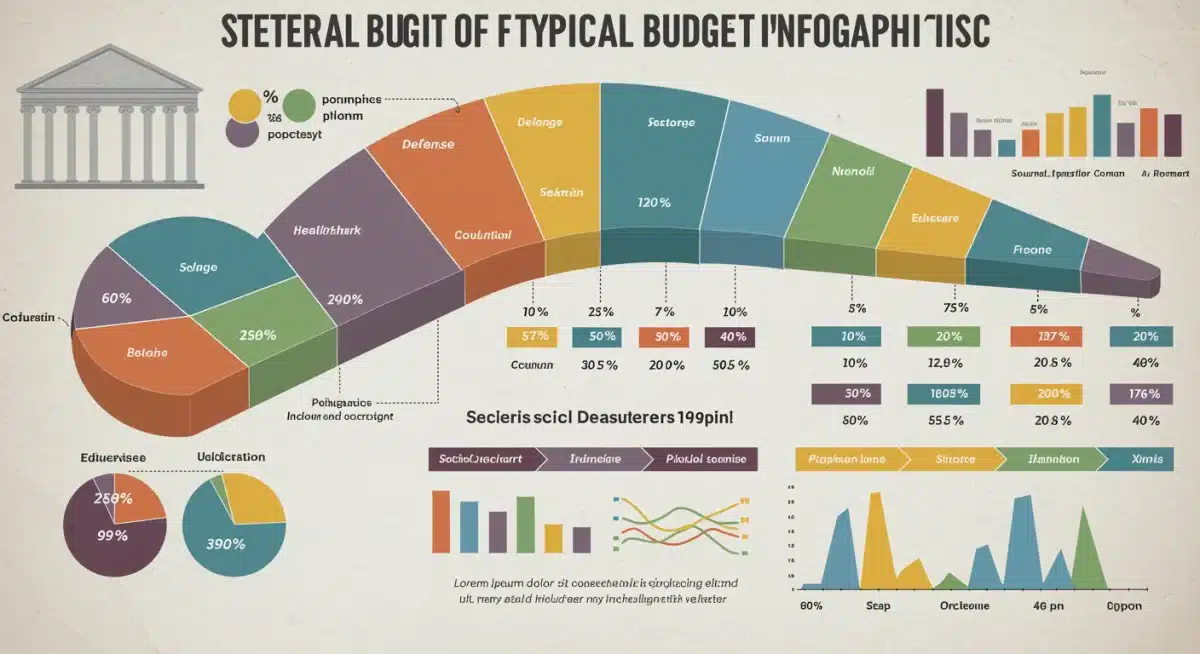
National Debt and Fiscal Sustainability
The growing national debt continues to be a major concern, exerting pressure on Congress to find ways to reduce deficits. Interest payments on the debt consume a significant portion of the federal budget, limiting funds available for other priorities.
Discussions around fiscal sustainability often involve debates about spending cuts, potential tax increases, and the overall trajectory of government borrowing. These conversations are particularly relevant as lawmakers consider the long-term implications of their budgetary choices for FY2025.
In summary, the budgetary challenges for FY2025 are multifaceted, encompassing economic instability, fiscal prudence, and strategic investments. Successfully addressing these issues requires a comprehensive and forward-thinking approach from Congress.
Impact on Key Public Services: Education and Healthcare
The upcoming congressional votes on budget allocations for FY2025 will have a direct and profound impact on two pillars of public service: education and healthcare. Funding decisions in these areas touch nearly every American household, from school children to retirees.
Adequate funding ensures that schools can provide quality learning environments and that healthcare systems can deliver essential services. Conversely, budget cuts can lead to significant disruptions and diminished access.
Federal Funding for Education
Federal education funding supports a wide array of programs, including those for low-income students, special education, and higher education initiatives. These funds often supplement state and local budgets, playing a crucial role in closing achievement gaps and promoting educational equity.
For FY2025, debates will likely center on the allocation for Title I programs, Pell Grants, and investments in STEM education. The outcomes of these votes could determine staffing levels, curriculum development, and access to resources for millions of students.
- Title I Programs: Provide financial assistance to local educational agencies and schools with high numbers or high percentages of children from low-income families.
- Pell Grants: Offer need-based grants to low-income undergraduate and certain post-baccalaureate students to promote access to higher education.
- Special Education Funding: Supports programs for students with disabilities, ensuring they receive appropriate educational services.
The decisions made by Congress will directly influence the quality of education available to future generations and the ability of schools to adapt to evolving educational needs.
Healthcare Funding and Access
Federal healthcare spending is enormous, encompassing Medicare, Medicaid, and funding for public health initiatives. These programs provide critical health coverage and services to vulnerable populations, including the elderly, low-income individuals, and those with disabilities.
In FY2025, discussions will likely focus on strengthening these safety nets, addressing rising prescription drug costs, and preparing for future public health emergencies. Any significant changes in funding could alter access to care, impact provider reimbursement rates, and affect the overall health of the nation.
Ultimately, the congressional votes on FY2025 budget allocations for education and healthcare are not merely fiscal decisions; they are investments in the human capital and well-being of the United States. Their impact will be felt in classrooms and hospitals across the country.
Infrastructure and Environmental Protection Allocations
Beyond human services, the FY2025 budget will also critically shape the nation’s infrastructure and environmental protection efforts. Investments in these areas are essential for economic competitiveness, public safety, and long-term ecological sustainability.
From repairing aging bridges to funding clean energy initiatives, congressional decisions will dictate the pace and scope of these vital projects. The stakes are high, with impacts reaching far beyond immediate budgetary figures.
Modernizing American Infrastructure
The state of American infrastructure has been a perennial concern, with many roads, bridges, and public transit systems in need of significant upgrades. Federal funding plays a crucial role in supporting these projects, often leveraging state and local investments.
For FY2025, Congress will deliberate on allocations for transportation, water systems, and broadband expansion. These investments are vital not only for improving daily commutes and commerce but also for creating jobs and stimulating economic growth.
- Transportation Projects: Funding for highway repairs, bridge construction, and public transit improvements.
- Water Infrastructure: Investments in clean water systems, wastewater treatment, and flood control measures.
- Broadband Expansion: Initiatives to bring high-speed internet access to unserved and underserved communities, bridging the digital divide.
The ability of the nation to move goods, people, and information efficiently depends heavily on these budgetary decisions.
Environmental Protection and Climate Initiatives
Federal agencies like the Environmental Protection Agency (EPA) and the Department of Energy receive funding to address environmental challenges and promote sustainable practices. These efforts range from regulating pollution to investing in renewable energy research.
In FY2025, budget discussions will likely encompass funding for climate resilience programs, conservation efforts, and the transition to a cleaner energy economy. These allocations are critical for protecting natural resources and mitigating the impacts of climate change.
In conclusion, the budget allocations for infrastructure and environmental protection in FY2025 represent critical investments in the nation’s physical and ecological health. These decisions will determine how well the United States is prepared for the challenges of the 21st century.
Defense and National Security Priorities
A significant portion of the federal budget is consistently dedicated to defense and national security. The FY2025 budget will reflect the nation’s strategic priorities in a complex global landscape, balancing the need for a strong military with fiscal constraints.
These allocations impact everything from troop readiness and weapons procurement to cybersecurity and intelligence operations, directly influencing the country’s ability to protect its interests at home and abroad.
Funding for Military Readiness and Modernization
Maintaining a robust and modern military requires substantial investment. Congressional votes will determine funding levels for military personnel, training exercises, and the acquisition of advanced defense systems. These decisions are crucial for ensuring the readiness of U.S. forces.
Debates often revolve around the balance between current operational needs and long-term modernization efforts, including research and development for emerging technologies. The FY2025 budget will reflect the Pentagon’s strategic assessments and congressional priorities.
- Personnel and Training: Allocations for salaries, benefits, and training programs for active-duty personnel and reservists.
- Weapons Systems: Funding for the development and purchase of new aircraft, ships, and other military hardware.
- Research and Development: Investments in cutting-edge defense technologies to maintain a technological edge.
The effectiveness of the U.S. military hinges on these budgetary choices.
Cybersecurity and Intelligence Operations
In an increasingly digital world, cybersecurity and intelligence gathering are paramount to national security. The FY2025 budget will likely include significant allocations to bolster these capabilities, protecting critical infrastructure and countering foreign threats.
Funding decisions will impact federal agencies responsible for cybersecurity defense, intelligence analysis, and counter-terrorism efforts. These investments are essential for safeguarding national interests in the face of evolving threats.
Ultimately, the congressional votes on defense and national security allocations for FY2025 underscore the nation’s commitment to protecting its citizens and projecting its influence globally. These decisions require careful consideration of both immediate threats and future strategic requirements.
The Role of Political Dynamics in Budget Decisions
The budget process is inherently political, with various factions and ideologies vying for influence. The outcomes of congressional votes on FY2025 budget allocations will be heavily shaped by the prevailing political dynamics within Congress and between the legislative and executive branches.
Partisan divides, electoral considerations, and the influence of special interest groups all play a significant role in shaping the final budget. Understanding these dynamics is key to comprehending the eventual allocations.
Partisan Divides and Bipartisan Negotiations
In a closely divided Congress, achieving consensus on budget matters can be exceptionally challenging. Each party typically has differing priorities regarding spending levels, revenue sources, and the allocation of funds across various sectors.
Bipartisan negotiations are often necessary to pass appropriations bills, particularly when neither party holds a supermajority. These negotiations can lead to compromises that may not fully satisfy any single group but are necessary to avoid government shutdowns.
- Spending Ceilings: Debates over overall spending limits often highlight fundamental ideological differences between parties.
- Revenue Policies: Disagreements on taxation and other revenue-generating policies can be contentious, impacting the total amount available for allocation.
- Programmatic Priorities: Each party tends to favor specific programs or agencies, leading to intense lobbying and debate over individual line items.
The ability of lawmakers to bridge these divides will be critical for a timely and effective budget for FY2025.
Influence of Elections and Public Opinion
With an upcoming election cycle, budgetary decisions are often influenced by political considerations and public opinion. Lawmakers may prioritize programs that resonate with their constituents or avoid cuts that could be politically unpopular.
Public advocacy groups and media scrutiny also play a role, bringing attention to specific funding needs or potential consequences of budgetary choices. These external pressures can shape the legislative agenda and influence voting behavior.
In conclusion, the political dynamics surrounding the FY2025 budget allocations are complex and multifaceted. The interplay of partisan interests, negotiation strategies, and public sentiment will ultimately determine how taxpayer dollars are distributed and which public services receive priority.
Navigating Future Fiscal Landscapes
Looking beyond FY2025, the decisions made in the upcoming congressional budget votes will establish precedents and define the fiscal landscape for years to come. These choices are not isolated events but rather integral parts of a continuous budgetary cycle with long-term implications.
Understanding how these allocations set the stage for future spending and revenue policies is crucial for anticipating the evolving impact on public services and the national economy.
Long-Term Economic Projections
The FY2025 budget is developed with an eye towards long-term economic projections, including anticipated growth rates, inflation trends, and demographic shifts. These forecasts help lawmakers assess the sustainability of current spending patterns and plan for future needs.
Decisions around entitlement programs, for instance, often reflect projections about an aging population and rising healthcare costs. The budget aims to balance immediate needs with the imperative of long-term fiscal health.
- Demographic Changes: An aging population implies increased demand for social security and Medicare, impacting future budget priorities.
- Technological Advancements: Investments in research and development today can lead to economic growth and new industries in the future, influencing long-term revenue potential.
- Global Economic Trends: International economic conditions and trade policies can also affect federal revenues and spending requirements over time.
These long-term considerations underscore the strategic importance of each annual budget cycle.
Adaptability and Future Policy Adjustments
While the FY2025 budget sets a course, it is also subject to future adjustments. Economic conditions can change rapidly, and unforeseen events may necessitate revisions to spending priorities. Congress and the executive branch must remain adaptable.
The budget process includes mechanisms for supplemental appropriations and continuing resolutions, which allow for flexibility in response to evolving circumstances. However, frequent reliance on these measures can also indicate a lack of long-term planning.
In summary, navigating the future fiscal landscape requires not only careful planning for FY2025 but also a robust framework for adaptability and continuous assessment. The upcoming congressional votes are pivotal in shaping both the immediate and long-term trajectory of public services and national priorities.
| Key Aspect | Impact on Public Services |
|---|---|
| Education Funding | Determines resources for Title I, Pell Grants, and special education, affecting student access and quality. |
| Healthcare Allocations | Influences Medicare/Medicaid funding, drug costs, and public health initiatives, impacting patient access to care. |
| Infrastructure Investment | Funds for roads, bridges, water systems, and broadband, crucial for economic growth and public safety. |
| National Security Budget | Affects military readiness, cybersecurity, and intelligence, safeguarding national interests and global stability. |
Frequently Asked Questions About FY2025 Budget
Fiscal Year 2025 (FY2025) refers to the budget period for the U.S. federal government that will run from October 1, 2024, to September 30, 2025. It’s the financial blueprint for federal spending and revenue during that time.
Congressional votes directly determine the funding levels for federal programs that support public services like education, healthcare, infrastructure, and environmental protection. More funding can enhance services, while cuts can reduce them or impact quality.
Key challenges include persistent inflation, the rising national debt, and significant partisan divides over spending priorities. These factors often lead to complex negotiations and potential delays in the budget approval process.
Yes, public opinion and advocacy can influence budget allocations. Citizens can contact their representatives, participate in public forums, and engage with advocacy groups to express their priorities and concerns regarding federal spending.
If a budget is not passed by October 1, Congress typically enacts a continuing resolution (CR) to temporarily fund the government at previous levels. Without a CR or a full budget, a government shutdown can occur, disrupting federal services.
Conclusion
The upcoming congressional votes on budget allocations for Fiscal Year 2025 represent a pivotal moment for the United States. These decisions will not only define the nation’s financial priorities for the coming year but will also cast a long shadow over the future of essential public services, from education and healthcare to infrastructure and national security. The complex interplay of economic challenges, political dynamics, and societal needs underscores the critical importance of these budgetary deliberations. As lawmakers navigate these intricate waters, the outcomes will directly impact the daily lives of millions of Americans and shape the country’s trajectory for years to come, demanding informed engagement from all stakeholders.
Author