Medicare Part B 2026: Premiums, Costs, and Future Planning

The Latest on Medicare Premiums: What to Expect for Part B Costs in 2026 and How to Plan
As we navigate the ever-evolving landscape of healthcare in the United States, understanding the intricacies of Medicare, particularly Medicare Part B, becomes increasingly vital for millions of Americans. For seniors and those approaching Medicare eligibility, anticipating future costs is not just a matter of curiosity but a crucial component of sound financial planning. This comprehensive guide delves into what to expect for Medicare Part B 2026 premiums, the factors influencing these costs, and essential strategies for planning your healthcare expenses effectively.
Medicare Part B, which covers medically necessary services like doctor visits, outpatient care, durable medical equipment, and some preventive services, is a cornerstone of healthcare for eligible individuals. Unlike Medicare Part A (hospital insurance), which is often premium-free for most beneficiaries, Part B requires a monthly premium. These premiums are subject to annual adjustments based on a variety of economic and healthcare-specific factors, making it imperative to stay informed about potential changes.
The year 2026 might seem distant, but the groundwork for its premium determinations is already being laid. By understanding the mechanisms behind these adjustments, beneficiaries can better prepare for their future healthcare financial obligations. This article will explore the historical context of Medicare Part B premiums, dissect the elements that drive their fluctuations, provide insights into projected costs for Medicare Part B 2026, and offer actionable advice on how to mitigate potential financial burdens.
Understanding Medicare Part B: A Brief Overview
Before we dive into the specifics of Medicare Part B 2026, let’s briefly review what Medicare Part B entails. As mentioned, it’s a critical component of Original Medicare, providing coverage for a wide array of outpatient medical services. This includes:
- Doctor’s services (both inpatient and outpatient)
- Outpatient hospital care
- Other medical services, such as physical and occupational therapy
- Some home health care
- Durable medical equipment (DME)
- Many preventive services, such as flu shots and certain screenings
Beneficiaries typically pay a monthly premium for Part B, an annual deductible, and coinsurance for most services after the deductible is met. The standard Part B premium is the same for most beneficiaries, but some individuals with higher incomes pay an Income-Related Monthly Adjustment Amount (IRMAA), which results in a higher premium. This income-based adjustment is a significant factor to consider when planning for Medicare Part B 2026 costs.
The Mechanics Behind Medicare Part B Premium Adjustments
The Centers for Medicare & Medicaid Services (CMS) and the Social Security Administration (SSA) are responsible for setting the annual Medicare Part B premiums. Several key factors influence these adjustments, making the future cost of Medicare Part B 2026 a complex projection. These factors include:
- Healthcare Spending Trends: The overall trajectory of healthcare costs in the U.S. is a primary driver. Increases in the utilization of medical services, the cost of new technologies and prescription drugs, and shifts in treatment patterns all contribute to higher spending, which can translate into higher premiums.
- Medical Inflation: General inflation in the medical sector, which often outpaces general economic inflation, directly impacts the cost of providing services covered by Part B.
- Social Security Cost-of-Living Adjustment (COLA): The Social Security Act includes a “hold harmless” provision that protects many Medicare beneficiaries from a reduction in their Social Security benefits due to an increase in the Part B premium. If the Part B premium increase is larger than their Social Security COLA, their premium may be capped. However, this provision does not apply to all beneficiaries, especially those who are new to Medicare, those who don’t receive Social Security benefits, and those who pay IRMAA. The size of the COLA can therefore indirectly influence the standard premium for those not covered by “hold harmless.”
- Medicare Trust Fund Balances: The financial health of the Supplementary Medical Insurance (SMI) Trust Fund, which pays for Part B (and Part D), is continually monitored. Projections of future expenditures and revenues play a role in premium adjustments to ensure the fund’s solvency.
- Legislative Changes: While less frequent, legislative actions can also impact Medicare Part B premiums. Congress may pass laws that directly affect how premiums are calculated or what services are covered, thereby altering costs.
- Demographics: The aging population and the increasing number of Medicare beneficiaries also contribute to the overall cost burden, influencing premium calculations for future years, including Medicare Part B 2026.
Understanding these contributing factors is essential for comprehending why annual premium changes occur and to better anticipate what might happen with Medicare Part B 2026.
Projecting Medicare Part B Costs for 2026: What the Experts Say
Predicting the exact Medicare Part B 2026 premium is challenging, as official figures are usually not released until late in the preceding year (e.g., late 2025 for 2026). However, we can look at historical trends, current economic indicators, and expert projections to form a reasonable expectation.
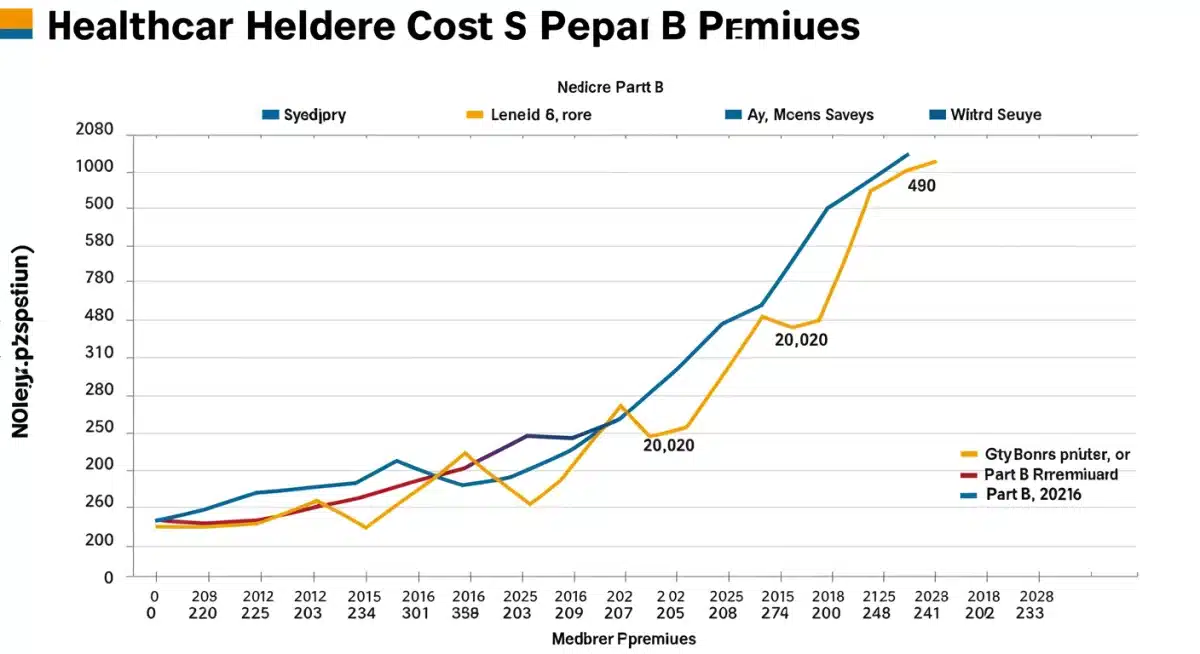
Historically, Medicare Part B premiums have generally increased year over year. While there have been occasional periods of stagnation or slight decreases, the overall trend has been upward. For instance, the standard monthly premium for Medicare Part B was $174.70 in 2024, an increase from $164.90 in 2023. These increments reflect the rising costs of healthcare and other economic pressures.
Several government agencies, including the Medicare Trustees and the Congressional Budget Office (CBO), release annual reports that project Medicare spending and trust fund solvency for future years. These reports often provide insights into potential premium adjustments. While they don’t give exact premium figures for individual years like Medicare Part B 2026, they offer broad outlines of expected increases in overall Medicare expenditures.
Economic forecasts suggest continued medical inflation, driven by factors such as new drug development, advanced medical technologies, and the increasing demand for healthcare services from an aging population. These trends indicate that it is highly probable that Medicare Part B 2026 premiums will see another increase. The magnitude of this increase will depend on the specific economic conditions and healthcare spending patterns observed in late 2024 and 2025.
The Role of IRMAA in 2026
For higher-income beneficiaries, the Income-Related Monthly Adjustment Amount (IRMAA) will continue to be a significant factor. IRMAA tiers are also adjusted annually, and these adjustments can lead to even higher premium increases for those in the upper-income brackets. The income thresholds for IRMAA are based on your modified adjusted gross income (MAGI) from two years prior. So, for Medicare Part B 2026, your 2024 MAGI will be used to determine if you owe an IRMAA and at what level.
It’s crucial for those with higher incomes to be aware of these thresholds and to plan their finances accordingly to potentially mitigate the impact of IRMAA on their Medicare Part B 2026 costs. Strategic financial planning, including managing capital gains and other income sources, can sometimes help keep your MAGI below certain IRMAA thresholds.
Strategies for Planning for Medicare Part B 2026 Costs
Given the likelihood of increased Medicare Part B 2026 premiums, proactive planning is essential. Here are several strategies to help you prepare and manage your healthcare expenses:
1. Monitor Official Announcements
Stay informed. The most accurate information regarding Medicare Part B 2026 premiums will come directly from official sources like the Centers for Medicare & Medicaid Services (CMS) and the Social Security Administration (SSA). These announcements are typically made in the fall of the preceding year (e.g., October or November 2025 for 2026 premiums). Subscribe to newsletters, check official websites, and consult reliable news sources that cover Medicare updates.
2. Budgeting and Financial Planning
Incorporate potential premium increases into your annual budget. Even a modest increase can add up over a year. If you are currently receiving Social Security benefits, remember that your Part B premium is usually deducted directly from your benefit payments. Factor this into your overall income and expense calculations. For those not yet on Medicare, begin saving for healthcare costs well in advance of your eligibility.
3. Understand IRMAA and Plan Accordingly
If you anticipate being subject to IRMAA, review your income sources. Certain financial strategies, such as Roth conversions or managing withdrawals from traditional IRAs, might impact your MAGI and potentially lower your IRMAA bracket. Consulting with a financial advisor specializing in retirement planning can be highly beneficial in this regard. Remember that the income used for Medicare Part B 2026 IRMAA determination will be from your 2024 tax return.
4. Explore Medicare Advantage (Part C) Plans
While Original Medicare (Parts A and B) is the foundation, Medicare Advantage plans (Part C) offer an alternative. These plans are offered by private insurance companies approved by Medicare and must provide at least the same benefits as Original Medicare. Many Medicare Advantage plans also include prescription drug coverage (Part D) and extra benefits like vision, hearing, and dental. Some plans even offer a Part B premium reduction, where the plan pays a portion of your Part B premium. This can be a significant cost-saving measure for Medicare Part B 2026, but it’s important to weigh the trade-offs, such as network restrictions and referral requirements.
5. Consider Medicare Supplement (Medigap) Plans
Medigap plans help cover some of the out-of-pocket costs that Original Medicare doesn’t, such as deductibles, copayments, and coinsurance. While Medigap plans do not cover the Part B premium itself, they can significantly reduce your overall healthcare spending by covering the 20% coinsurance that Part B typically leaves beneficiaries responsible for. Choosing the right Medigap plan can provide financial predictability and peace of mind, especially as Medicare Part B 2026 costs evolve.
6. Maximize Preventive Services
Medicare Part B covers a wide range of preventive services, often with no out-of-pocket cost to you. Utilizing these services, such as annual wellness visits, screenings, and vaccinations, can help detect health issues early, potentially preventing more serious and costly conditions down the line. Staying healthy is one of the best ways to control your overall healthcare expenditures.
7. Review Your Prescription Drug Coverage (Part D)
While Part D is separate from Part B, the holistic view of your healthcare costs is important. Ensure your Part D plan (either standalone or through Medicare Advantage) adequately covers your medications at the most affordable cost. Plan changes, including formulary adjustments and rising drug prices, can impact your total out-of-pocket spending. Annual review during the Open Enrollment Period is crucial.
8. Seek Professional Advice
Navigating Medicare can be complex. Don’t hesitate to consult with a qualified Medicare insurance broker, financial planner, or a counselor from your State Health Insurance Assistance Program (SHIP). These professionals can provide personalized advice based on your specific health needs, financial situation, and help you understand the implications of changes in Medicare Part B 2026.

The ‘Hold Harmless’ Provision and 2026
It’s important to revisit the “hold harmless” provision, as it significantly impacts many Social Security beneficiaries. This provision states that the increase in a beneficiary’s Part B premium cannot exceed the dollar amount of their Social Security cost-of-living adjustment (COLA). This protects many from having their net Social Security benefit decrease due to a Part B premium hike.
However, this protection does not apply to everyone. Those who are:
- New to Medicare in 2026
- Not receiving Social Security benefits
- Paying an Income-Related Monthly Adjustment Amount (IRMAA)
- Enrolled in Medicare but having their premiums paid by Medicaid
These groups are not protected by the “hold harmless” provision and will pay the full standard Medicare Part B 2026 premium, or their applicable IRMAA amount. This distinction is crucial for financial planning, as it means not everyone will experience the same premium increase.
Long-Term Outlook and What It Means for You
The long-term outlook for healthcare costs and Medicare premiums suggests a continued upward trajectory. Factors such as medical advancements, increasing life expectancies, and the growing demand for services from an aging population will likely keep pressure on the Medicare system. Therefore, planning for Medicare Part B 2026 and beyond requires a sustained, proactive approach.
Consider the following for your long-term financial health:
- Health Savings Accounts (HSAs): If you are eligible, an HSA can be a powerful tool for saving for future healthcare costs, including Medicare premiums. Contributions are tax-deductible, funds grow tax-free, and withdrawals for qualified medical expenses are tax-free.
- Retirement Savings: Ensure your retirement savings strategy adequately accounts for healthcare expenses, which often become a significant cost in retirement.
- Healthy Lifestyle: Maintaining a healthy lifestyle can contribute to lower medical costs over time by reducing the incidence of chronic diseases and the need for extensive medical interventions.
Conclusion: Preparing for Medicare Part B 2026 Today
While the exact figures for Medicare Part B 2026 premiums are yet to be announced, the trends and influencing factors strongly suggest an increase. By understanding the mechanics of premium adjustments, monitoring official announcements, and implementing sound financial and healthcare planning strategies, you can effectively prepare for these changes.
Don’t wait until the last minute. Start reviewing your current Medicare coverage, assessing your financial situation, and exploring your options now. Whether it’s optimizing your income to manage IRMAA, considering a Medicare Advantage or Medigap plan, or simply budgeting for anticipated increases, proactive steps today will ensure you are well-prepared for the costs of Medicare Part B 2026 and can continue to access the quality healthcare you deserve.
Staying informed and adaptable is key to navigating the complexities of Medicare. With careful planning, you can minimize surprises and maintain financial stability while securing your healthcare future.