National Minimum Wage Increase: $15 by Mid-2026 Debate
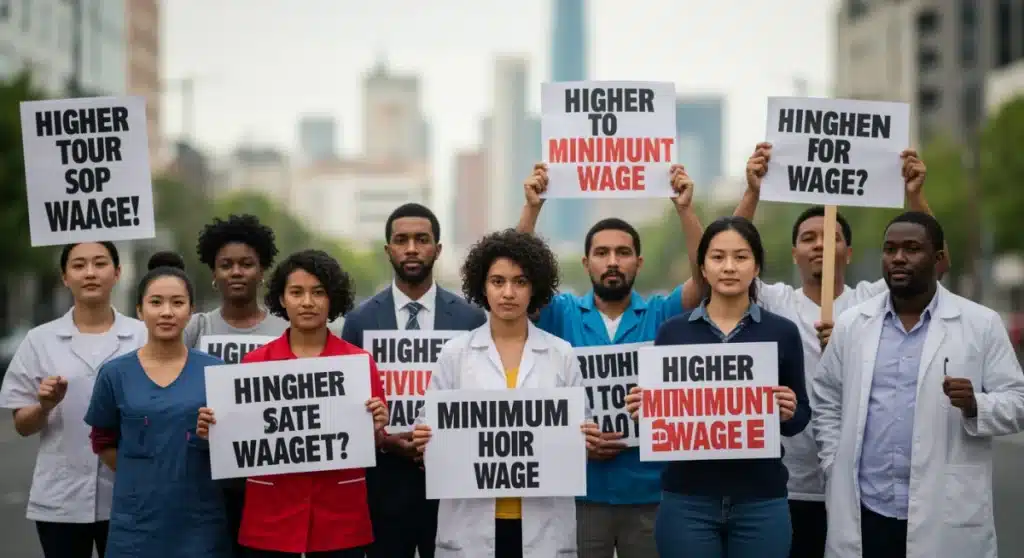
The discussion surrounding the national minimum wage is a perennial topic in economic and political discourse, consistently sparking fervent debate among policymakers, economists, business owners, and workers alike. At the heart of the current conversation is the proposition to increase the national minimum wage to $15 per hour by mid-2026. This isn’t merely a numerical adjustment; it’s a policy proposal with far-reaching implications, poised to reshape labor markets, influence consumer spending, and impact the livelihoods of millions. Understanding the intricacies of this debate requires a deep dive into its historical context, economic arguments for and against, potential social ramifications, and the political landscape that shapes its trajectory.
Historically, the minimum wage was established to ensure a basic standard of living for workers and to prevent exploitation. However, its value has often failed to keep pace with inflation and the rising cost of living, leading to a significant erosion of its purchasing power over decades. Proponents of the $15 minimum wage argue that this increase is long overdue, necessary to lift workers out of poverty, reduce income inequality, and stimulate economic growth by boosting consumer demand. They point to research suggesting that a higher wage can lead to reduced employee turnover, increased productivity, and a healthier workforce.
Conversely, opponents express concerns about the potential negative consequences, particularly for small businesses and low-wage industries. They often cite fears of job losses due to automation or businesses being forced to cut staff, increased prices for consumers, and a general dampening of economic activity. The debate is complex, touching upon fundamental questions about fairness, economic efficiency, and the role of government in regulating labor markets. This article aims to explore these multifaceted perspectives, providing a comprehensive overview of the arguments, evidence, and potential outcomes associated with the proposed national minimum wage increase to $15 by mid-2026.
The Historical Context of the National Minimum Wage
To fully grasp the significance of the current push for a $15 national minimum wage, it is crucial to understand its origins and evolution. The Fair Labor Standards Act (FLSA) of 1938 first established a federal minimum wage in the United States, set at $0.25 per hour. Its primary goal was to create a safety net for workers, ensuring that even the lowest-paid employees earned a living wage. Over the decades, the minimum wage has been adjusted periodically, reflecting changes in the economy, inflation, and political priorities. However, these adjustments have not always kept pace with the rising cost of living, leading to a gradual decline in the real value of the minimum wage.
For instance, in 1968, the minimum wage peaked in terms of its purchasing power, meaning it could buy more goods and services than it can today. Since then, while nominal wages have increased, the real wage – adjusted for inflation – has largely stagnated or even decreased. This erosion of purchasing power is a central argument for those advocating for a substantial increase. They contend that the current federal minimum wage of $7.25 per hour, unchanged since 2009, is insufficient to cover basic living expenses in most parts of the country, pushing millions of full-time workers into poverty or near-poverty.
The historical trajectory also reveals a growing disparity between the minimum wage and average worker productivity. While worker productivity has steadily increased over the past several decades, the minimum wage has not followed suit. This divergence fuels the argument that workers are not receiving a fair share of the economic growth they help create. Understanding this historical context is vital for appreciating the depth and urgency of the current debate, as it frames the minimum wage not just as an economic figure, but as a reflection of societal values regarding labor, fairness, and economic opportunity.
Economic Arguments for a $15 National Minimum Wage
Proponents of increasing the national minimum wage to $15 by mid-2026 articulate several compelling economic arguments. One of the most frequently cited benefits is the potential for poverty reduction. A higher minimum wage would directly increase the income of millions of low-wage workers, potentially lifting many individuals and families out of poverty. This direct financial injection into the hands of those most likely to spend it immediately is expected to stimulate consumer demand, which in turn can boost economic activity and growth. This concept is often referred to as the ‘multiplier effect,’ where initial spending generates further economic activity.
Another significant argument revolves around reducing income inequality. The gap between the highest and lowest earners has widened considerably in recent decades. A substantial increase in the minimum wage is seen as a crucial step towards narrowing this gap, leading to a more equitable distribution of wealth. This can have broader societal benefits, including improved social cohesion and reduced social costs associated with poverty, such as healthcare expenses and crime rates.
Furthermore, advocates point to the potential for increased worker productivity and reduced employee turnover. When workers earn a living wage, they are often more motivated, engaged, and productive. They may experience less financial stress, leading to improved focus and performance at work. Higher wages can also lead to reduced turnover rates, as employees are less likely to leave their jobs for better-paying opportunities. This can save businesses money on recruitment and training costs, ultimately leading to greater efficiency and profitability. Studies by various economic organizations and universities have often found these positive correlations, offering empirical support for these claims.
The argument also extends to public health and welfare. Workers earning a sub-living wage often rely on public assistance programs, such as food stamps and Medicaid, to make ends meet. By increasing the minimum wage, the burden on these public programs could potentially decrease, freeing up taxpayer money for other essential services. This shift could represent a more sustainable economic model where individuals are able to support themselves and their families through their labor rather than relying on government aid. The cumulative effect of these factors, proponents argue, would be a stronger, more resilient economy with a healthier and more prosperous workforce.
Economic Concerns and Counterarguments
While the arguments for a higher minimum wage are robust, opponents raise equally significant concerns about its potential adverse economic effects. The primary worry is the potential for job losses. Businesses, especially small businesses with tight margins, may respond to increased labor costs by reducing their workforce, slowing hiring, or even closing down. This could lead to a net reduction in employment, particularly for entry-level positions and young workers, who might find it harder to secure their first jobs.
Another major concern is inflation. If businesses face higher labor costs, they may pass these costs on to consumers in the form of higher prices for goods and services. This would lead to a general increase in the cost of living, potentially eroding the purchasing power gains made by the minimum wage increase, effectively negating some of its intended benefits. This ‘wage-price spiral’ is a common fear among critics, who argue that it could lead to broader economic instability.
The impact on small businesses is a particularly sensitive point. Unlike larger corporations that may have more flexibility to absorb increased labor costs or automate tasks, small businesses often operate on very thin profit margins. A significant wage hike could force them to make difficult choices, such as reducing staff, cutting back on other investments, or increasing prices, which could make them less competitive. Some argue that this could lead to a consolidation of economic power, favoring larger businesses over smaller, local enterprises.
Critics also highlight the potential for automation. As labor costs rise, businesses might be incentivized to invest in automation and technology to replace human workers, particularly in industries with repetitive tasks. While automation can lead to increased efficiency in the long run, it could also displace a significant number of low-wage workers in the short to medium term, exacerbating unemployment issues. The debate also includes geographical considerations, as a national $15 minimum wage might have vastly different impacts in high-cost urban areas versus low-cost rural areas. What might be a living wage in one region could be a significant burden in another, leading to uneven economic consequences across the country.
Social and Societal Implications of a $15 Minimum Wage
Beyond the purely economic arguments, the debate over a $15 national minimum wage delves deep into social and societal implications. A primary social benefit touted by supporters is the potential for improved living standards and reduced poverty. For millions of low-wage workers, an increase to $15 an hour could mean the difference between struggling to make ends meet and achieving a measure of financial stability. This can translate into better housing, improved nutrition, access to better healthcare, and enhanced educational opportunities for their children.
From a public health perspective, a higher minimum wage is often linked to improved health outcomes. Financial stress is a significant contributor to mental and physical health problems. By alleviating some of this stress, workers may experience fewer health issues, leading to a healthier population overall. This also has implications for healthcare costs, as a healthier workforce could potentially reduce the demand on public health services and employer-provided health insurance.
Moreover, the increase could have a profound impact on social mobility and equity. Historically, marginalized communities and people of color are disproportionately represented in low-wage jobs. A higher minimum wage could serve as a powerful tool to address systemic inequalities, providing a more equitable pathway to economic advancement for these groups. It could empower workers, giving them more bargaining power and a greater sense of dignity and respect in the workplace.
However, critics also point to potential negative social consequences. If job losses occur, it could lead to increased unemployment and social displacement, particularly in communities heavily reliant on low-wage industries. This could exacerbate existing social problems rather than alleviate them. There are also concerns that an increased minimum wage could inadvertently lead to a reduction in certain social benefits for low-income individuals, as their higher earnings might push them above eligibility thresholds for assistance programs, even if their overall financial situation hasn’t significantly improved in real terms.
The debate also touches on the concept of fairness and the value of work. Proponents argue that all work has inherent value and that no full-time worker should live in poverty. Opponents, while often agreeing with the principle, sometimes argue that the minimum wage is intended as an entry-level wage for less skilled workers, and that significant increases could distort the natural progression of wages based on skill and experience. These discussions highlight the complex interplay between economic policy and broader societal values, demonstrating that the minimum wage debate is as much about social justice as it is about economic efficiency.
Political Landscape and Implementation Challenges
The push for a $15 national minimum wage is deeply entrenched in the political landscape, reflecting differing ideologies and priorities among political parties and interest groups. Typically, the Democratic Party and progressive organizations are strong advocates for the increase, viewing it as a matter of economic justice and a vital step towards reducing poverty and inequality. They often highlight the benefits to workers and the potential for economic stimulus.
On the other hand, the Republican Party and conservative business groups generally express caution or outright opposition, emphasizing concerns about job losses, inflation, and the burden on small businesses. They often argue for market-driven solutions and less government intervention in wage setting. This partisan divide makes the legislative path for a national minimum wage increase particularly challenging, often leading to stalemates and compromises.
Even if a national consensus were reached, the practical implementation of a $15 minimum wage by mid-2026 presents its own set of challenges. One major hurdle is the varied economic conditions across different states and regions. A $15 minimum wage might be easily absorbed in high-cost-of-living areas like New York City or San Francisco, where local minimum wages are often already at or above this level. However, in rural areas with a much lower cost of living, such an increase could have a more disruptive effect on local economies and employment. This has led to discussions about regional minimum wages or phased implementation strategies that account for local economic realities.
Another implementation challenge involves the transition period. A rapid increase to $15 could be more shocking to businesses than a gradual, phased approach. The proposal for a mid-2026 target date suggests a phased increase, allowing businesses time to adjust to the new wage structure, potentially mitigating some of the immediate negative impacts. However, even with a phased approach, businesses would need clear guidance and potentially support programs to help them adapt.
The role of state and local governments is also crucial. Many states and cities have already taken the initiative to raise their own minimum wages above the federal level, with some already reaching or exceeding $15 an hour. This patchwork of state and local laws creates a complex regulatory environment. A national increase would simplify some aspects but also necessitate a re-evaluation of existing local ordinances. The political will to overcome these challenges and find common ground will ultimately determine the feasibility and shape of any future national minimum wage policy.

Case Studies and Real-World Examples
To move beyond theoretical arguments, examining real-world examples and case studies of minimum wage increases can offer valuable insights. Several cities and states across the United States have already implemented minimum wages at or above $15 an hour, providing a living laboratory for economists and policymakers.
For instance, Seattle was one of the first major cities to implement a phased increase to $15 an hour, beginning in 2015. Initial studies on Seattle’s experience yielded mixed results. Some research suggested modest job losses in certain sectors, particularly in food service, while other studies found little to no significant negative impact on employment and even noted positive effects on worker earnings and reduced poverty. The differing conclusions often depend on the methodologies used, the timeframes analyzed, and the specific economic indicators examined, highlighting the complexity of attributing direct causation in dynamic economic environments.
Similarly, California phased in a statewide $15 minimum wage, reaching the threshold for large employers in 2022 and for all employers in 2023. Early reports from California suggest that while some businesses have faced challenges, the overall economic impact has not been catastrophic. Many businesses adapted by adjusting prices, improving efficiency, or accepting slightly lower profit margins. Workers, especially those in the lowest wage brackets, have seen an increase in their take-home pay, which has been crucial in combating the high cost of living in many parts of the state.
Another example comes from New York, which also implemented a phased-in $15 minimum wage, particularly for New York City and certain counties. The experience here has further demonstrated the regional disparities in impact. While businesses in high-cost urban centers adapted more readily, some businesses in lower-cost upstate regions voiced greater concerns about competitiveness and the ability to absorb the increased labor costs.
These case studies underscore a few key takeaways. First, the impact of a minimum wage increase is highly dependent on local economic conditions, industry composition, and the pace of implementation. Second, businesses often find ways to adapt, whether through efficiency gains, price adjustments, or other strategies, though these adaptations are not without their own costs. Third, while some localized negative effects, particularly on employment in specific sectors, cannot be entirely ruled out, widespread job losses across the economy have not consistently materialized in the way some critics predicted. These real-world experiences provide crucial data points that inform and enrich the ongoing national debate, moving it beyond purely theoretical discussions to evidence-based policy considerations for the national minimum wage increase.
The Path Forward: Finding Common Ground
The debate surrounding a national minimum wage increase to $15 by mid-2026 is undoubtedly one of the most critical economic policy discussions of our time. It encapsulates fundamental questions about economic fairness, social responsibility, and the role of government in shaping labor markets. As we have explored, there are compelling arguments on both sides, supported by economic theories, historical data, and real-world case studies.
Proponents highlight the potential to lift millions out of poverty, reduce income inequality, stimulate consumer spending, and boost worker morale and productivity. They argue that a $15 minimum wage is not just an economic adjustment but a moral imperative to ensure that all full-time workers can afford a basic standard of living. The long-term stagnation of the real minimum wage, coupled with rising costs of living, strengthens their call for a significant increase.
Conversely, opponents voice legitimate concerns about the potential for job losses, particularly in small businesses, and the risk of inflationary pressures. They worry that a uniform national minimum wage might disproportionately harm businesses in lower-cost regions and could accelerate automation, displacing human workers. Their arguments emphasize the delicate balance required to maintain economic stability and foster a competitive business environment.
Finding common ground in this complex debate will require a nuanced approach that acknowledges the validity of concerns from both perspectives. Potential solutions might involve phased implementation schedules, allowing businesses ample time to adapt and plan for increased labor costs. Regional adjustments, where the minimum wage is set based on local cost-of-living indices rather than a single national standard, could also mitigate some of the negative impacts on diverse economic areas. Furthermore, providing support and resources for small businesses to help them manage the transition, such as tax credits or training programs, could ease the burden and prevent widespread closures.
Ultimately, the discussion is not just about a numerical figure; it’s about envisioning the kind of society we want to build – one where hard work is sufficiently rewarded, where economic opportunities are more equitable, and where the most vulnerable members of our workforce are protected. The decision to raise the national minimum wage to $15 by mid-2026, or any other figure, will be a testament to how we balance economic realities with social aspirations. It demands careful consideration, evidence-based policymaking, and a willingness to engage in constructive dialogue to forge a path forward that benefits the broadest possible spectrum of society.