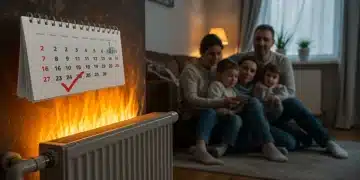
2025 LIHEAP Program: Heating & Cooling Aid for Low-Income Households

The 2025 LIHEAP Program offers crucial financial assistance, helping eligible low-income households cover heating and cooling expenses, ensuring energy security throughout the year.
Understanding the 2025 LIHEAP Program: Practical Solutions for Low-Income Households to Secure Heating and Cooling Assistance for 12 Months is vital for millions of Americans facing energy insecurity. As utility costs continue to fluctuate, this federal program stands as a critical lifeline, providing much-needed aid to ensure homes remain safe and comfortable year-round. This guide will demystify the program, offering clear, actionable insights into how eligible families can access these essential benefits.
what is the liheap program?
The Low Income Home Energy Assistance Program (LIHEAP) is a federally funded initiative designed to help low-income households manage their energy bills. Administered by individual states and often through local community action agencies, LIHEAP provides financial assistance for heating and cooling costs, energy crisis intervention, weatherization, and minor home energy repairs. Its primary goal is to reduce the energy burden on vulnerable populations, preventing utility shut-offs and ensuring safe living conditions.
The program is not a direct entitlement; rather, it operates as a block grant to states, which then distribute funds based on their specific needs and priorities. This structure means that eligibility requirements and available benefits can vary significantly from one state to another, making it crucial for applicants to research their local program guidelines carefully.
federal funding and state administration
- Federal Grants: LIHEAP receives annual appropriations from the U.S. Congress, which are then allocated to states, territories, and tribal organizations.
- State-Specific Rules: Each state develops its own criteria for eligibility, application periods, and benefit amounts, tailored to local energy costs and poverty levels.
- Local Agencies: Most states partner with local community action agencies or other non-profits to process applications and distribute funds, providing a community-based approach to assistance.
In essence, LIHEAP acts as a safety net, protecting the most vulnerable from the harsh realities of extreme temperatures and unaffordable energy costs. Understanding its foundational structure is the first step toward accessing its benefits.
eligibility requirements for 2025 liheap
Determining eligibility for the 2025 LIHEAP Program is a crucial step for any household seeking assistance. While federal guidelines provide a framework, specific criteria are set at the state and local levels. Generally, eligibility is based on income, household size, and the energy burden faced by the household. Most states require applicants to have a gross income at or below 150% of the federal poverty level or 60% of the state’s median income, whichever is greater.
However, some states may have slightly different thresholds or additional requirements, such as a percentage of income spent on energy costs. It’s also important to note that households receiving certain other federal benefits, like SNAP (food stamps), SSI, or TANF, are often automatically deemed eligible for LIHEAP, simplifying the application process.
income thresholds and household size
- Federal Poverty Guidelines: The primary benchmark for income eligibility is often linked to the federal poverty guidelines, adjusted for household size.
- State Median Income: Some states use a percentage of the state’s median income as an alternative, potentially allowing slightly higher-income households to qualify.
- Vulnerable Populations: Households with elderly members, individuals with disabilities, or young children often receive priority consideration due to their increased vulnerability to energy-related health risks.
It’s not just about meeting income thresholds; the program also considers the household’s energy burden. For instance, if a significant portion of a household’s income is already dedicated to utility bills, they may be more likely to qualify for assistance, even if their income is slightly above the standard threshold. Always check with your local LIHEAP office for the most accurate and up-to-date eligibility information.
how to apply for 2025 liheap benefits
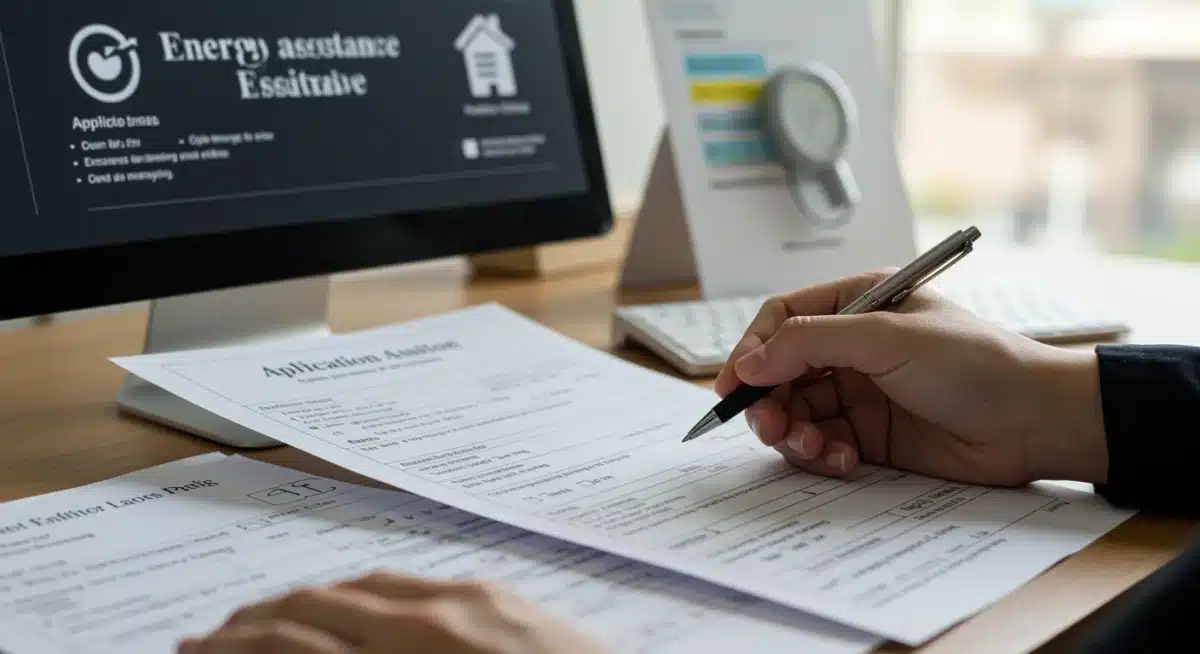
Applying for the 2025 LIHEAP Program involves a series of steps designed to verify eligibility and ensure that assistance reaches those who need it most. The application process typically begins by contacting your state’s LIHEAP office or a local community action agency. These agencies are equipped to provide detailed information on specific requirements, application periods, and necessary documentation. It’s essential to start early, as funds are limited and often distributed on a first-come, first-served basis, or during specific application windows.
Most applications require documentation of income for all household members, proof of residence, a recent utility bill, and identification for the primary applicant. Some states may also require information about your energy provider and any other forms of assistance you currently receive. Online applications are becoming more common, but in-person or mail-in options are usually available as well, especially for those without internet access.
essential documentation and application periods
- Proof of Income: This can include pay stubs, Social Security statements, unemployment benefits documentation, or tax returns for all adult household members.
- Proof of Residency: A utility bill, lease agreement, or driver’s license with your current address will usually suffice.
- Utility Bill: A recent copy of your heating or cooling bill is necessary to demonstrate an energy burden and identify your service provider.
- Application Periods: Be aware that LIHEAP has specific application periods, often seasonal (e.g., fall for heating, spring for cooling). Missing these windows can mean missing out on assistance.
Once your application is submitted, it will be reviewed by the local agency. Processing times can vary, so patience is key. If approved, you will receive notification, and the benefits will typically be paid directly to your utility company, though some states offer direct payments to eligible households. It’s always advisable to keep copies of all submitted documents and correspondence.
types of assistance offered by liheap
The 2025 LIHEAP Program offers a variety of assistance types, each designed to address different aspects of a household’s energy needs. While heating and cooling assistance are the most commonly recognized benefits, LIHEAP can also provide support for energy crisis situations, weatherization, and minor energy-related home repairs. The specific types of aid available can vary by state, reflecting diverse climatic conditions and energy challenges across the country.
Heating assistance helps cover the costs of various fuel types, including natural gas, electricity, propane, wood, and oil, ensuring homes can stay warm during colder months. Cooling assistance similarly aids with electricity costs during hot summer periods, preventing heat-related illnesses. Crisis assistance is critical for households facing immediate energy emergencies, such as a utility disconnection notice or a broken furnace, providing rapid intervention to restore service or repair essential equipment.
beyond heating and cooling: crisis and weatherization
- Energy Crisis Assistance: Provides immediate help to prevent or resolve energy emergencies, such as utility shut-offs or fuel shortages. This aid is typically faster to process.
- Weatherization Assistance: Funds improvements to make homes more energy-efficient, such as insulation, window sealing, or furnace tune-ups, reducing long-term energy costs.
- Minor Home Energy Repair: In some cases, LIHEAP can help with small repairs to heating or cooling systems that are essential for their operation and safety.
Understanding the full scope of LIHEAP benefits allows households to leverage the program effectively. It’s not just about paying a bill; it’s about creating a more stable and sustainable energy environment for low-income families. Each component plays a vital role in alleviating the overall energy burden.
maximizing your liheap benefits for 12 months
Securing 12 months of heating and cooling assistance through the 2025 LIHEAP Program requires a strategic approach. While LIHEAP primarily offers seasonal aid, combining it with other energy-saving strategies and related programs can help extend its impact throughout the entire year. The goal is not just to get a one-time payment but to develop a comprehensive plan for energy management.
One key strategy is to apply for both heating and cooling components of LIHEAP if available in your state. Many states have separate application periods for each, and applying for both ensures coverage for different seasons. Additionally, exploring energy efficiency improvements through LIHEAP’s weatherization component can lead to significant long-term savings, reducing your overall energy consumption and dependence on assistance.
combining liheap with other energy-saving strategies
Beyond direct financial aid, integrating LIHEAP with other resources can create a robust support system. Many utility companies offer their own assistance programs, budget billing options, or energy efficiency audits that can complement LIHEAP benefits. Furthermore, understanding your household’s energy consumption patterns and adopting simple conservation habits can greatly reduce your energy burden. Small changes, like adjusting thermostats or sealing drafts, can add up to substantial savings over time.
- Seasonal Applications: Apply for both heating and cooling assistance during their respective application windows to ensure year-round coverage.
- Energy Efficiency: Take advantage of LIHEAP’s weatherization services to make your home more energy-efficient and reduce future energy costs.
- Utility Company Programs: Inquire about additional assistance programs, payment plans, or energy audits offered directly by your utility provider.
- Conservation Habits: Implement simple energy-saving practices at home, such as using smart thermostats, unplugging electronics, and ensuring proper insulation.
By proactively managing your energy needs and utilizing all available resources, households can maximize the benefits of LIHEAP and achieve greater energy security throughout the year. This holistic approach ensures that the assistance received goes further, providing sustained relief from high utility costs.
challenges and solutions in accessing liheap
While the 2025 LIHEAP Program is a vital resource, accessing its benefits can sometimes present challenges for eligible households. These obstacles often include complex application processes, limited funding, and a lack of awareness about the program itself. Navigating state-specific requirements and gathering necessary documentation can be daunting, especially for individuals with limited resources or language barriers.
Funding limitations are another significant hurdle. LIHEAP is a block grant program, meaning that once a state’s allocated funds are exhausted, no more assistance can be provided until the next funding cycle. This creates a competitive environment, often necessitating quick action from applicants once application windows open. Moreover, many eligible households remain unaware of LIHEAP’s existence or how to apply, highlighting a need for greater outreach and public education.
overcoming common hurdles
- Seek Assistance: Local community action agencies and non-profit organizations often provide direct assistance with the application process, helping applicants gather documents and fill out forms correctly.
- Early Application: Due to limited funds and specific application windows, applying as soon as the program opens in your area significantly increases your chances of receiving aid.
- Advocacy and Outreach: Participate in or support efforts to raise awareness about LIHEAP and advocate for increased funding to help more families.
To overcome these challenges, proactive engagement and community support are essential. Local agencies play a critical role in simplifying the application process and providing guidance. Additionally, continuous advocacy for increased federal funding and improved outreach efforts can ensure that LIHEAP remains a robust and accessible program for all eligible low-income households, effectively addressing the energy needs of communities nationwide.
| Key Aspect | Brief Description |
|---|---|
| Program Goal | Assists low-income households with heating and cooling costs to prevent energy crises. |
| Eligibility | Based on income, household size, and energy burden, often linked to federal poverty levels. |
| Application Process | Contact state/local agencies, submit income proof, residency, and utility bills during specific periods. |
| Benefits | Includes heating, cooling, crisis assistance, and weatherization services. |
frequently asked questions about 2025 liheap
Eligibility for the 2025 LIHEAP Program is primarily based on household income, which must typically be at or below 150% of the federal poverty level or 60% of the state’s median income. Household size and energy burden are also considered, with specific criteria varying by state and local agencies.
To apply for LIHEAP, contact your state’s LIHEAP office or a local community action agency. You will need to provide documentation such as proof of income, residence, and a recent utility bill. Application periods are often seasonal, so it’s important to apply early to secure funding.
LIHEAP offers various types of assistance, including help with heating and cooling costs, energy crisis intervention for emergencies like shut-offs, and weatherization services to improve home energy efficiency. The specific benefits available may differ based on state and local program offerings.
While LIHEAP primarily offers seasonal assistance, you can maximize its impact by applying for both heating and cooling components if available in your state. Combining LIHEAP with energy efficiency improvements and other utility programs can help manage energy costs throughout the entire 12 months.
If you receive a utility disconnection notice, you may be eligible for LIHEAP’s energy crisis assistance. Contact your local LIHEAP office or community action agency immediately. They can often provide expedited processing to help prevent or resolve utility shut-offs and restore essential services quickly.
conclusion
The 2025 LIHEAP Program remains an indispensable resource for low-income households across the United States, offering practical solutions to the persistent challenge of energy affordability. By understanding its structure, eligibility requirements, and diverse benefits, families can proactively seek the assistance needed to maintain safe and comfortable living conditions year-round. While challenges in access and funding exist, informed action and community support can help maximize the program’s reach and impact, ensuring that vital heating and cooling assistance is secured for those who need it most.