Fed’s Rate Decision: 2025 Mortgage & Savings Impact
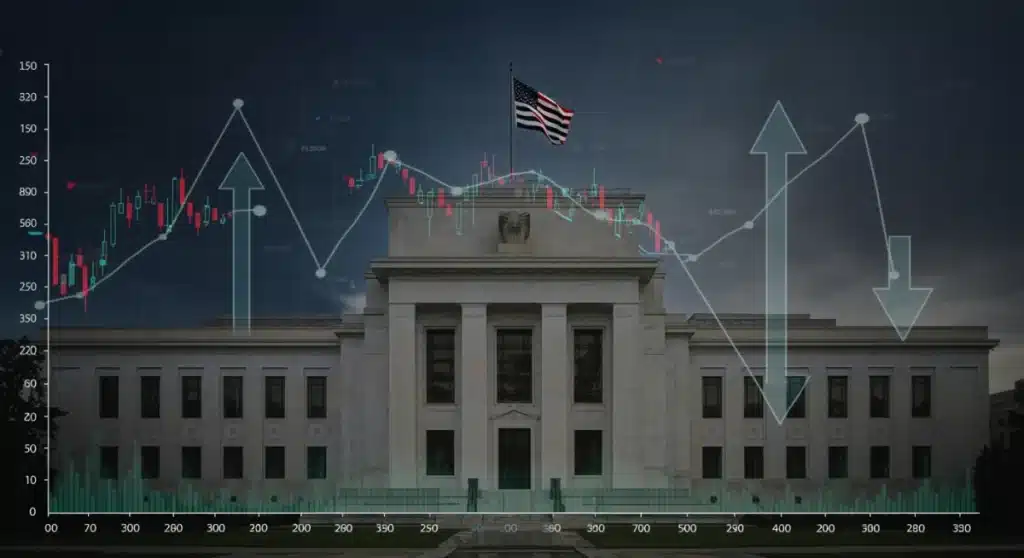
The Federal Reserve’s latest interest rate decision signals a cautious approach to monetary policy, with significant implications for mortgage rates and the returns on savings accounts throughout 2025, shaping the financial landscape for consumers.
Understanding the Federal Reserve’s latest interest rate decision and its projected 2025 impact on mortgages and savings accounts is crucial for every American household. These policy shifts, often announced with much anticipation, don’t just influence financial markets; they directly touch our daily lives, from the cost of buying a home to the returns we see on our hard-earned savings. Let’s delve into what the Fed’s recent actions mean for your financial future.
Decoding the Federal Reserve’s Latest Move
The Federal Reserve, often simply called ‘the Fed,’ stands as the central bank of the United States. Its primary mandates include maximizing employment, stabilizing prices, and moderating long-term interest rates. To achieve these goals, the Fed employs various monetary policy tools, with adjusting the federal funds rate being one of the most prominent.
Recently, the Federal Open Market Committee (FOMC), the Fed’s primary monetary policymaking body, convened to assess the economic landscape. Their latest decision regarding the federal funds rate was a pivotal moment, shaping expectations for the coming year. This rate influences a cascade of other interest rates throughout the economy, directly affecting everything from consumer loans to business investments.
The Federal Funds Rate Explained
The federal funds rate is the target rate for overnight lending between banks. While it’s not a rate that consumers directly pay, its changes reverberate across the financial system. When the Fed raises this rate, borrowing often becomes more expensive for banks, which then pass these higher costs onto consumers and businesses.
- Inflation Control: Higher rates can cool down an overheating economy by making borrowing and spending less attractive, thus curbing inflation.
- Economic Stimulus: Lower rates aim to stimulate economic activity by making borrowing cheaper, encouraging investment and consumer spending.
- Market Expectations: The Fed’s forward guidance on future rate movements plays a significant role in market expectations, influencing long-term rates even before actual changes occur.
The Fed’s recent announcement reflected a careful balancing act, acknowledging persistent inflationary pressures while also considering signs of a cooling economy. Their forward guidance suggests a data-dependent approach, meaning future decisions will heavily rely on incoming economic indicators such as inflation reports, employment figures, and GDP growth. This cautious stance aims to navigate the economy towards a soft landing, avoiding a recession while bringing inflation back to its target.
Anticipating 2025: Interest Rate Projections and Economic Outlook
Looking ahead to 2025, the Federal Reserve’s projections offer a glimpse into the likely trajectory of interest rates. These projections are not guarantees but rather the FOMC members’ best estimates based on current data and economic models. Understanding these forecasts is essential for individuals and businesses planning their financial strategies.
The Fed’s ‘dot plot,’ a graphical representation of individual FOMC members’ projections for the federal funds rate, typically indicates a range of possible outcomes. For 2025, the consensus generally points towards a period of stabilization, potentially with modest adjustments depending on how economic conditions evolve. Factors such as global economic stability, geopolitical events, and domestic fiscal policy could all influence the Fed’s path.
Key Economic Indicators Influencing the Fed
Several critical economic indicators will heavily influence the Fed’s decisions throughout 2024 and into 2025. These metrics provide the data points the FOMC needs to assess the health of the economy and determine the appropriate monetary policy response.
- Inflation Rate: The Consumer Price Index (CPI) and Personal Consumption Expenditures (PCE) index are closely watched to ensure inflation moves toward the Fed’s 2% target.
- Employment Data: Non-farm payrolls, unemployment rates, and wage growth figures provide insights into the labor market’s strength and potential inflationary pressures.
- GDP Growth: The Gross Domestic Product (GDP) reports indicate the overall economic output and help gauge the pace of economic expansion or contraction.
- Consumer Spending: Retail sales and consumer confidence surveys offer a snapshot of household demand, a significant driver of economic activity.
The overarching economic outlook for 2025, according to the Fed’s summary of economic projections, anticipates continued deceleration in inflation, alongside a robust, albeit moderating, labor market. This optimistic scenario hinges on the Fed’s ability to fine-tune its policy without over-tightening or easing too prematurely. The market will be keenly observing each data release, as any significant deviation could prompt the Fed to reconsider its projected course.
The Direct Impact on Mortgage Rates in 2025
For many Americans, the most tangible effect of the Federal Reserve’s policies is felt in the housing market, specifically through mortgage rates. While the federal funds rate doesn’t directly dictate mortgage rates, it significantly influences them, as mortgage rates are more closely tied to the yield on long-term Treasury bonds. However, the Fed’s broader monetary policy stance creates a ripple effect.
As the Fed potentially holds or adjusts its rates in 2025, we can expect mortgage rates to react accordingly. If the Fed’s policy signals a continued fight against inflation with higher-for-longer rates, mortgage rates could remain elevated. Conversely, if economic data suggests a need for stimulus, leading to potential rate cuts, mortgage rates might trend downwards, making homeownership more accessible.
Factors Beyond the Fed Affecting Mortgages
It’s important to remember that mortgage rates are influenced by a confluence of factors, not solely the Fed’s actions. While the federal funds rate sets a baseline, other elements contribute to the final rate offered to consumers.
- Inflation Expectations: Lenders factor in future inflation when setting rates, as inflation erodes the value of future payments.
- Economic Growth: Strong economic growth can lead to higher long-term rates as investors seek higher returns.
- Housing Market Demand: High demand for homes can put upward pressure on rates, while a slowdown can lead to more competitive pricing.
- Global Economic Conditions: International events and global capital flows can also impact the yield on U.S. Treasury bonds, which in turn affects mortgage rates.
Prospective homebuyers and those considering refinancing in 2025 should closely monitor these developments. A stable or slightly declining rate environment could present opportunities for more affordable home financing. However, volatility remains a possibility, underscoring the importance of staying informed and consulting with financial advisors to lock in favorable rates when they arise. The housing market’s sensitivity to interest rate changes means that even small shifts in the Fed’s policy can have substantial financial implications for borrowers.

How Savings Accounts Will Fare in 2025
While borrowers often lament higher interest rates, savers generally welcome them. The Federal Reserve’s interest rate decisions have a direct and often immediate impact on the yields offered by savings accounts, certificates of deposit (CDs), and money market accounts. For individuals relying on interest income, 2025 could present both opportunities and challenges.
If the Fed maintains a higher interest rate environment into 2025, or even implements further modest increases, savers can expect to continue earning attractive returns on their deposits. High-yield savings accounts, in particular, tend to track the federal funds rate more closely than traditional savings accounts, offering a significant advantage to those who park their cash in these vehicles.
Maximizing Your Savings in a Changing Rate Environment
Navigating the landscape of savings accounts in 2025 requires a proactive approach. Understanding how different account types respond to Fed policy can help you optimize your returns.
- High-Yield Savings Accounts: These accounts typically offer significantly higher interest rates than traditional banks and are often the first to reflect Fed rate changes.
- Certificates of Deposit (CDs): CDs offer fixed interest rates for a set term. If rates are expected to decline, locking in a higher rate with a longer-term CD might be beneficial. If rates are projected to rise, shorter-term CDs or a CD ladder strategy could be more advantageous.
- Money Market Accounts: These accounts offer a hybrid of checking and savings features, typically with competitive interest rates that also track Fed movements.
- Treasury Bills and Bonds: For those looking beyond traditional bank accounts, short-term Treasury securities can offer competitive, government-backed returns that are highly sensitive to Fed policy.
For savers, 2025 could be a year to capitalize on potentially elevated rates, especially if inflation begins to recede, increasing the real return on savings. It’s an opportune time to review your current savings vehicles and consider alternatives that offer better yields. Regularly comparing rates from different financial institutions, including online banks, can ensure you are getting the most out of your money as the Fed’s policies unfold.
Regional Economic Disparities and Their Influence
While the Federal Reserve sets a national monetary policy, its impact often varies across different regions of the United States. Economic conditions are not uniform; some areas may experience stronger job growth, higher housing demand, or different inflationary pressures than others. These regional disparities can influence how the Fed’s decisions are felt by local economies and individual households.
For instance, a region with a booming tech sector might be less sensitive to interest rate hikes due to robust wage growth and high demand, whereas a manufacturing-heavy region could feel a more pronounced pinch if borrowing costs for businesses increase. The Fed monitors these regional reports closely, as they provide a more granular view of the national economic picture.
Varied Economic Landscapes Across the U.S.
The U.S. economy is a mosaic of diverse regional economies, each with its own strengths and vulnerabilities. Understanding these differences helps in appreciating the complex dance between national policy and local realities.
- Housing Market Dynamics: Some regions may see rapid home price appreciation and fierce competition, making mortgage rate changes particularly impactful. Other areas might experience slower growth or even declines, where rate adjustments could have different effects on affordability.
- Labor Market Strength: Regions with strong labor markets and low unemployment might be more resilient to economic headwinds, while those with weaker job growth could face greater challenges.
- Inflationary Pressures: Local factors such as energy costs, transportation expenses, and even regional supply chain issues can lead to varying inflation rates across the country, influencing consumer spending and business investment.
- Industry Concentration: Regions heavily reliant on specific industries (e.g., oil and gas, tourism, agriculture) can experience unique economic cycles that may amplify or mitigate the effects of national monetary policy.
The Fed’s challenge lies in crafting a policy that serves the national interest while acknowledging these varied local conditions. For individuals, recognizing the economic nuances of their own region is key to understanding how the Fed’s decisions will personally affect their finances, from employment opportunities to the cost of living and access to credit. These regional insights are crucial for a complete understanding of the broader economic landscape.
Historical Context: Lessons from Past Rate Cycles
To better understand the potential implications of the Federal Reserve’s current and projected interest rate decisions for 2025, it’s insightful to look back at historical rate cycles. The Fed has a long history of adjusting rates to manage inflation and stimulate economic growth, and each cycle offers valuable lessons on how the economy, and particularly mortgages and savings, respond.
Throughout history, periods of rising interest rates have typically led to a cooling of the housing market, as higher borrowing costs reduce affordability. Conversely, periods of falling rates have often spurred housing booms. For savers, high-rate environments have historically meant better returns, while low-rate periods have challenged the ability to grow wealth through traditional savings vehicles.
Notable Fed Rate Cycles and Their Outcomes
Examining specific periods of monetary policy shifts can provide context for what might unfold in 2025. While every economic cycle is unique, patterns often emerge.
- The 1970s and Early 1980s: A period of high inflation led to aggressive rate hikes by the Fed, pushing mortgage rates into double digits but offering unprecedented returns for savers.
- The Early 2000s: Following the dot-com bust, the Fed lowered rates significantly to stimulate the economy, contributing to a housing boom and low returns on savings.
- The Post-2008 Financial Crisis Era: The Fed maintained near-zero interest rates for an extended period, leading to historically low mortgage rates but challenging savers and retirees.
- The 2022-2023 Inflation Fight: Rapid rate increases were implemented to combat soaring inflation, resulting in a sharp rise in mortgage rates and a welcome boost for savings account yields.
These historical examples underscore the cyclical nature of interest rates and their profound impact on personal finance. While the specifics of 2025 will be shaped by contemporary economic conditions, understanding past responses helps us anticipate how different sectors of the economy might react. The Fed aims to learn from these past experiences, striving for a more stable and predictable economic environment, even as it navigates new challenges. History reminds us that adaptability and informed decision-making are key for both borrowers and savers.
Strategic Financial Planning for 2025
Given the Federal Reserve’s latest interest rate decision and its projected 2025 impact on mortgages and savings accounts, strategic financial planning becomes paramount. Whether you are a homeowner, a prospective buyer, or simply looking to grow your savings, understanding how to adapt to these economic shifts can significantly enhance your financial well-being. Proactive planning allows individuals to capitalize on opportunities and mitigate potential risks.
For those with mortgages, monitoring rates for potential refinancing opportunities will be crucial, especially if the Fed signals future rate cuts. Savers, on the other hand, should explore various high-yield options to maximize their returns in what could remain a favorable environment for deposits. The key is to avoid complacency and actively manage your finances in response to the evolving economic landscape.
Actionable Steps for Households
Translating the Fed’s decisions into personal financial strategies involves several practical steps that can be implemented throughout 2025.
- Review Your Mortgage: If you have an adjustable-rate mortgage (ARM), understand how rate changes will affect your payments. For fixed-rate mortgages, keep an eye on refinancing potential if rates decline.
- Optimize Savings: Regularly compare interest rates on high-yield savings accounts, money market accounts, and CDs. Consider laddering CDs to take advantage of potential future rate increases.
- Manage Debt: High interest rates make variable-rate debt (like credit cards or some personal loans) more expensive. Prioritize paying down these debts to reduce interest burdens.
- Invest Wisely: Consult with a financial advisor to ensure your investment portfolio is aligned with your risk tolerance and financial goals in a changing interest rate environment. Bonds, for example, can be sensitive to rate changes.
- Build an Emergency Fund: A robust emergency fund, ideally in a high-yield savings account, provides a financial cushion against unexpected expenses, regardless of economic fluctuations.
The economic outlook for 2025, shaped by the Federal Reserve’s careful approach, requires an informed and agile response from consumers. By staying abreast of economic news and actively managing their financial portfolios, individuals can navigate the projected impacts on mortgages and savings accounts effectively, turning potential challenges into opportunities for financial growth and stability. Personal financial resilience will be a key theme in the coming year.
| Key Point | Brief Description |
|---|---|
| Fed’s Rate Decision | The Federal Reserve’s cautious stance influences overall borrowing costs and economic stability. |
| Mortgage Rate Impact | Mortgage rates closely track long-term Treasury yields, influenced by Fed policy and inflation expectations. |
| Savings Account Yields | Higher Fed rates generally lead to better returns for savers in high-yield accounts and CDs. |
| 2025 Economic Outlook | Projections anticipate decelerating inflation and a moderating labor market, guiding future Fed actions. |
Frequently Asked Questions About Fed Rates
The Fed’s federal funds rate doesn’t directly set mortgage rates, but it influences the broader financial market, including the yield on long-term Treasury bonds to which mortgage rates are closely tied. Higher Fed rates usually translate to higher mortgage rates, while lower rates can lead to more affordable home loans.
If the Federal Reserve maintains an elevated interest rate environment, or even implements modest increases, you can anticipate continued attractive returns on high-yield savings accounts, money market accounts, and CDs. Conversely, rate cuts might lead to lower yields, so staying informed is key.
The decision to refinance depends on various factors, including your current rate, market trends, and personal financial goals. If the Fed’s actions lead to a significant drop in mortgage rates, refinancing could be beneficial to secure a lower interest rate and reduce monthly payments. Consult a financial advisor.
The Fed closely monitors inflation (CPI, PCE) and employment data (non-farm payrolls, unemployment rate) as part of its dual mandate. High inflation or a robust labor market might prompt rate hikes to cool the economy, while weak employment or low inflation could lead to rate cuts for stimulus.
A volatile interest rate environment can create uncertainty. For borrowers, rising rates increase loan costs, especially for variable-rate products. For savers, rapidly falling rates can reduce investment income. Strategic planning and diversification are crucial to mitigate these risks and maintain financial stability.
Conclusion
The Federal Reserve’s latest interest rate decision sets the stage for a dynamic financial landscape in 2025, with profound implications for both mortgage rates and savings account yields. While the Fed navigates the complexities of inflation and economic growth, consumers must remain vigilant and proactive. Understanding these shifts and adapting personal financial strategies—whether through optimizing savings, reviewing mortgage options, or managing debt—will be essential for maintaining financial health and capitalizing on emerging opportunities in the coming year. Staying informed and making deliberate choices will empower individuals to navigate the evolving economic environment successfully.